
 KOR
KOR
I frequently encountered this dilemma while reporting on the "Special School Admissions War." In a desperate search for a glimmer of hope for their children—who require special education due to various disabilities or developmental delays—parents gave up the communities they had built their lives in, and some even broke up their households. In this process, some resorted to illegal or expedient means. There were many cases that I considered but ultimately set aside. Yet, this was clearly a reality that needed to be known. I share these behind-the-scenes reporting notes on the "Special School Admissions War," which could not be shown on air. All subjects and tipsters are kept anonymous, and any identifying information has been excluded as much as possible. (▶ Related Article: [News Story] Their Own Admissions War: Mencius' Mother-Style Relocations for Special Schools)
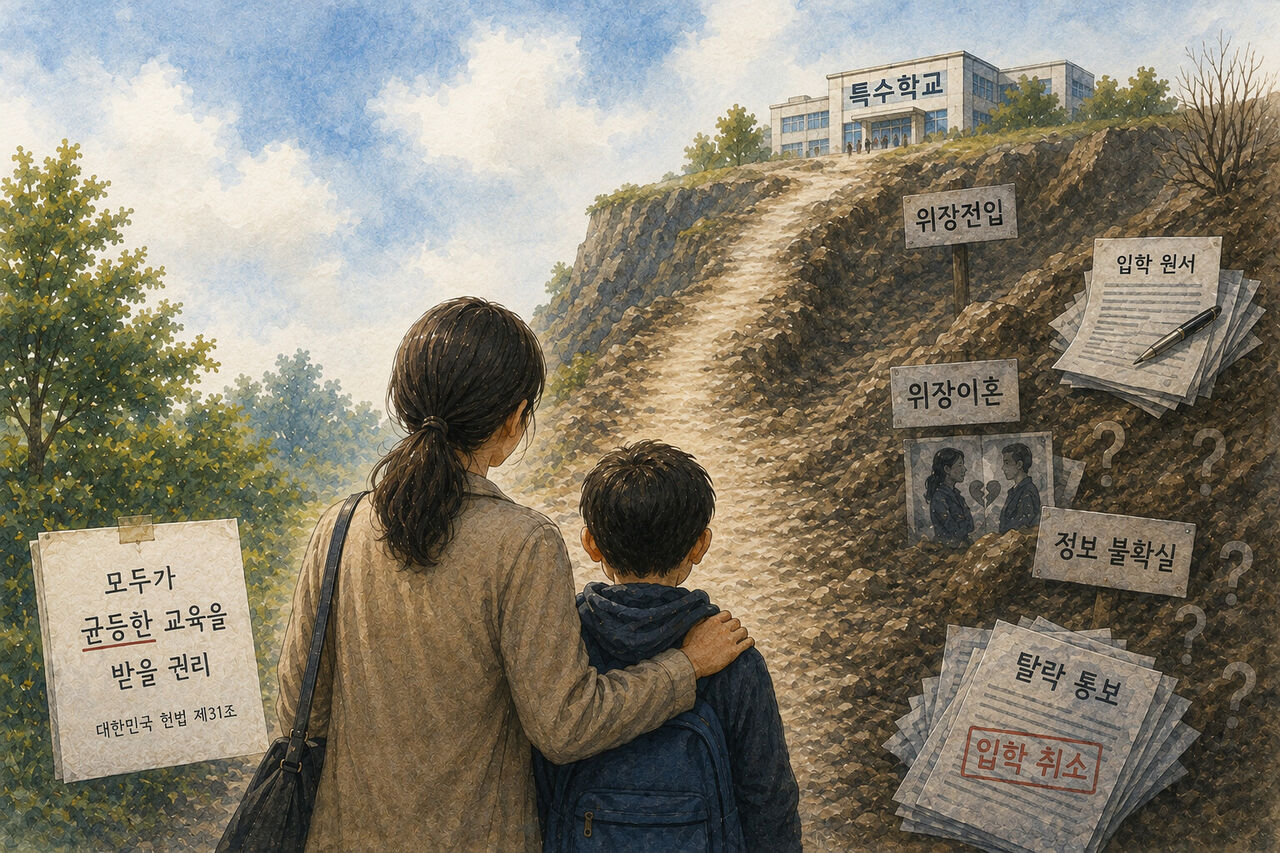
Secured Admission via 'Fake Address Registration', but There Was Another Child
When the inspection team arrived at the address, Person A's family did not live there. It was a "fake address registration," where only the official residency paperwork was transferred. In the end, Person A's child had their special school admission canceled and had to enroll in a regular school. Why did Person A rush to move their address again before the on-site inspection was even completed? Person A had another child who also needed to enter a different school. To meet the admission criteria for that school, the address had to be transferred once more. Consequently, Person A became a failed "Mencius' mother." While registering a false address is undeniably wrong, this might never have happened if a special school had been available where the family originally lived. The region where Person A lived is well known for its severe shortage of special schools relative to the city's size.
"I Moved in Advance, but Heard Another Applicant's Parents Got a 'Paper Divorce'"
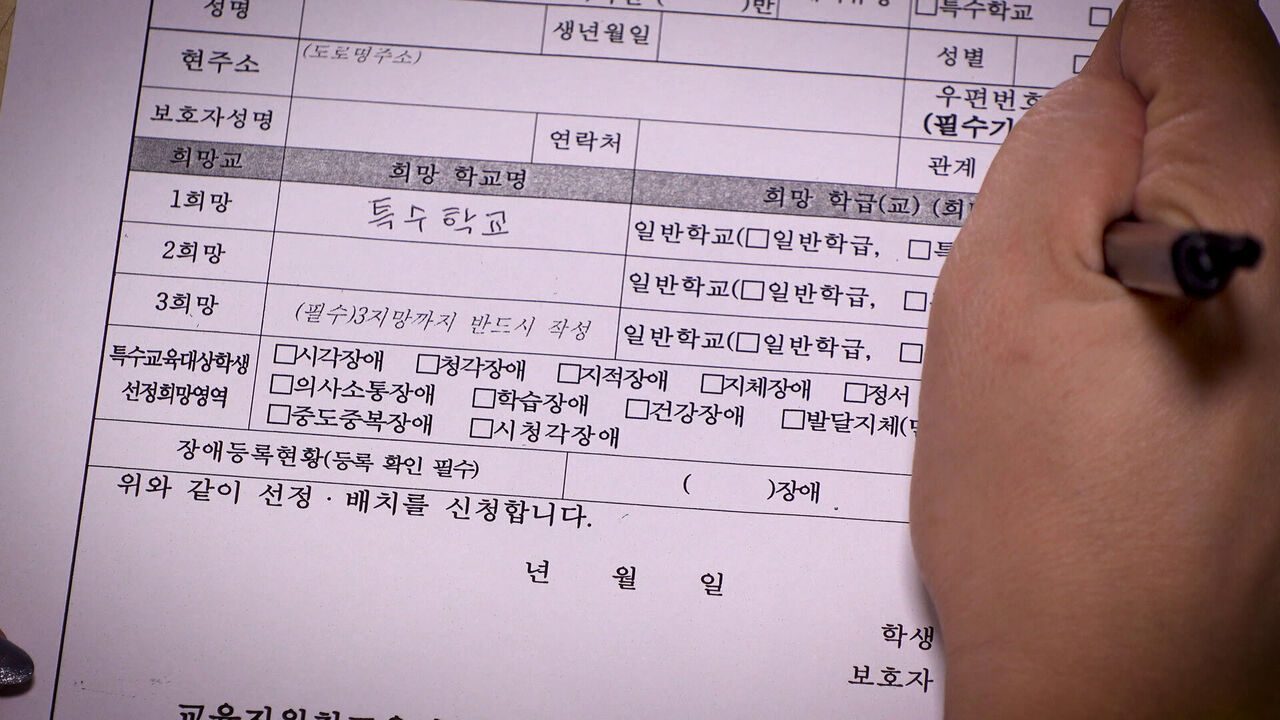
The Child Who Could Not Enter a Special School Was Pushed Out of Public Education
There was no special school in Person C's residential district that matched the child's type of disability. The nearest special school had only one first-grade class, with an admission quota of just six students. Children from four neighboring autonomous districts were competing for those spots. The child was ultimately rejected. Person C's child, who has severe autism spectrum disorder, was diagnosed at the time with anxiety levels 100 times higher than other children, along with significant self-harm and aggressive behavior toward others. "When I heard the news of the rejection from the special school, it felt like the sky was falling," Person C recalled.
The child was briefly placed in a special education classroom within a regular school, but dropped out after only ten days. "The assigned school was severely understaffed, with more children per teacher than the mandated limit. Before even ten days had passed, my child's anxiety surged dramatically. Individualized education was not properly implemented, nor was a safe learning environment guaranteed. At the time, the education the school provided to our child was simply 'not causing trouble for other children.'"
In this way, Person C's child had no choice but to be pushed out of public education. Person C has been homeschooling the child for three years now. Under current legal regulations, a child cannot simply be kept out of school entirely, so the child's name remains registered at a school without attending—effectively a student outside the regular quota. Person C said the homeschooling will continue at least until middle school. The failure to find a suitable school for the child has ultimately led to distrust in public education.
Special Schools Are Not the Only Option, but...
A special education recipient refers to a person diagnosed and evaluated as needing special education under any of the following categories: visual impairment, hearing impairment, intellectual disability, physical disability, emotional/behavioral disorder, autism, communication disorder, learning disability, health impairment, developmental delay, or multiple disabilities. (In other words, having a disability or developmental delay alone does not qualify a child; official diagnosis and evaluation are required.)
Once designated as a special education recipient, students can apply to special schools or special education classes in regular schools. Special schools provide education exclusively to special education recipients, whereas special classes in regular schools combine regular classes and special classes depending on the situation and need, as part of integrated education. Students may spend most of their time in regular classes and visit the special class only for specific subjects, or they may spend most of their day in the special class and join regular classes for certain hours. As of 2025, approximately 60% of all special education recipients attend special classes in regular schools, while 25.7% attend special schools. (About 16.2% are enrolled exclusively in regular classes.)
A mother of a child with autism spectrum disorder told the reporter that what hurts the most is hearing people say, "If you can't get into a special school, why not just go to a special class in a regular school?" She noted two reasons: not everyone can get into their desired regular school's special class, and some people view parents seeking special schools "as if they are making an unnecessary fuss." "I know people say it out of ignorance rather than malice, but every time it is said so casually, it hurts deeply. We are waging an admissions war in tears that nobody knows about."
Unprepared Inclusive Education Breeds 'Special School Relocations'
A mother raising a teenage middle-school daughter who has a relatively high IQ but clear autism spectrum disorder moved from the capital region to Gangwon-do in search of a special school. She told the reporter, "When my child goes to a regular school, she sits there like a bystander and only eats lunch. Sitting quietly without causing problems—that isn't inclusive education, is it?"
The current administration promised to build 20 special schools as a national policy agenda. From 2024 to the present, only one special school has been added nationwide. Seoul has 25 autonomous districts with 32 special schools, including private ones. While this may seem sufficient at a glance, eight of the 25 autonomous districts currently do not have a single special school. Even excluding the two districts where construction is underway, six districts still have no plans in place. Article 31 of the Constitution of the Republic of Korea states: 'All citizens shall have an equal right to receive an education corresponding to their abilities.' Are the parents and children encountered in this reporting truly enjoying the 'equal right to education' guaranteed by the Constitution?
I would like to take this opportunity to express my gratitude to the many families of special education recipients who participated in interviews. Some families initially requested anonymity but later agreed to be interviewed on the record, while other parents went as far as securing filming permissions at therapy centers and rehabilitation wards themselves. The reason they stepped forward with such dedication was singular: "Please make sure these facts appear on the news more often, so that more people become aware."
It was a desperation that deeply resonated in the heart.
※ Please note: This article was translated by AI and may contain errors.





