
 KOR
KOR![DAPA-LIG Bribery Case Just a Personal Deviation? Arrest of DAPA Member 'KK' and Major Corporate Vice President [Reporter's Notebook]](https://img.sbs.co.kr/newimg/news/20260811/202211101_1280.jpg )
During a regular Ministry of National Defense briefing yesterday (August 10), the DAPA spokesperson dismissed the incident as a personal deviation. The situation unfolding behind the scenes, however, suggests otherwise. DAPA official A is pointed out as a member of a private faction within DAPA known as 'KK'. KK is notorious for its members promoting and backing each other up. Meanwhile, B from LIG D&A is the company's number two, holding a vice-presidential rank. Given the high profile of the individuals involved and the nature of the charges being bribery, it is difficult to dismiss this as a mere personal deviation.

Regardless of the direction of the investigation and trial, the defense industry's attention is focused on the level of administrative penalties LIG D&A will face. DAPA plans to hold a contract deliberation committee to determine the level of administrative penalties after B of LIG D&A is indicted. Under strict standards, this involves sanctions for entities deemed improper followed by additional penalty points, while a flexible interpretation points to the imposition of a surcharge. Depending on whether DAPA views the case of A and B as a defense industry corruption scandal or a personal deviation, the committee's judgment is expected to vary.
KK and the Vice President: Extraordinary Profile of the Involved Figures
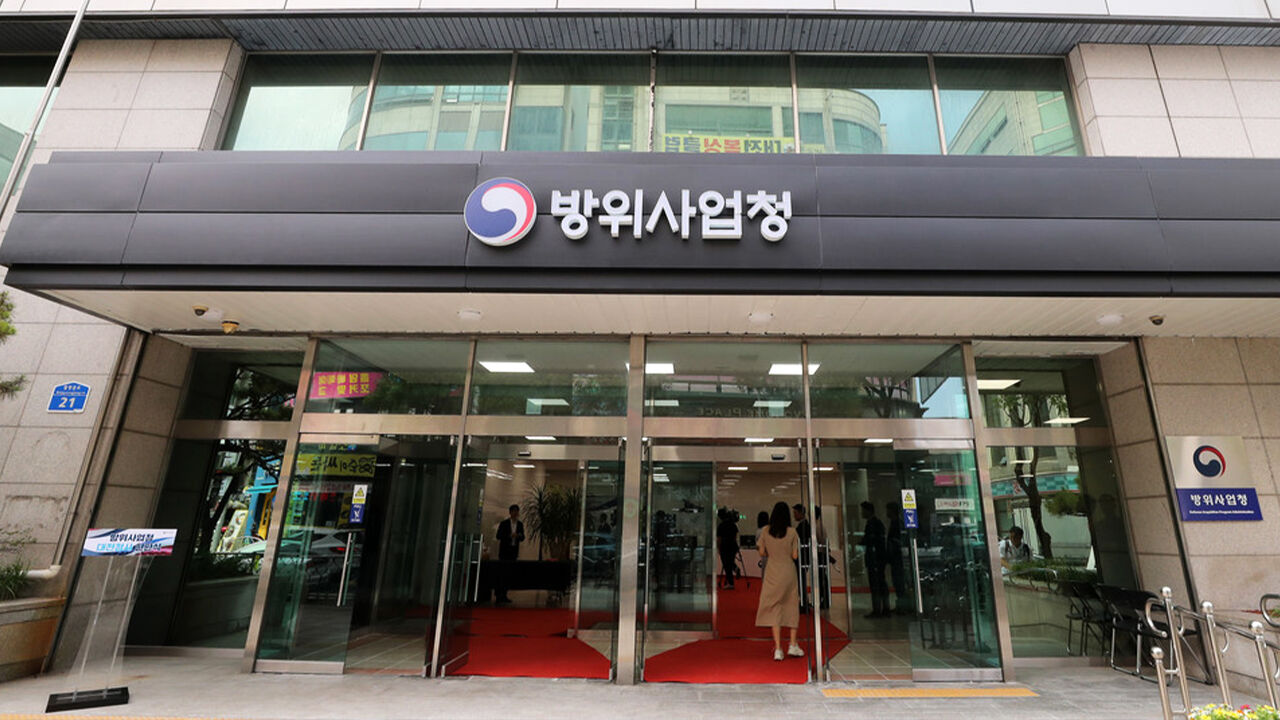
DAPA official A, who was arrested on charges of receiving bribes from a contractor, belongs to KK. While DAPA officials claim that "A held a marginal post within DAPA and was not in a position to receive money and grant special favors to contractors," if A belongs to KK, the situation warrants a closer look. This is because other members of KK could assist A in various explicit and implicit ways. The Suwon District Prosecutor's Office is reportedly targeting several other DAPA officials besides A, and there is widespread speculation that they are connected to KK.
The official title of B, who was arrested on the opposite side of A's bribery case, is division head. Held by only four or five people at LIG D&A, this position is right below the CEO and equivalent to a vice president. This appears to be the first instance where a vice president of a major defense conglomerate has been implicated and arrested in a bribery case involving a DAPA official. C, a headquarters head at LIG D&A holding an executive director rank, is also under investigation by the prosecution. The defense industry is paying keen attention to the fact that two heavyweights from a major defense corporation have been entangled in a DAPA bribery case.
Improper Entity Sanctions vs. Surcharges: The Weight of the Case and Their Hopes
Both DAPA and LIG D&A appear to be pinning their hopes on the imposition of financial surcharges that can resolve the issue with money. The shared interest of both parties is to minimize the fallout of the incident as much as possible. Therefore, they seem to rely on relevant legal provisions stating that "surcharges may be imposed when sanctions against improper entities or penalty points would have a profound impact on national projects, or when competitive bidding for national projects becomes difficult."
Critics point out that DAPA calling this incident a personal deviation is a buildup toward imposing surcharges. This is because penalties can be subtly lowered only if the incident is widely perceived as minor. However, as noted earlier, the profiles of those involved are formidable. The bribe amount reported in the media stands at 460 million won plus alpha. This is corruption that took place over astronomical sums for weapon projects. The prevailing opinion in the defense industry is that this has gone far beyond the scope of a case that can be embraced with leniency.
There is one case DAPA must remember: the leak of military secrets regarding the Korea Next-Generation Destroyer (KDDX) project. While media outlets reported that the sluggish progress, debates, and controversies surrounding the KDDX project were due to fierce competition among contractors, the reality was a crisis spawned by a shipbuilding firm's unprecedented secret-stealing crime and DAPA's leniency toward powerful entities. If DAPA fails to stay alert, a repeat of the KDDX project fiasco could occur.
※ Please note: This article was translated by AI and may contain errors.





 Video News

 Video News