
 KOR
KOR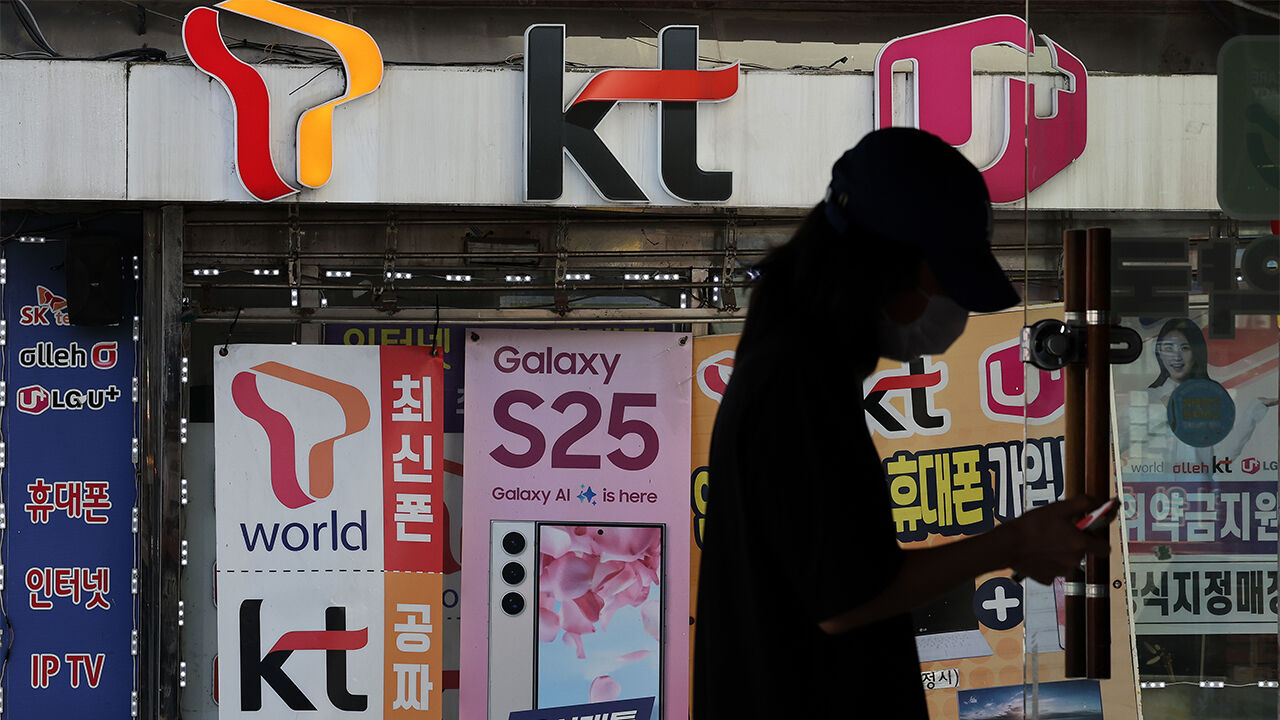
▲ Cell phone stores of the three major mobile carriers
The Korea Fair Trade Commission (FTC) announced that SK Telecom, KT, and LG Uplus have decided to correct unfair terms, such as those limiting liability even in the event of personal information infringement incidents, following the antitrust agency's recommendations.
The FTC stated today that it reviewed the telecommunication service terms and conditions of the three mobile carriers, identified four types of unfair clauses, and requested voluntary corrections.
The FTC explained that it conducted a comprehensive review of the terms considering that personal information leak incidents have been occurring consecutively and that telecommunications services are used by the vast majority of citizens, making the scale of personal information held and managed by operators massive.
First, liability exemption clauses regarding personal information infringement incidents were found commonly across all three companies.
For instance, the terms included clauses stating that "no responsibility is taken if communication contents and information are leaked in unencrypted Wi-Fi sections."
The FTC pointed out that "such clauses limit the business operator's liability for damages resulting from personal information infringement incidents and shift related responsibilities onto users, rendering them void under Article 7 of the Act on the Regulation of Terms and Conditions."
Consequently, the terms were revised so that when an incident occurs, operators bear corresponding responsibilities based on their attribution grounds, such as intent or negligence, allowing users and operators to share responsibility rationally.
Clauses limiting and exempting liability for damages related to service provision were also commonly flagged among the three companies.
These terms exempted operators from liability entirely, making users bear full responsibility without considering whether the operator is at fault if telecommunication services are disrupted, provided that the user has some intent or negligence.
The FTC noted that "if both the user and the operator are at fault during the service usage process, the responsibility should be shared according to each party's proportion of fault," criticizing that it is unfair for operators to be universally exempted simply because the user holds some fault.
Accordingly, the grounds for reduction or exemption of responsibility were clarified rather than allowing total exemption.
In LG Uplus's terms, a clause limiting the operator's level of liability regarding a member's ID and password only to cases of "the company's intent or gross negligence" was also found, prompting the FTC to revise the terms so that the scope of liability includes damages caused by ordinary negligence as well as intent or gross negligence.
At KT, a clause was flagged which stated that if reasons for terms revision or contract termination arise, the company notifies members in advance and deems them to have agreed unless the member explicitly expresses refusal within a certain period.
The FTC instructed KT to modify the terms so that implicit consent is established only when it is clearly notified that a failure to express an intention within a reasonable period will be regarded as having expressed that intention.
(Photo: Yonhap News)
※ Please note: This article was translated by AI and may contain errors.



 Video News
 Video News
![Billions in Taxes Poured Into Empty Facilities... The 22 Billion Won Twist [XR]](http://img.sbs.co.kr/newimg/news/20260806/202209915_300.jpg) Video News
Video News
 Video News
 Video News