
 KOR
KOR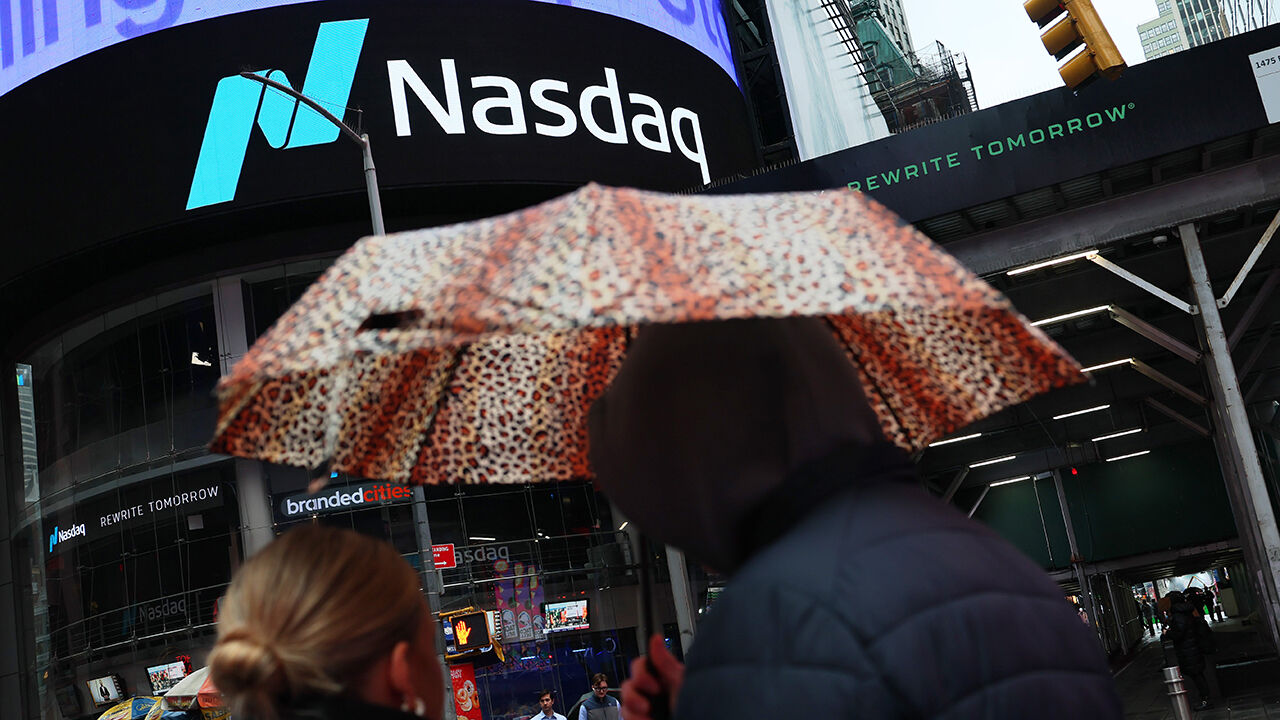
Domestic investors are flocking back to the U.S. stock market.
However, it has been revealed that they suffered massive losses approaching 50 trillion won over the past two months.
Pouring huge amounts of capital into high-risk leveraged products appears to be the root cause.
The Korea Securities Depository stated that retail investors, known as "Seohak Ants," net purchased $4.66862 billion worth of U.S. stocks last month (July).
This amounts to a staggering 6.7428 trillion won in Korean currency.
It is the largest monthly purchase amount in half a year since last January.
Looking at the net purchase trend of Seohak Ants this year, it peaked last January and then gradually decreased in February and March.
Then, as the domestic KOSPI gained upward momentum and the government introduced stock market support measures, more people became net sellers starting in April.
In May, the net selling volume jumped significantly to $939.77 million.
This trend turned back to a buying dominance in June, and the scale expanded sharply in July.
As the domestic stock market turned weak again starting in June, analyses suggest that individual investors are fleeing the local market.
The money poured into the U.S. market over the two months of June and July alone reaches $5.3 billion, or about 7.6547 trillion won.
The problem is that the estimated valuation losses incurred by Seohak Ants during this period amount to about 50 trillion won.
The total value of U.S. stocks held by Seohak Ants, which stood at $204.1 billion at the end of May, shrank to $170.4 billion by the 30th of last month.
This means that $33.7 billion—or about 48.6729 trillion won in Korean currency—vanished into thin air in just two months.
This is a massive amount equivalent to 16.5% of the valuation at the end of May.
During the same period, major U.S. stock indices such as the S&P 500 fell by only 1.88% and the Nasdaq index by 6.85%.
They recorded massive losses that far exceeded the index decline rates.
The fallout from the 29.1% plunge in Tesla stock, which individual investors held the most, was significant.
The stock price of NVIDIA, the second most held stock, also fell by 7.6%, dealing a blow.
Above all, aggressive betting on leveraged products is analyzed as the decisive blunder.
The most purchased stock by Seohak Ants in June and July was "SOXL," an exchange-traded fund (ETF) that tracks 3 times the return of the Philadelphia Semiconductor Index.
They swept up a whopping $3.77486 billion, equivalent to 5.452 trillion won.
The value of SOXL holdings, which was $5.35326 billion at the end of May, increased only slightly to $5.81145 billion.
Considering that they made additional purchases close to $4 billion over the two months, this is a disastrous scorecard.
This is because the price of SOXL literally "halved" from the $224 range to the $114 range during this period.
Previously, individual investors were known to have suffered heavy losses in the domestic leverage market as well.
Citigroup Global Markets stated in a recent report that the market capitalization of Korean asset-based leveraged ETFs plummeted in just over a month.
It also projected that the total cumulative losses of individual investors resulting from this would reach 56 trillion won.
An official from the securities industry expressed concern regarding individual investors who suffered massive losses regardless of domestic and foreign markets, saying, "The capacity that has propped up the domestic market has diminished to that extent."
※ Please note: This article was translated by AI and may contain errors.
"Escaping Korean Market Is Smart": 7 Trillion Won Poured In, But 50 Trillion Won "Vaporized" in Two Months



Trending Now
-

Yangsan, Gyeongsangnam-do, Hits 42.5°C (108.5°F)... Breaking Record for Highest Temperature in South Korea
-
"Landmine-like Object"... Responding to Vacationer's Report Revealed It Was a North Korean Antipersonnel Mine
-
Court Orders 500 Million Won Compensation for Newborn's Death After Overfeeding at Hospital
-
Drunk Driver in His 20s Arrested After Serial Crashes in Wangsimni
-
Runway Closures and Passenger Plane Diversions: Gimhae Airport's 'Unidentified Flying Object'


