
 KOR
KOR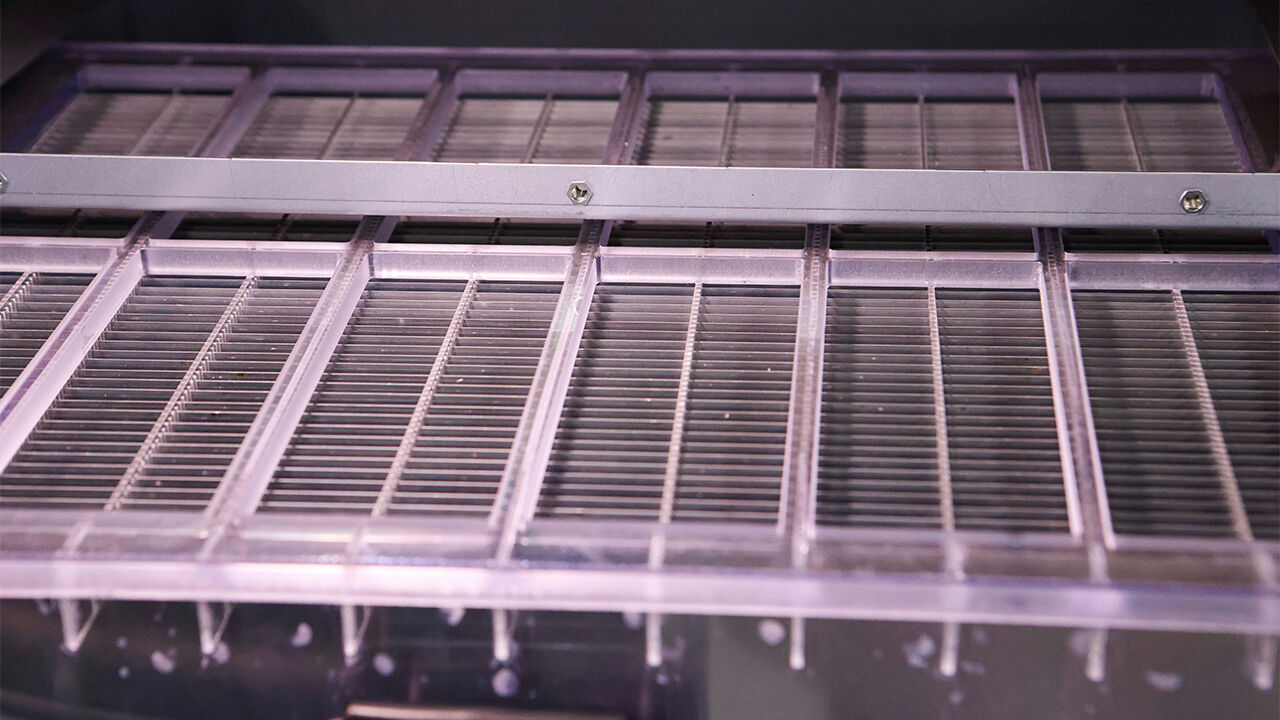
▲ The ultrafine dust collection unit inside an air purifier
An investigation has revealed that a significant number of replacement air purifier filters, which are growing in demand as cheaper alternatives to genuine parts, fall short of standards in harmful gas removal performance.
Some products even contained harmful substances that are prohibited from use, prompting corrective recommendations such as sales suspension, exchanges, and refunds.
The Korea Consumer Agency announced today (July 28) that after testing 20 replacement air purifier filters available on the market for quality and safety, it found wide performance gaps among products in harmful gas removal efficiency and fine dust removal performance.
Replacement filters are similar in shape and function to the genuine filters made by air purifier manufacturers, but are priced at 30 to 56 percent of the genuine parts.
When the agency tested the replacement filters by installing them in the latest models from LG Electronics, Samsung Electronics, Winia, and Xiaomi, only 4 out of the 20 products met the relevant standards for harmful gas removal efficiency.
According to the Korea Air Cleaning Association's group standards, the individual removal rate for five harmful gases—formaldehyde, ammonia, acetaldehyde, acetic acid, and toluene—must be at least 40 percent each, with an average removal rate of at least 70 percent. However, the average removal efficiency of the remaining 16 products lingered at 20 to 63 percent.
The average removal efficiency of genuine filters ranged from 81 to 100 percent.
The four products that met the harmful gas removal rate standards were Daemyung Tech's "Daemyung Filter," Majum's "Major Filter," Bareun Filter's "Bareun Filter," and With U's "Best Filter."
Fine dust removal performance also showed wide variations across products.
Among those tested, 8 products met the standard by recording 90 percent or more of the performance indicated on the air purifiers, while the remaining 12 products stayed at 68 to 89 percent of the indicated values.
Notably, in this evaluation, methylisothiazolinone (MIT), a substance banned from inclusion, was detected in the deodorizing filters of two replacement filters for Xiaomi air purifiers.
MIT is a substance used for antibacterial and preservative treatments, which can pose health risks when inhaled or absorbed through the skin.
The products in question are Itec's "TSI Gray Premium" and Sejin Aqua's "Sejin Gray Filter," both of which were manufactured in China.
The quantities sold were 433 and 192 units, respectively.
The Korea Consumer Agency recommended that the two companies suspend sales, recall previously sold products, and provide free exchanges or refunds, and the companies accepted the measures.
The agency also recommended quality improvements to the 16 companies whose harmful gas and fine dust removal performances were inadequate, and 13 of these companies stated plans to pursue material changes and production process improvements.
The Consumer Agency advised, "When purchasing replacement filters, consumers should comprehensively consider compatibility with the air purifier in use, as well as harmful gas and fine dust removal performance, filter replacement cycles, and price."
(Photo provided by the Korea Institute of Machinery and Materials, Yonhap News)
※ Please note: This article was translated by AI and may contain errors.


 Video News

 Video News
 Video News