KOR
KOR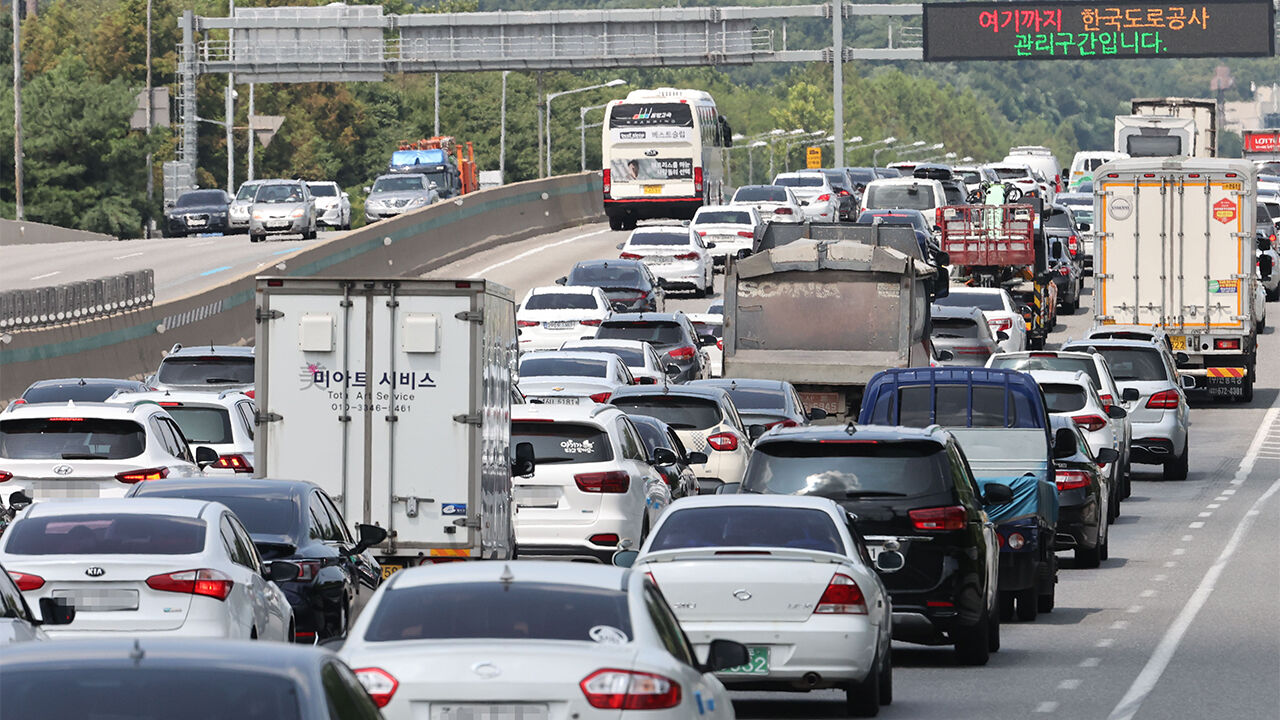
▲ The northbound Gyeongbu Expressway near Yangjae IC (File Photo: Yonhap News)
An average of more than 6 million people per day is expected to travel during the peak summer vacation season from late July to early August this year.
During this period, the government will increase public transportation capacity by more than 10%, improve convenience for highway and national road travel, and strengthen traffic safety, including heightening preparedness for abnormal weather conditions.
The Ministry of Land, Infrastructure and Transport announced today that it has designated the 17-day period from July 25 to August 10 as a special transportation countermeasure period and will implement a joint special transportation plan for the summer vacation season with related agencies.
According to analysis by The Korea Transport Institute and Korea Expressway Corporation, an average of 6.14 million people per day, totaling 104.33 million people, are expected to travel during this countermeasure period.
This is a 1.5% increase compared to the special transportation period of last summer (an average of 6.05 million people per day).
According to a survey conducted by the Korea Transport Institute of 10,123 citizens, 51.5% intend to take a summer vacation this year. Among them, 86.3% plan to travel domestically, while 13.7% plan to travel abroad.
Vacation plans were most concentrated from July 25 to 31 (16.1%), followed by August 1 to 7 (12.9%).
For domestic travel destinations, respondents favored the east coast region (26.4%), followed by the south coast region (19.1%), the capital area (12.3%), the west coast region (10.3%), and the Jeju region (7.7%).
Most travelers are expected to use passenger cars (83.8%) to get around.
The daily average traffic volume on expressways is projected to reach 5.43 million vehicles, a 0.6% increase from the previous year (5.4 million vehicles).
During this special transportation period, the Ministry of Land, Infrastructure and Transport will focus on five major areas: ensuring smooth vehicle traffic, increasing convenience and services for vacationers, strengthening traffic safety, expanding public transportation capacity, and enhancing responses to worsening weather.
Nine new sections of general national roads (65 km) have been newly opened, and shoulder lanes will be operated on 59 sections of expressways (371.62 km).
In addition, 234 sections of expressways and general national roads (1,872 km) have been selected as expected traffic congestion zones for intensive management.
To prepare for an increase in passengers, the number of bus and train operations and seats will be increased by 11.1% (37,452 trips) and 8.3% (2.076 million seats), respectively, compared to usual levels.
The Korea Railroad Corporation (KORAIL) app has also been improved to allow users to directly book accommodations.
To enhance airport convenience, shuttle bus services at Incheon International Airport Terminal 2 will be increased, Smart Pass-exclusive departure gates will be expanded (from 3 to 5 locations), and temporary parking spaces (9,116 spaces) will be secured.
To prepare for abnormal weather conditions such as heavy rainfall during the vacation season, underground roadway entry blocking facilities and evacuation guidance facilities will be operated, and underground roadway closure information will be provided through navigation systems.
Dangerous situations, such as rockfalls on slopes, will be monitored in real-time using intelligent CCTVs.
(Photo: Yonhap News)
※ Please note: This article was translated by AI and may contain errors.



 Video News