
 KOR
KOR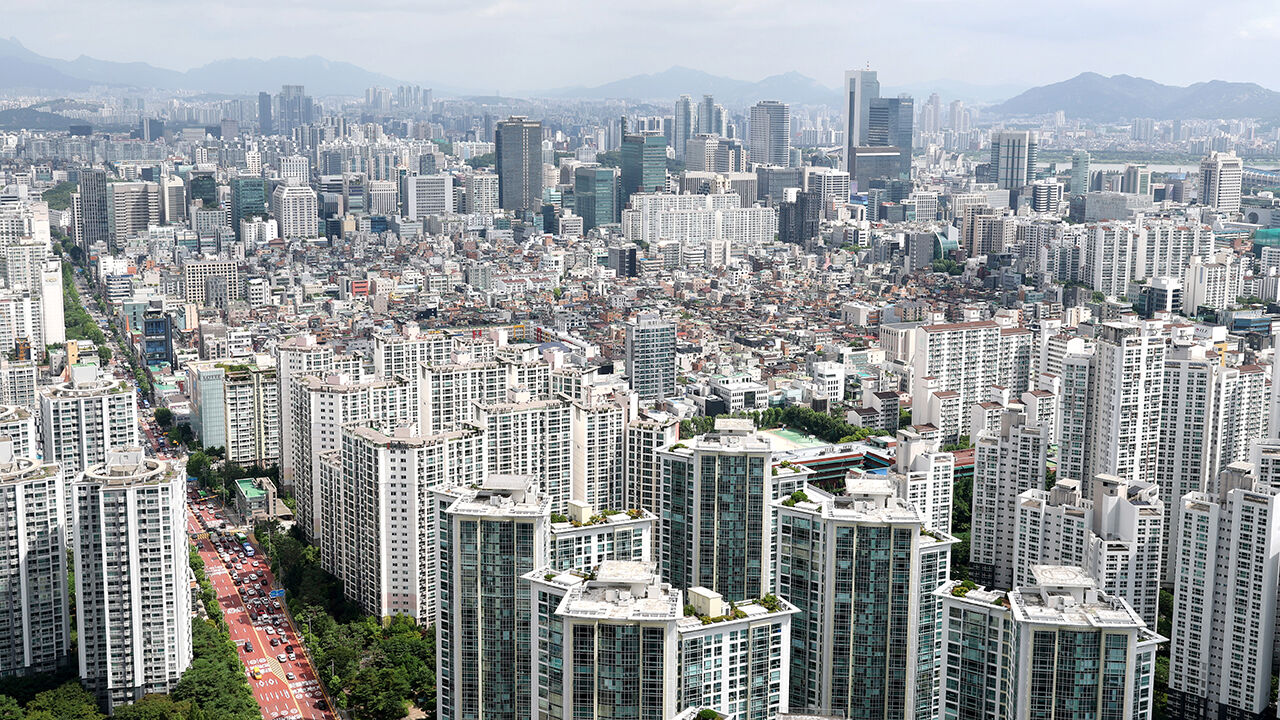
▲ Apartment complexes in the Gangnam area of Seoul
The threshold for entering the top 1% of the apartment sales market in Seoul during the first half of this year has been found to be approaching the 4.65 billion won mark.
Zigbang announced on July 20 that, based on an analysis of actual transaction data for apartment sales nationwide, the threshold for the top 1% of apartments in Seoul for the first half of this year was recorded at 4.64998 billion won.
This figure is lower than the 4.98 billion won recorded in the first half of last year, but higher than the 4.3 billion won seen in the second half of last year, when triple regulations were expanded across all of Seoul.
The average transaction price for apartments in the top 1% during the first half of this year was 6.3059 billion won.
This is also lower than the 6.88334 billion won recorded in the first half of last year, but higher than the 5.96843 billion won seen in the second half of last year.
Zigbang explained that the top 1% of apartments in Seoul are primarily located along the Han River in both the Gangnam and Gangbuk areas, as well as in reconstruction projects and newly built luxury complexes.
In Gyeonggi Province, the threshold for the top 1% was recorded at 1.85 billion won, with an average transaction price of 2.23468 billion won.
These areas were mainly concentrated in locations with excellent accessibility to Seoul or those with self-sufficient functions, such as Gwacheon, Bundang and Pangyo in Seongnam, Gwanggyo, and Dongtan.
Among regional areas, Daegu had a relatively high threshold for the top 1% at 1.58 billion won, followed by Busan at 1.525 billion won.
Kim Eun-sun, head of the Big Data Lab at Zigbang, explained, "While the top 1% of complexes in the Seoul metropolitan area are diverse and widely distributed within the region, the top 1% of transactions in regional areas tend to be centered around specific landmark complexes that represent the region." She added, "There are differences in how the top-tier market is formed depending on the market size and the supply conditions for high-end housing in each region."
(Photo: Yonhap News)
※ Please note: This article was translated by AI and may contain errors.


 Video News
 Video News
 Video News
 Video News
 Video News