
 KOR
KOR
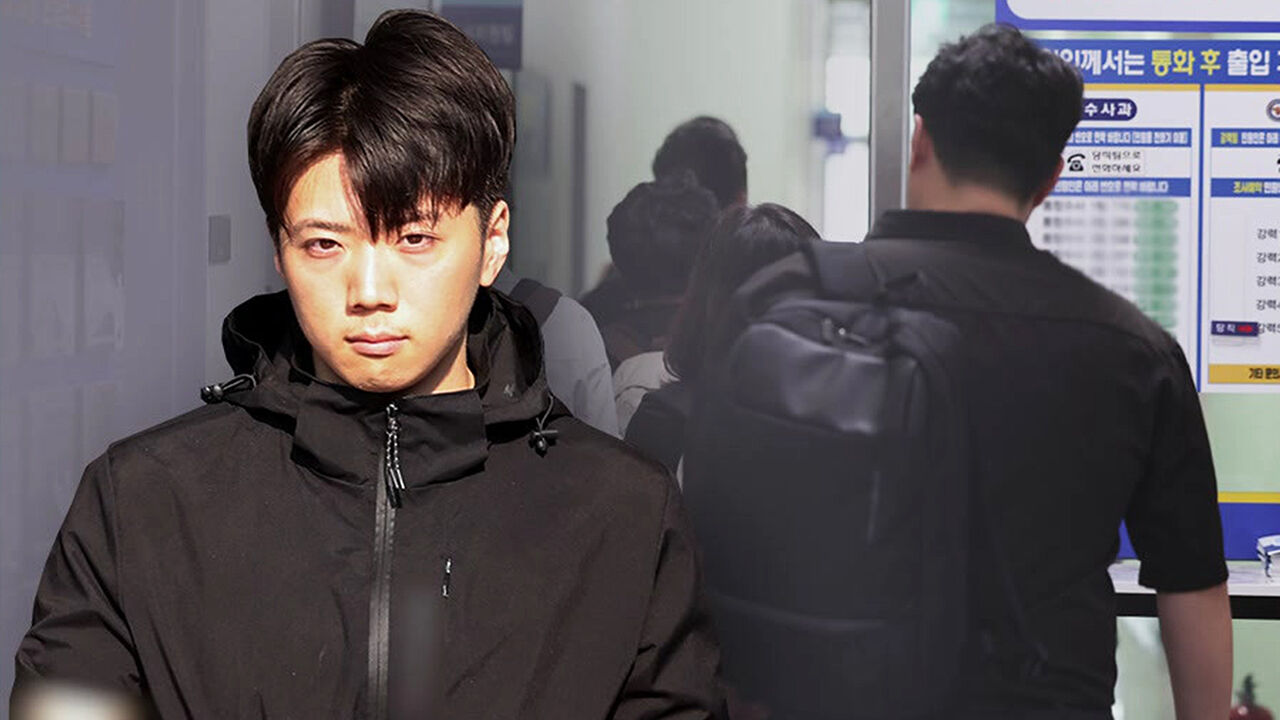
▲ Jang Yoon-ki
Recently, as the truth of the Jang Yoon-ki case was revealed through SBS reporting, the debate over abolishing the prosecution's right to conduct supplementary investigations has been ignited. There are two reasons for this.
First, it was revealed that the prosecution secured additional evidence through a supplementary investigation and indicted the suspect on the heavier charge of "rape-homicide," after the police had transferred the case applying the relatively lighter charge of "general homicide." Without the prosecution's supplementary investigation, Jang Yoon-ki, who brutally murdered a high school girl he had never met before, would have faced trial only for the relatively lighter charge.
Second, during the prosecution's supplementary investigation, circumstances were uncovered showing that the police destroyed evidence or leaked investigation details to allow the suspect's parents to destroy evidence. If the supplementary investigation power had been abolished, leaving prosecutors to determine whether to indict based solely on the records transferred by the police or to only "request" supplementary investigations, the police's destruction of evidence would likely have remained hidden forever.
Can the Jang Yoon-ki Case Be Solved with Just Requests for Supplementary Investigation?
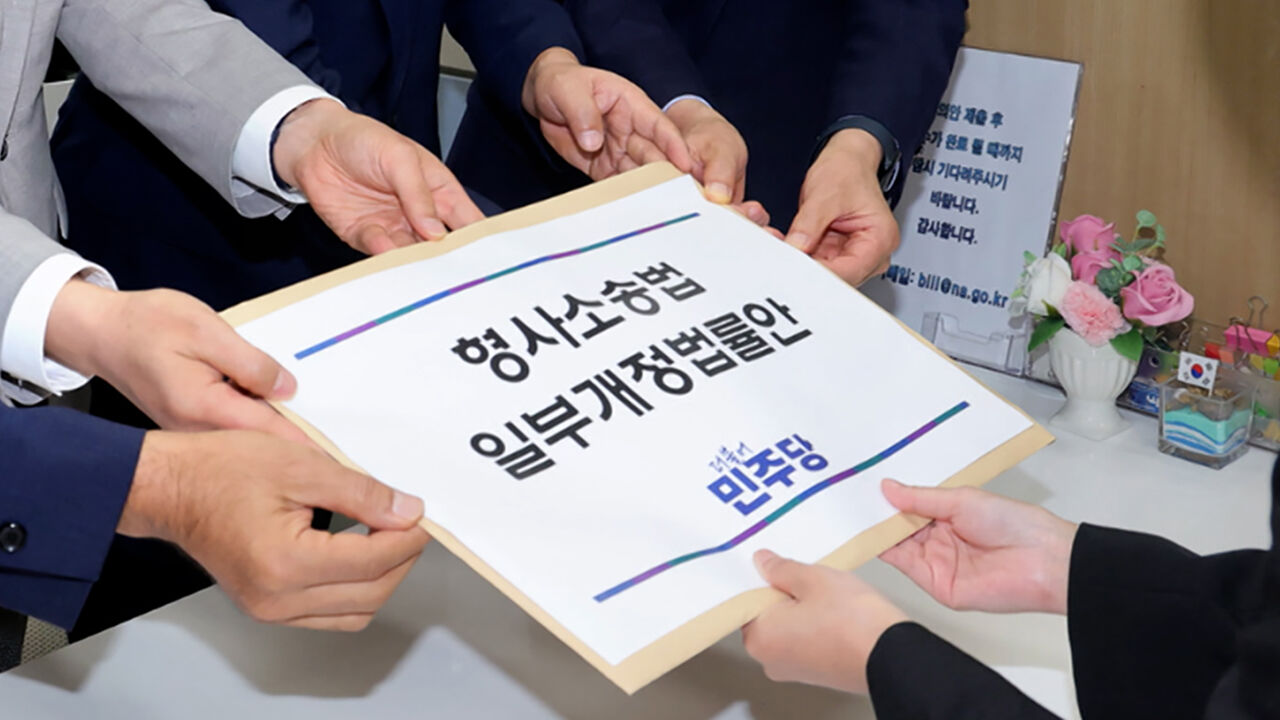
This logic is also reflected in the amendment to the Criminal Procedure Act announced on July 9 by the Democratic Party's Criminal Procedure Act Revision Task Force (hereinafter referred to as the "Democratic Party TF"), amid ongoing reports on the Jang Yoon-ki case. The amendment contains provisions to completely abolish prosecutors' power to conduct supplementary investigations and instead strengthen their authority to request them. Democratic Party lawmakers who attended the announcement of the bill repeatedly claimed that prosecutors' supplementary investigations have no direct relevance to the Jang Yoon-ki case.
If We Apply the Measures to Strengthen Requests for Supplementary Investigation to the Jang Yoon-ki Case...
To this end, this article will first examine the details of the measures to strengthen supplementary investigations included in the amendment bill, and concretely verify whether those provisions, had they existed, would have allowed for addressing the issues that arose in the Jang Yoon-ki case through requests for supplementary investigations alone, without the prosecutor's own supplementary investigation. In the conclusion, after summarizing the verification results, I will share my thoughts on what needs to be considered regarding the reform of the criminal justice system.
Details of the Measures to Strengthen Requests for Supplementary Investigation Proposed by the Democratic Party TF
First, it imposes an obligation on judicial police officers to carry out supplementary investigations when requested by a prosecutor. The current Criminal Procedure Act stipulates that judicial police officers must comply with a prosecutor's request for a supplementary investigation "unless there is a justifiable reason" (Article 197-2, Paragraph 2), allowing them to refuse the request if there is a justifiable reason. The amendment bill deletes the phrase "unless there is a justifiable reason" from the provision. Accordingly, it is stipulated that if a prosecutor requests a supplementary investigation, the judicial police officer must initiate the supplementary investigation and notify the prosecutor of the results, regardless of the reason. This measure addresses the criticism that judicial police officers can simply ignore requests for supplementary investigations made by prosecutors.
Second, it sets a deadline of up to two months for judicial police officers to complete supplementary investigations. Under the current system, the period for completing a supplementary investigation is three months. (Although there is no explicit provision in the Criminal Procedure Act, it is set at three months in the relevant Presidential Decree.) However, the amendment bill stipulates that judicial police officers must complete the supplementary investigation within one month, and the period can be extended by one month only "when the prosecutor recognizes that there is a substantial reason." Thus, the maximum period for a supplementary investigation becomes two months. It also adds that if a prosecutor requests a supplementary investigation with a specifically shorter deadline considering urgency, the judicial police officer must complete it within that shorter timeframe set by the prosecutor. This measure reflects criticism that prolonged supplementary investigations are delaying case processing.
Third, if a judicial police officer fails to comply with a request for a supplementary investigation without a justifiable reason, the prosecutor can request the police to replace the officer in charge of the case. Under the current Criminal Procedure Act, there is already a provision allowing prosecutors to request the exclusion from duty or disciplinary action of a judicial police officer who fails to comply with a request for a supplementary investigation without a justifiable reason. The amendment bill adds the authority to request a "replacement" to this.
Fourth, in cases prescribed by Presidential Decree, such as when it is difficult to expect the specific investigative agency that initially handled the investigation to properly execute the request for a supplementary investigation, the head of each level of the Public Prosecution Office (the institution where prosecutors will work after the abolition of the Prosecution Service) can designate another investigative agency (such as another police station or the Serious Crime Investigation Agency) to handle the supplementary investigation and make the request. This means that if circumstances of misconduct by police officers in the initial investigative team are detected, as in the Jang Yoon-ki case, a request for a supplementary investigation can be made to another police station.
Fifth, the procedure for a prosecutor's request for corrective action has changed. The "request for corrective action" in the current Criminal Procedure Act is a procedure where, if a prosecutor receives a report or becomes aware of human rights violations or abuse of investigative power during the investigation process by judicial police officers, the prosecutor receives and reviews the investigation records and requests the police to correct the issues. Under the current Criminal Procedure Act, if the issue is not resolved even after the request for corrective action, the prosecutor is authorized to forcibly transfer the case from the police and conduct a direct investigation. However, under the amendment bill, since prosecutors' investigative powers are completely abolished, even if the police do not comply with the prosecutor's request for corrective action, the prosecution cannot take over (receive the transfer of) the case and conduct a direct investigation. Accordingly, the amendment bill stipulates that if a request for corrective action is not accepted, the prosecutor, after receiving the transfer of the case, should not conduct a direct investigation but instead request a supplementary investigation from another investigative agency. In addition, the amendment bill specifies the persons who can report abuses of investigative power by judicial police officers to prosecutors as "the accuser, the complainant, the victim, or their legal representative." (The current Criminal Procedure Act did not specify who could make such a report.)
Now, let us verify in earnest whether these strengthened powers to request supplementary investigations alone, without the prosecutor's own supplementary investigation, can solve problems like the Jang Yoon-ki case. The verification will be conducted by applying the measures to strengthen requests for supplementary investigations included in the amendment bill to the specific circumstances of the Jang Yoon-ki case.
Verification 1: Even with the Obligation to Execute Supplementary Investigations, the Jang Yoon-ki Case Cannot Be Solved
Verification 2: Requesting Another Police Station Is Also Ineffective in the Jang Yoon-ki Case
Under the current Criminal Procedure Act, the police must complete their investigation and transfer the case to the prosecutor within 10 days of detention, and after receiving the case, the prosecutor can investigate the suspect under detention for 10 days in principle, and for a total of 20 days if a judge permits an extension. However, under the amendment bill, the period for prosecutors to process detention cases is reduced. A prosecutor handling a detention case must indict the suspect under detention or release the suspect within 10 days of the transfer.
Let us apply these provisions of the amendment bill to the Jang Yoon-ki case. Suppose a prosecutor, after receiving the results of the police investigation that applied only general homicide to Jang Yoon-ki, determined that applying rape-homicide would be possible if additional evidence were collected. And suppose that while closely examining the records transferred by the police, the prosecutor caught traces suggesting that the police intentionally omitted evidence. However, the prosecutor cannot directly conduct a supplementary investigation. Nor can the prosecutor request a supplementary investigation from the police investigation team suspected of intentionally omitting or destroying evidence. Under the amendment bill, the prosecutor can only request a supplementary investigation to collect additional evidence related to rape-homicide from another police station, rather than the police station to which the initial police investigation team belongs. (Since homicide is not subject to investigation by the Serious Crime Investigation Agency, a request for a supplementary investigation cannot be made to the agency.)
The problem is the prosecutor's detention period. Unless the murderer Jang Yoon-ki is to be released before indictment, all of the following four processes must proceed without a hitch within 10 days:
1. The prosecutor precisely reviews the transferred investigation records to find issues,
2. Sends the investigation records while requesting a supplementary investigation from another police station (which has no information about the case as it is not the initial investigating police station),
3. The "other police station" that received the request reviews the records to understand the case from scratch, collects additional evidence through re-interviews of involved parties and additional search and seizure warrants to complete the supplementary investigation, and then sends the records reflecting the investigation results back to the prosecutor, and
4. The prosecutor, upon receiving the case back, indicts Jang Yoon-ki under detention if the results of the supplementary investigation are deemed sufficient to apply the rape-homicide charge.
However, it is close to impossible for all four of the above processes to take place within the 10-day prosecutor detention period under the amendment bill. Time is needed for the prosecutor to precisely review the records and identify issues in the police investigation; physical time is consumed in sending the investigation records to another police station while requesting a supplementary investigation and receiving the records back after its completion; it is also highly difficult and time-consuming for investigators at another police station, who have no prior information, to re-examine the involved parties or conduct searches and seizures to find additional evidence; and even if they manage to complete the supplementary investigation and notify the prosecutor of the results, the level of completion is unlikely to be high enough for the prosecutor to deem further requests unnecessary. Furthermore, there is no time for the prosecutor to make a second or third request for a supplementary investigation. Additionally, if a prosecutor requests a supplementary investigation on the grounds of suspected evidence destruction by the initial police investigation team, it is questionable whether an investigation team from another police station, belonging to the same police organization, would enthusiastically execute the prosecutor's request. Therefore, it is close to impossible to collect additional evidence for the rape-homicide charge, which was intentionally omitted or concealed by the police investigation team, through requests for supplementary investigations within the 10-day prosecutor detention period prescribed in the amendment bill.
Moreover, as examined so far, in detention cases—especially in major violent crime detention cases like the Jang Yoon-ki case—the provision requiring the completion of supplementary investigations within a maximum of two months, or the provision allowing for a short supplementary investigation period in urgent cases, is highly likely to be meaningless. Unless the detained suspect is to be released, the prosecutor has no choice but to demand that the supplementary investigation be completed within at least seven to eight days, and the more serious the crime, the more difficult it is to effectively complete a supplementary investigation within that timeframe. (Yet, it is also difficult to make the prosecutor's detention period longer than 10 days. If prosecutors' investigative authority is abolished, critics point out that detaining a suspect at the prosecution stage, where no investigation is conducted, is itself problematic.)

Verification 3: Requesting the Replacement of the Officer in Charge Is Also Ineffective
There are several reasons why this procedure is not used. First, critics point out that its effectiveness is low because the prosecutor can only "request" disciplinary action from the police. Unless the fault of the officer in charge is extremely obvious, it is difficult to be certain whether the police will accept the prosecutor's request and discipline an officer belonging to their own organization. A more important reason is the concern over investigation delays. If a request to exclude the officer in charge from duty or to discipline them is accepted under the current system, the police investigator in charge must be replaced. In this case, the newly assigned police investigator has to understand the case from scratch, which inevitably delays case processing. Few prosecutors would make a request for exclusion from duty or disciplinary action—which may not even be implemented—while accepting such delays.
Therefore, even if the authority to request a "replacement" is added to the existing powers to request exclusion from duty or disciplinary action, the likelihood of this procedure being used in reality is not high. Furthermore, as examined earlier, under the amendment bill, prosecutors will be able to designate another investigative agency rather than the initial one to request a supplementary investigation, so the request to replace the police investigator in charge could be seen as overlapping with this provision.
Verification 4: The Request for Corrective Action Can Hardly Be Seen as Strengthened
Could the prosecutor's authority to request corrective action have been used in the Jang Yoon-ki case? Based on the amendment bill, a request for corrective action is a procedure that can proceed when the accuser, complainant, or victim's side reports to the prosecutor "suspected violations of laws, human rights violations, or significant abuse of investigative power" by judicial police officers during the investigation process (or when the prosecutor recognizes such facts even without a report). However, in this case, with the exception of the suspect Jang Yoon-ki, there is virtually no one who can report the police's "human rights violations or significant abuse of investigative power." It is highly unlikely that Jang Yoon-ki would raise an issue of human rights violations regarding the police's actions of hiding evidence unfavorable to him or leaking investigation details to allow him to destroy evidence. Therefore, there is no possibility of a report on human rights violations or significant abuse of investigative power. Regarding "violations of laws," which is another condition for reporting, the victim's side could report it, but during the actual investigation of the Jang Yoon-ki case, the victim's side was unable to recognize the circumstances of evidence destruction or leakage of official secrets by the investigation team. In the end, the report itself, which is the premise of a request for corrective action, was difficult to occur. Even if the prosecutor became aware of the issues in the police investigation without a report from the victim's side, the only thing the prosecutor could do against the police who did not accept the request for corrective action is ultimately to request a supplementary investigation (by designating another police station). As seen earlier, this is unlikely to have any practical effectiveness in this case.
Even in general criminal cases, rather than urgent and major cases like the Jang Yoon-ki case, requests for corrective action are rarely used. According to data submitted by the National Police Agency to Representative Park Eun-jung of the Rebuilding Korea Party, the ratio of prosecutors' requests for corrective action to the number of transferred cases (cases transferred by the police to prosecutors) was a mere 0.19% as of 2025. (It was 0.33% in 2021, 0.32% in 2022, and 0.23% in 2023.) Ultimately, requests for corrective action can hardly be seen as strengthened through the amendment bill, are unlikely to have practical effectiveness in the Jang Yoon-ki case, and, looking at the statistics, can be evaluated as a system that is difficult to be used meaningfully even in general criminal cases, let alone major crimes like the Jang Yoon-ki case.
Verification Results: The Jang Yoon-ki Case Cannot Be Solved with Just Requests for Supplementary Investigation
Virtual "Privatization of the Prosecution"... It Will Be Like Cutting the Last Lifeline
The problems of the criminal justice process, which have worsened since the 2021 adjustment of investigative powers, cannot be solved solely by retaining prosecutors' supplementary investigations. However, abolishing prosecutors' supplementary investigations will be akin to cutting the lifeline that has barely sustained the system. In our society, where political polarization and the politicization of judicial issues have become extreme, the abolition of the prosecution's supplementary investigation power is a very rare case where the vast majority of practitioners involved in the criminal justice process commonly oppose it, regardless of their political inclinations. Politicians participating in the revision of the Criminal Procedure Act must keep in mind what it means to push forward with such a measure.
※ Please note: This article was translated by AI and may contain errors.



 Video News

 Video News
