
 KOR
KOR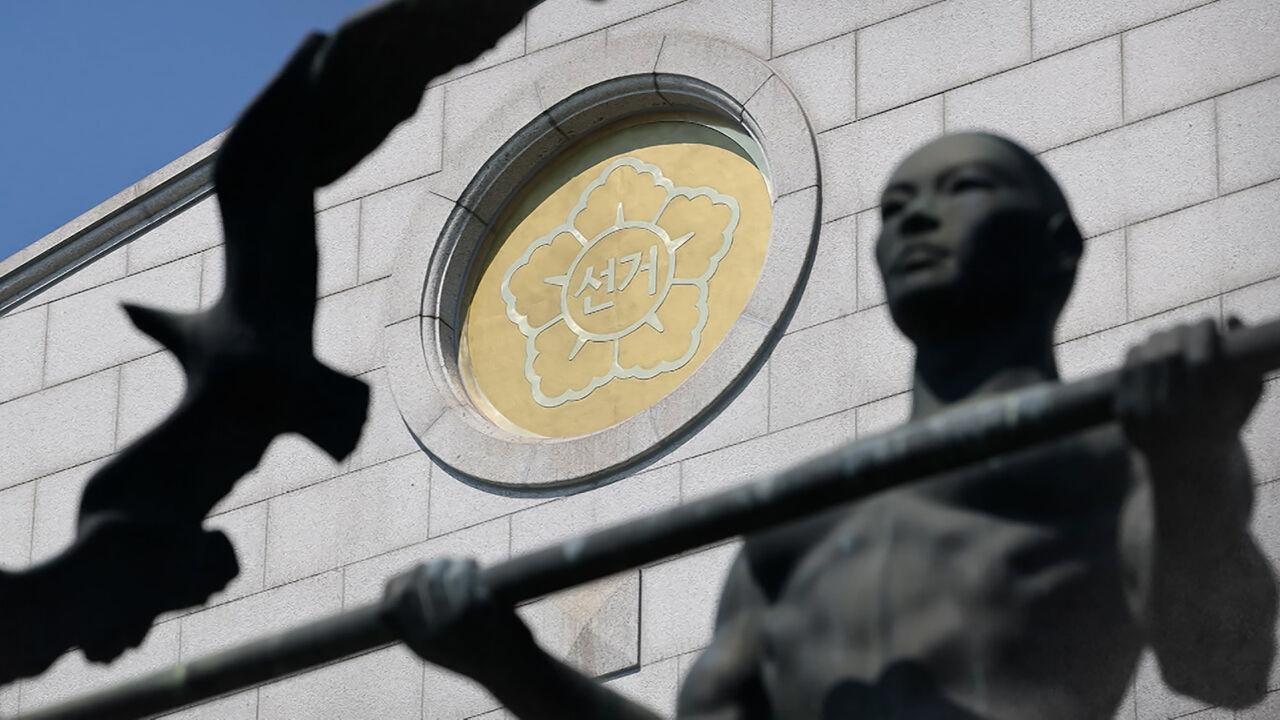
▲ National Election Commission
The National Election Commission's (NEC) poor election management, triggered by the shortage of ballots during the June 3 local elections, has been making headlines daily as public anger boils over regarding the "infringement on the right to vote" and sharp scrutiny is directed at the commission's lax work practices. Analysis is gaining traction that the lack of monitoring, control, and checks due to the NEC's firmly established status as a constitutionally independent body has led to the current situation.
[Yoon Sang-hyun / Chairman of the Special Parliamentary Committee on the Ballot Shortage Incident: "The independence of the National Election Commission guaranteed by the Constitution is meant for them to be accountable to the public, not to receive immunity after violating their right to vote."]
Currently, a parliamentary investigation is underway in the National Assembly, and the ruling and opposition parties are continuing discussions on introducing a special counsel to identify and punish those responsible. Regarding the scrutiny of the NEC, SBS has exclusively reported on various issues, including allegations of a lavish overseas trip taken by former NEC Chairperson Noh Tae-ak and his wife, and structural problems such as the fact that 70% of the additional ballots sent on the day of the main election were unnumbered, which caused difficulties in emergency response on election day due to the issue of writing serial numbers on them. Furthermore, what the SBS reporting team confirmed this time is the NEC's budget management. Around August each year, the NEC formulates its budget for the following year and receives its allocation after parliamentary review. Naturally, a budget funded by taxpayers' money must be spent according to its intended purpose, but the reality of transferring and diverting funds for various reasons has now been revealed.
Budget Transferred Here and There: 255 Cases, Over 30.5 Billion Won
The document SBS obtained through the office of Representative Kim Ki-hyun of the People Power Party is the National Election Commission's "Status of Budget Transfers and Diversions over the Past Three Years". Looking closer at the yearly breakdown, there were 4 cases totaling about 3.67 billion won in 2023, 154 cases totaling about 24.1 billion won in 2024, and 97 cases totaling about 2.63 billion won in 2025. In total, it amounts to approximately 30.5 billion won across 255 cases. Looking at the numbers, the scale and frequency of budget transfers were far greater in 2024. In April of that year, the general election, the largest nationwide election, took place. Budget funds can be transferred for purposes other than their original expenditure if urgently needed. However, as described above, our reporting team raised concerns because the frequency and scale were too large to be considered exceptional circumstances. Upon further investigation, it was revealed that the vast majority of these budget transfers and diversions were due to "labor costs".
Claimed as Necessary Budget... 80% Diverted to Labor Costs
Over the past three years, the NEC transferred budget funds to cover labor costs in 212 cases, accounting for 83% of the total, amounting to 7.3 billion won. Specifically, budgets for "election management and supply management," "commissioned election management," "election broadcast debates," "political party affairs support," "election information and records management," "international exchange projects," and the ODA project "overseas dissemination of the Korean election system"—all of which were supposedly necessary for smooth election preparation—were used for labor costs. These were funds secured by claiming they were essential projects. In December 2024, the NEC went as far as using 2.3 billion won from the general election management budget to cover internal labor costs. The transfer and diversion of budgets for labor costs were highest in 2024, reaching 5.9 billion won. When SBS asked the NEC why they transferred so much of the budget, particularly to cover labor costs, the response was, "It was because of the high number of employees returning from leave at the end of the year".
Is the "Salary Shortage" Due to Year-End Returnees?
The significant number of NEC employees taking leave ahead of elections is an issue that has been pointed out by the National Assembly every year. According to the status of NEC employees on leave in 2024 obtained by SBS, the number of employees on leave rose to 176 around April, when the general election was held. It then decreased to 119 at the end of August and 114 at the end of September, before slightly increasing to 127 at the end of December. This pattern of taking leave right before an election and quietly returning afterward has drawn criticism as "moral hazard" that disrupts election management. As the number of returning employees increased by 40 to 50, the size of year-end labor costs—including annual leave compensation and performance-based bonuses—grew, leading to budget transfers and diversions to fill the gap.
[Kim Ki-hyun / Representative of the People Power Party: "Since the budget is funded by taxpayers' money, it must be used in accordance with the purpose reviewed by the National Assembly. Yet, the uncontrolled NEC managed it at its own whim, as if it were pocket money."]
SBS also listened to the NEC's explanation in detail. The commission admitted that there was a shortage in public servant compensation in 2024 and 2025. However, it explained that 2024 had unique circumstances. Specifically, a manual counting process was introduced during the general election vote counting. As a result, they had to appoint additional vote-counting staff and lease extra machines, which forced them to use up the pre-allocated labor budget first. They stated that as the number of returning employees subsequently increased, they had to divert budgets from other items to cover labor costs. They also added that they took into account the possibility that if they budgeted too much for labor costs, it might not pass the National Assembly's review process.
Numerous Budgets Transferred Without Approval: A Legal Violation?
Suspicion has also been raised that the NEC may have violated relevant laws in the process of transferring budget funds. Under the National Finance Act, approval from the Ministry of Planning and Budget is required to transfer or divert budget funds. The NEC received approval from the Ministry of Planning and Budget for 219 cases totaling 15.3 billion won, which is about half of the total 30.5 billion won. This means the rest was diverted internally without approval. When asked about this, the NEC stated, based on Article 46, Paragraph 2 of the relevant law, that its internal transfers fell under the exceptional scope delegated by the Ministry of Planning and Budget. The NEC was applying the "2026 Budget and Fund Management Plan Execution Guidelines" published by the Ministry of Planning and Budget. According to the regulations, while internal diversion is possible for labor costs, consultation with the Ministry of Planning and Budget is required for regular wages, annual leave compensation, and compensation for other positions. The NEC explained that it did not violate this regulation. However, given that the amount of internal transfers and diversions reached around 15 billion won, the NEC cannot escape criticism that it should have minimized the application of such exceptions, even if it was not a legal violation. As some criticize the move as a "trick" that "carelessly used taxpayers' money," the NEC needs to re-examine its work practices in this area as well.
"Collapsed System" Criticized: Constitutional Amendment Debate Ignited
The first meeting of the National Assembly's Special Committee for the Parliamentary Investigation to address and examine this issue was held on June 23. Both ruling and opposition parties spoke in one voice to strongly criticize the NEC's poor reporting and management system, lax management, and loose internal discipline, which triggered the ballot shortage incident. Many are calling for "structural reform on a level equivalent to dissolution". The special committee decided to form an "expert preliminary investigation team" and prepare comprehensive reform measures. In addition, the NEC responded that "a one-point constitutional amendment should also be considered" if necessary. However, Special Committee Chairman Yoon Sang-hyun of the People Power Party showed a difference in stance regarding the constitutional amendment debate, saying, "Instead, let's establish a neutral, permanent audit committee within the NEC and create a system to report to the National Assembly". The second meeting of the special committee and the briefing from relevant agencies will be held on July 1.
※ Please note: This article was translated by AI and may contain errors.


 Video News
 Video News
 Video News
 Video News
 Video News