
 KOR
KOR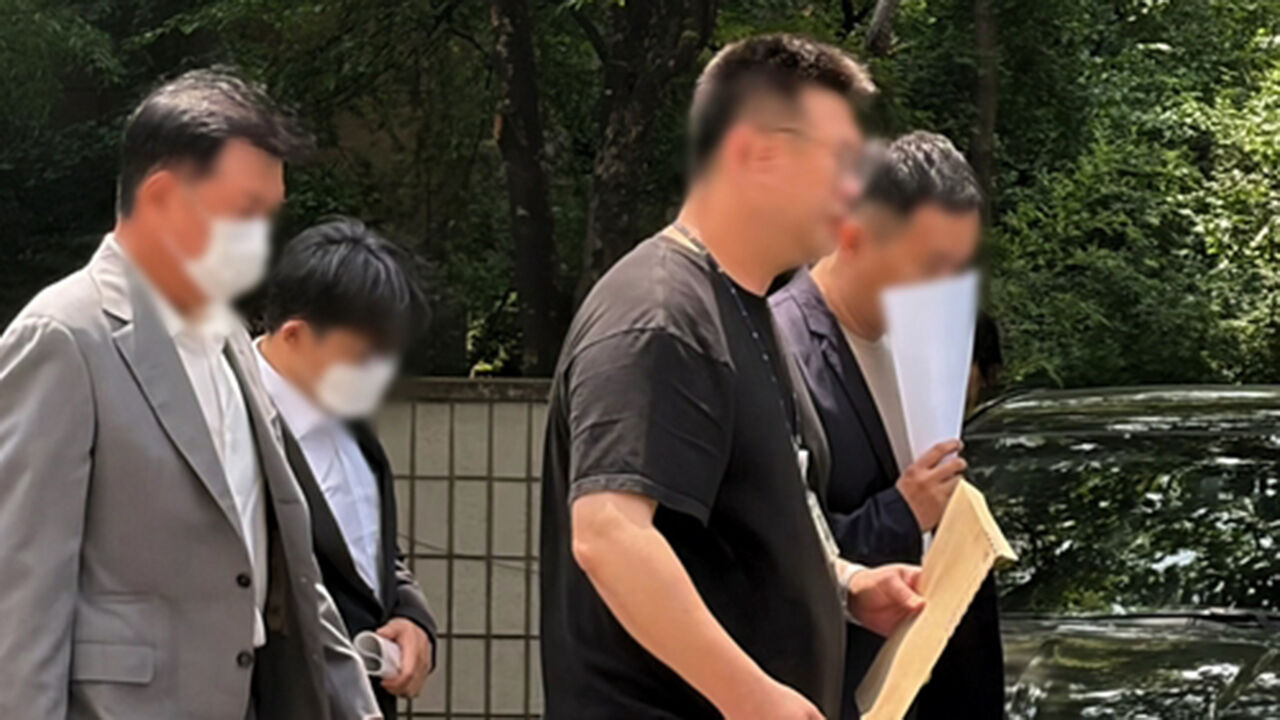
▲ Suspects in the first 'Stock Manipulation Ruin' case attend a warrant review hearing.
Arrest warrants for all members of a group accused of orchestrating stock manipulation using over 100 billion won in funds, known as the first case under the government's crackdown on stock manipulation, have been denied.
On July 1, Judge Hwang Joong-yeon of the Seoul Southern District Court denied the arrest warrants for the four suspects, who are accused of violating the Capital Markets and Financial Investment Business Act, following a pre-arrest interrogation.
The suspects include a large academy operator surnamed Kim, a former director of DI Dong-il (formerly Dong-il Textiles) surnamed Jung, a person surnamed Shin who claimed to represent a coalition of minority shareholders of DI Dong-il, and a general hospital director surnamed Jang.
The court stated, "The arrest warrant does not specifically state which provisions of the relevant law were violated by the total of 65,168 instances of alleged market manipulation," adding, "There is room for dispute regarding the establishment and scope of the market manipulation crimes, and it appears necessary to guarantee the suspects' right to defense."
The court further noted, "It appears appropriate to await the outcome of the quasi-appeal case filed by the suspects with the court, in which they claim that the seizure process was unlawful."
The court also determined that there was no significant risk of the suspects fleeing or destroying evidence.
Previously, the suspects filed a quasi-appeal with the Southern District Court, alleging that there were illegalities in the evidence selection process conducted by a joint response team, which includes the Financial Services Commission.
A quasi-appeal is a legal procedure in which a party requests the court to cancel or change a disposition made by investigative agencies, such as a search and seizure, or a decision made by a judge.
Those who filed the quasi-appeal took issue with the fact that employees of the Financial Supervisory Service, who lack compulsory investigation authority, were involved in the Financial Services Commission's evidence selection process.
The suspects, who appeared at the court around 1:50 p.m. on July 1 with their faces covered by masks, did not respond to questions from reporters, such as whether they had anything to say to victimized shareholders, when they planned the crimes, or if they admitted to manipulating the stock price of Byucksan.
This case came to light in March when the Securities and Futures Commission under the Financial Services Commission filed complaints against 11 individuals—including wealthy individuals operating general hospitals and large academies, asset management company executives, and financial company branch managers—as well as minority shareholder activists and four corporations.
The group is accused of targeting DI Dong-il, which had low daily trading volume, and manipulating its stock price by mobilizing corporate funds they operated and loans from financial companies.
It was found that they pressured the management of DI Dong-il under the pretext of a minority shareholder movement to sign trust agreements to acquire their own shares, and then lured investors by managing the stock price.
At the time, the purchase order volume of the suspects for this stock accounted for one-third of the entire market.
They are also known to have attempted to manipulate the stock price of Byucksan, a company listed on the KOSPI.
This case drew attention as the first case of the joint response team's crackdown on stock manipulation, which was launched after President Lee Jae-myung emphasized the eradication of unfair trading practices.
(Photo: Yonhap News)
※ Please note: This article was translated by AI and may contain errors.


 Video News
 Video News
 Video News
 Video News
 Video News