
 KOR
KOR
People Power Party Protests Investment in 'Second Semiconductor Cluster' in Honam Region
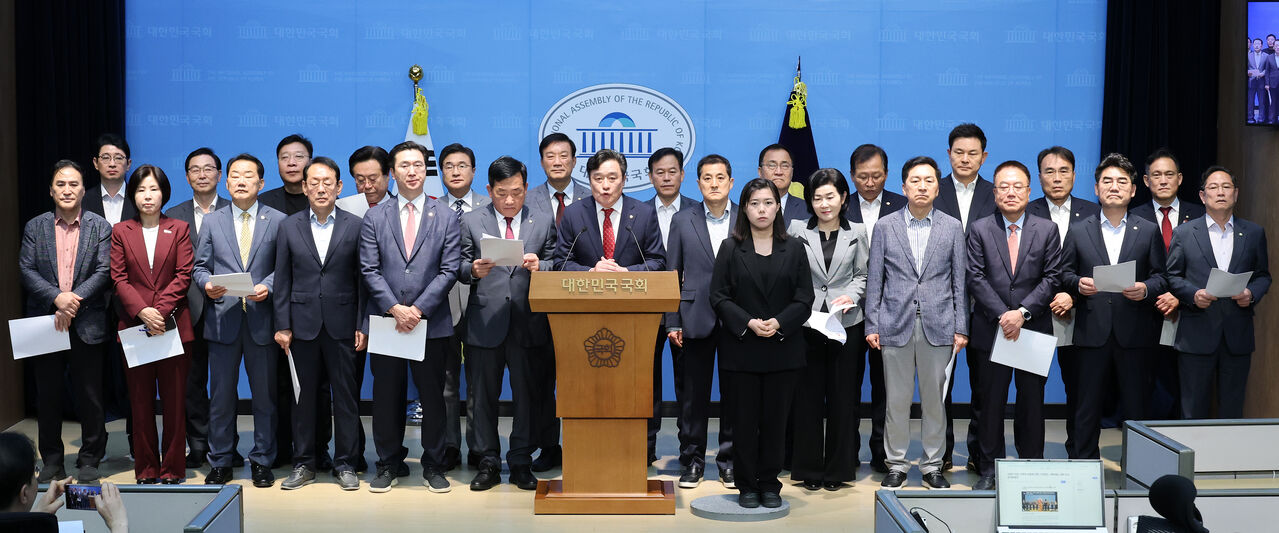
"Where is there a region with more stable power and advanced manufacturing capabilities than Busan, Ulsan, and Gyeongnam, which possess nuclear power systems and a nuclear manufacturing ecosystem? For what reason was the Busan-Ulsan-Gyeongnam region excluded from consideration as a core semiconductor production hub? (Omitted) Reveal to the public why it is Honam, by what criteria it was judged, and how it was compared with other regions, including Busan-Ulsan-Gyeongnam." (Press conference by People Power Party lawmakers from the Busan, Ulsan, and Gyeongnam regions, today at the National Assembly)
The People Power Party lawmakers, who demanded the government disclose the site evaluation sheets and plans for power supply and water procurement, added the following:
"Using the Busan-Ulsan-Gyeongnam region only as a power generation base and excluding it from future industry investments is not balanced development, but merely 'balanced discrimination and regional discrimination.'" (Press conference by People Power Party lawmakers from the Busan, Ulsan, and Gyeongnam regions, today at the National Assembly)
PPP Lawmakers from Busan, Ulsan, and Gyeongnam Claim "Regional Discrimination"
'Regional discrimination' and the resulting 'regional conflict' and 'regional animosity' may seem unfamiliar to today's younger generation, but they have been a chronic disease plaguing Korean society since the 1970s. There is no dispute that regional animosity, often called a nation-ruining disease, originated from the Yeongnam-centered development strategy of the Park Chung-hee administration in the 1970s. Although the foundation for economic development was laid through the Heavy and Chemical Industry Development Plan in 1973, most investments and support were concentrated in the Yeongnam region, with the exception of the petrochemical complex in the Yeosu area. Not only economic power but also political and administrative power remained concentrated in Yeongnam until the election of President Kim Dae-jung in December 1997. It was the golden age of Yeongnam-based administrations. Since then, from the Kim Dae-jung administration to the Lee Jae-myung administration, the Democratic Party has produced four presidents, and it is also a reality that a certain vested interest has formed in Honam. Amid this, when the plan to establish South Korea's second semiconductor cluster in the Honam region was announced, the situation reversed, with Yeongnam now raising concerns of 'regional discrimination.'
Regarding these claims, President Lee Jae-myung said the following during a cabinet meeting this morning.
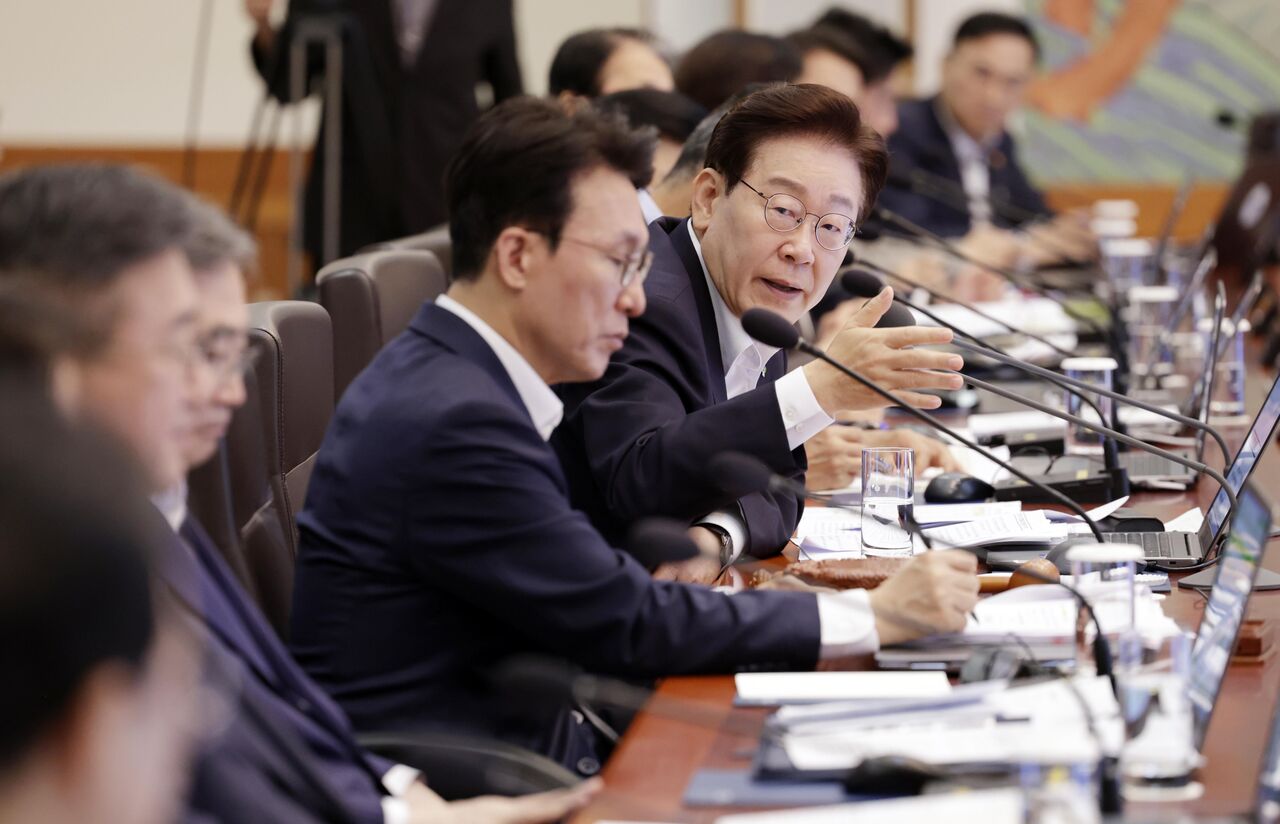
"According to some data I saw, the population of the Yeongnam region is about 13 million, and the population of the Honam region is about 5 million. I heard that after liberation, the population of the Honam region was much larger. In any case, although it is all in the past, it is a painful past that still leaves its mark on our current reality, and it is an undeniable fact that there was discrimination between Yeongnam and Honam. We couldn't force a correction, but fortunately, a new environment has emerged that allows us to alleviate that imbalance even if just a little." (President Lee Jae-myung, remarks at today's cabinet meeting)
President Lee Says, "Talking About Regional Discrimination... Compared to Cumulative Investment, It Is Merely a Drop in the Bucket"
"There seem to be cases where people talk about regional discrimination over this, and looking at this issue alone, it is true that there is slightly more investment in the Honam region. However, I hope everyone understands that if we compare the historically accumulated investment, this is truly nothing but a drop in the bucket. I hope you will understand this as a very fortunate outcome for the overall development of South Korea and for balanced national land development, upon which the future of South Korea depends." (President Lee Jae-myung, remarks at today's cabinet meeting)
Looking only at yesterday's announcement, it is true that more investment is being directed to Honam. However, when comparing the historically highly discriminatory investment volumes between Yeongnam and Honam, the 896 trillion won for the Honam region is a mere drop in the bucket—literally 'bird's foot blood' (meaning a drop in the bucket). Since the history of South Korea's economic development strategy has seen Honam sacrificed to a Yeongnam-centered development strategy, this is a counterargument that the plan is correcting this past imbalance rather than discriminating against Yeongnam. This statement clearly reveals President Lee's historical awareness and perception of the current situation. For PPP politicians in Yeongnam, they will likely feel they cannot just sit idly by, and the controversy over whether this constitutes regional discrimination could grow. Since the president even used the expression 'a drop in the bucket,' the debate could heat up further as figures comparing investment volumes between Yeongnam and Honam since the 1970s are brought forward. Hopefully, while the debate may be fierce, politicians must never make reckless remarks or actions that rekindle regional animosity, the nation-ruining disease. This applies to both the ruling and opposition parties. I hope the debate will proceed calmly on whether the plan announced yesterday is realistic and desirable from the perspective of balanced national development.
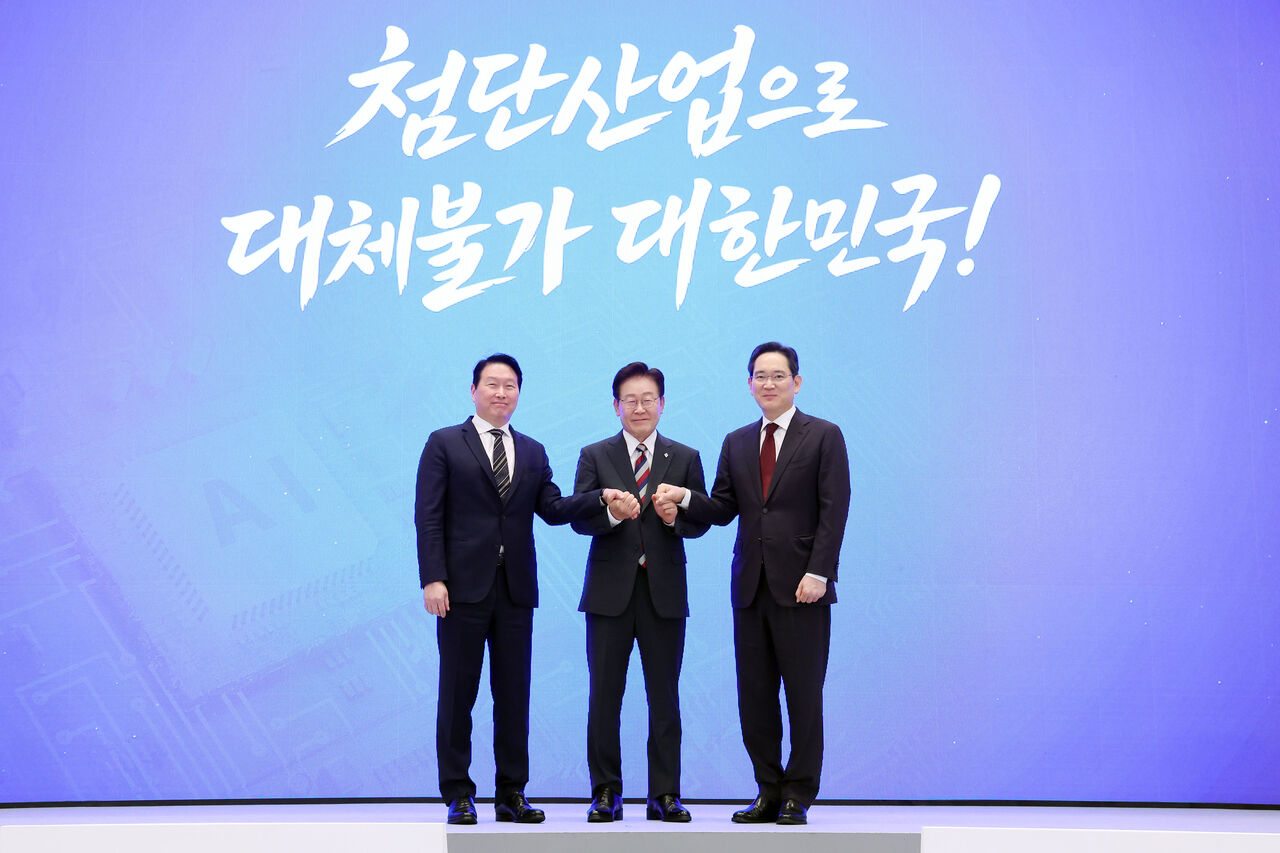
This afternoon, the president held a national report meeting for the Honam region in Gwangju. The event was planned as a follow-up to yesterday's 'National Report on the Three Mega Projects,' and he said the following:
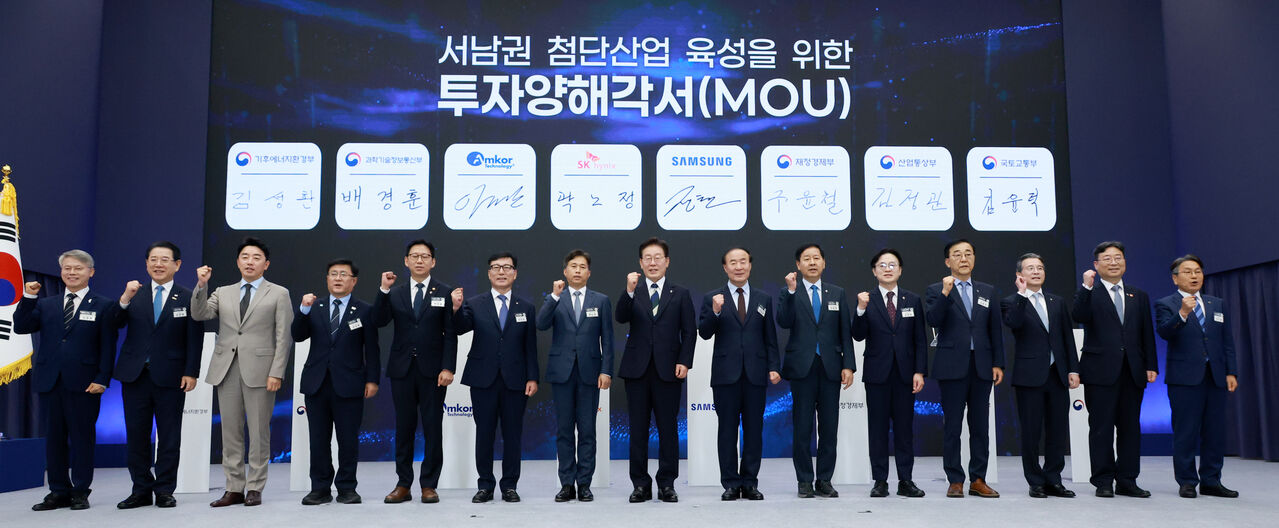
"I think this will be the first step toward making up even slightly for the marginalization, exclusion, sadness, and unfairness, and achieving balanced growth between the East and West, and between the metropolitan area and the provinces. This is my feeling as I make today's policy announcement. (Omitted) I became president as a politician belonging to the Democratic Party, but as president, I am in a position to plan, execute, and direct policies for all of South Korea. I believe I must aim for the whole. Of course, I do not abandon my basic values, ideals, or aspirations. The two must be well harmonized." (President Lee Jae-myung's remarks at the National Report on the Vision for the Development of Advanced Industries in the Southwest Region, today in Gwangju Metropolitan City)
President Lee Says, "President as a Democratic Politician, in a Position for All of South Korea"... Persuading Chungcheong and Yeongnam Is Crucial
A debate is in full swing over whether Honam is a suitable site for a semiconductor cluster in terms of power and water. Since this is a large-scale project being launched from scratch, any region would inevitably face shortages in power and water. The key will be whether the central and local governments, along with the companies involved, can join forces to solve the problems they face and make the project a success. Samsung is currently constructing eight fabs in Pyeongtaek and Yongin, while SK is building four in Yongin. They have announced plans to advance completion by 7 and 12 years, respectively, with active support from the central government. For the companies, this would be an immediate economic benefit they can grasp by responding to the Lee Jae-myung administration's request. What came in return is an additional investment plan worth 1,500 trillion won. However, like all projects, it will not be entirely rosy. The current investment plan is based on the outlook and expectation that the semiconductor business has entered an unprecedented 'big cycle' and that Samsung and SK will reap hundreds of trillions of won in operating profits every year, but who can guarantee that 100%? On the path to overcoming such uncertainties and succeeding in astronomical investments to create stable future growth engines, a calm response from the political circle will be essential to prevent the controversy over regional discrimination from escalating into serious regional conflict in the immediate term.
※ Please note: This article was translated by AI and may contain errors.

 Video News
 Video News
 Video News
 Video News
 Video News