
 KOR
KOR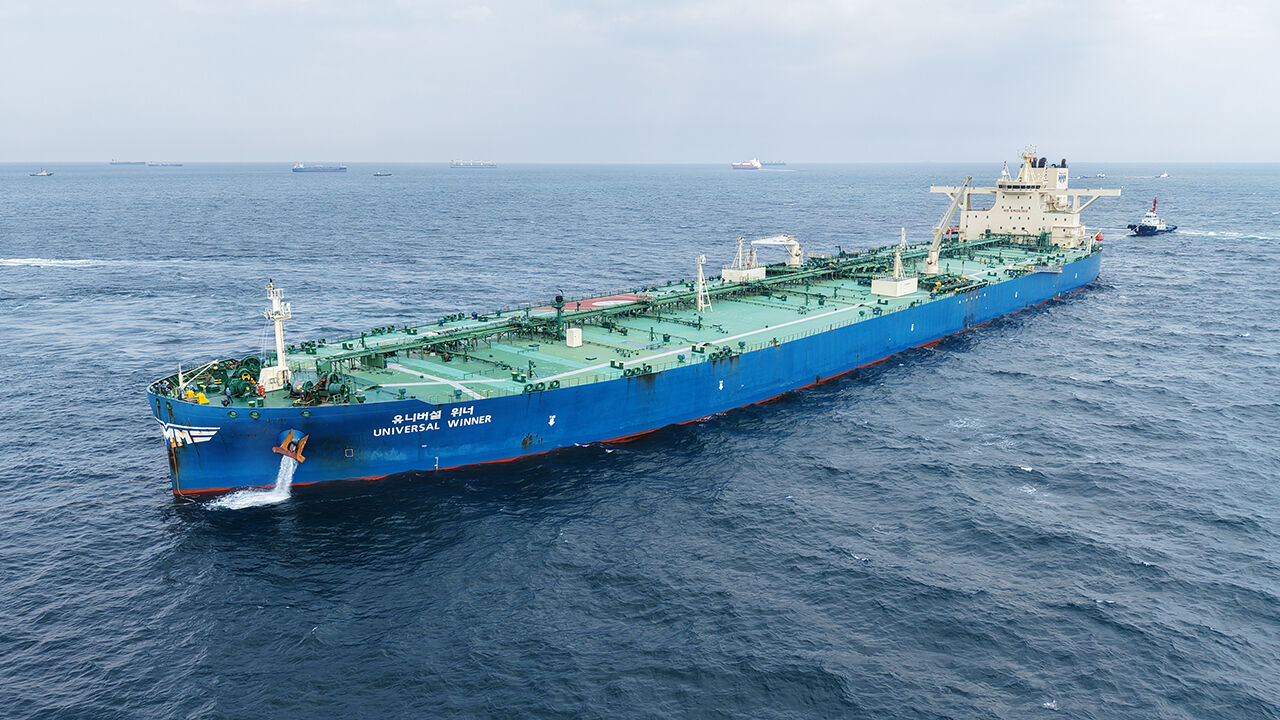
▲ The Universal Winner, a South Korean vessel, arrives in Ulsan after escaping the Strait of Hormuz.
Tensions surrounding South Korean vessels stranded in the Strait of Hormuz due to the Middle East conflict are subsiding, as most ships have exited the strait following the ceasefire agreement between the United States and Iran.
Although concerns escalated when the HMM-operated vessel Namu was hit by a military strike during the conflict, the situation is now reaching a conclusion with no casualties reported.
According to the Ministry of Oceans and Fisheries on June 28, two additional South Korean vessels departed the strait yesterday, leaving only three South Korean ships remaining inside.
Among the remaining vessels, the Namu, which is currently undergoing repairs at the Port of Dubai, is expected to be cleared for departure after the middle of next month.
The other two vessels are scheduled to exit the strait as soon as their cargo operations are completed.
This effectively means that all South Korean vessels, with the exception of those with specific circumstances, have cleared the area.
This comes four months after the ships were trapped when the Middle East conflict broke out in late February.
While a steady stream of vessels from various countries has been exiting the Strait of Hormuz following the U.S.-Iran ceasefire, South Korean ships are considered to have exited relatively quickly.
At the time the conflict began, there were a total of 26 South Korean vessels in the waters inside the strait.
From that point on, they were effectively trapped in the strait alongside approximately 2,000 vessels from around the world.
The South Korean government immediately activated an emergency response system.
The Ministry of Oceans and Fisheries established an emergency task force and operated a comprehensive situation room 24 hours a day, holding daily meetings even on weekends to monitor the status of the vessels.
Maintaining the welfare of the crew members, who had to wait indefinitely in a war zone where missiles and drones were flying, was also a critical task.
The ministry verified daily that each vessel had sufficient food, water, and fuel for its crew.
Remote psychological counseling was also provided to crew members who reported mental fatigue and anxiety.
While some foreign vessels faced survival crises due to food shortages, South Korean ships reportedly maintained relatively stable living conditions.
The crisis reached its peak on May 4, when the Namu was attacked.
The incident, which occurred just as the U.S. launched the Liberation Project to extract stranded vessels, was suspected to be an Iranian attack, and government investigations later confirmed that the Namu had been struck by an Iranian anti-ship missile.
Despite heightened tensions with Iran, the HMM oil tanker Universal Winner successfully exited the strait and arrived safely at the Port of Ulsan on May 20, following negotiations between the government and Iranian authorities.
Although the Namu was damaged in the strike, there were no casualties among the South Korean crew members inside the strait.
According to the International Maritime Organization (IMO), approximately 40 vessels from various countries were hit by missile attacks in the Strait of Hormuz during the conflict, resulting in 14 crew member deaths.
While trapped in the strait, the crews of the South Korean vessels remained at their posts without significant unrest.
Most remained on board to perform their duties, except for those who disembarked due to the expiration of their contracts with shipping companies.
Since the U.S.-Iran ceasefire, three of the South Korean vessels that have exited the strait were bound for South Korea.
Among them, the HMM oil tanker Universal Glory, carrying 2 million barrels of crude oil, is scheduled to arrive at the Port of Yeosu in the middle of next month.
Even after the ceasefire, the situation remains unstable, with Iran attacking a Singapore-flagged cargo ship and the U.S. conducting airstrikes on Iran in response.
A ministry official stated, "We will not lower our guard and will continue to manage the situation until all three remaining South Korean vessels have safely exited the Strait of Hormuz."
(Photo: Yonhap News)
※ Please note: This article was translated by AI and may contain errors.

![Park Hang-seo Apologizes Before Cameras After World Cup Elimination [Sports Mug]](http://img.sbs.co.kr/newimg/news/20260629/202197073_300.jpg) Video News
Video News
![Déjà Vu of a 2014 Nightmare: How to Avoid Repeating the Same Failures [Letter from Guadalajara ③]](http://img.sbs.co.kr/newimg/news/20260629/202197055_300.jpg)
 Video News
 Video News
 Video News