
 KOR
KOR
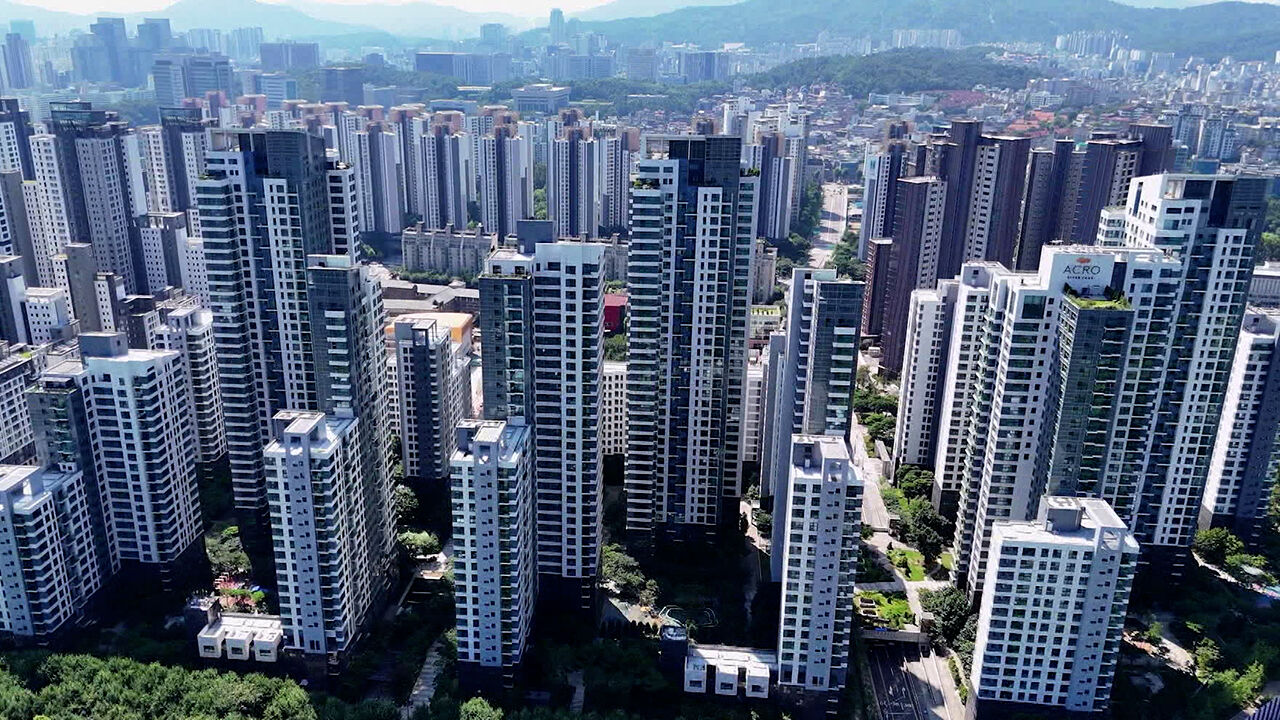
Over the past eight years, more than four out of every ten new privately owned homes in Seoul have been acquired by individuals residing outside the city.
This suggests that a significant portion of the recent increase in privately owned housing in Seoul may not be intended for primary residence.
According to the Korean Statistical Information Service (KOSIS) on June 28, the number of privately owned homes in Seoul reached 2,736,773 in 2024, an increase of 201,166 from 2,535,607 in 2016, when the relevant statistics were first compiled.
The rise in privately owned homes includes not only new housing supply but also the conversion of corporate or publicly owned homes into private ownership, as well as the inclusion of previously omitted housing data.
However, the government agency attributes most of the increase to new supply.
In these statistics, housing includes apartments, detached houses, and row or multi-household houses, while quasi-housing such as officetels is excluded.
Of the approximately 200,000 homes added over the eight-year period, 45.5% (91,617 units) were owned by non-residents registered in cities or provinces other than Seoul.
When including owners who live in Seoul but are registered in a different district (gu) from where their property is located (12,326 units), the ratio rises to 51.7%.
Registered addresses do not always match actual places of residence.
There may be cases where individuals move their registration for unavoidable reasons such as studies, work, or their children's education while actually residing elsewhere.
Nevertheless, even taking this into account, the fact that non-residents account for nearly half of the newly added homes can be interpreted as an indicator of significant demand for purposes other than primary residence.
Compared to the rest of the country, the proportion of non-resident ownership in Seoul is notably high.
Between 2016 and 2024, the number of privately owned homes nationwide increased by 2,536,308, but the share of non-resident ownership among this increase was only 16.2% (410,785 units).
Busan, which had the next highest rate of non-resident ownership after Seoul, stood at 27.8%.
In Gyeonggi Province, which saw the largest increase in privately owned homes (868,309 units) over the past eight years, the share of non-resident ownership was only 6.8%.
Looking at the data by year, the proportion of non-resident owners of privately owned homes in Seoul has risen steadily.
It increased from 14.7% in 2016 to 17.0% in 2024.
When including owners registered in a different district within Seoul, the ratio exceeded 30% for the first time in 2024.
This phenomenon of separation between ownership and residence is linked to the government's ongoing push to reform real estate tax laws to prioritize primary residence.
The government is currently preparing tax law amendments with the goal of restructuring real estate taxes to focus on actual residency.
The core of the plan is to reduce various tax benefits previously granted based on the duration of ownership while expanding benefits based on the duration of residence.
For owners of a single home with a transaction price exceeding 1.2 billion won, there is discussion about reducing the portion of the Long-Term Holding Special Deduction for capital gains tax, which currently provides up to 80% in tax benefits based on holding and residency periods, by scaling back the deduction based solely on the holding period.
Additionally, reforms are being discussed for the Comprehensive Real Estate Tax (Jongbu-se) long-term holding deduction, which currently offers tax reductions ranging from 20% for five years of ownership to 50% for 15 years or more for single-home owners with a government-assessed value exceeding 1.2 billion won.
The special capital gains tax exemption for "win-win" rental housing, which is set to expire at the end of this year, is also being considered for reform.
This system exempts landlords who limit rent increases to within 5% of the previous contract from the two-year residency requirement needed for capital gains tax exemptions and long-term holding deductions. However, critics have pointed out that it has been used more as a tool for multi-home owners and gap investors to reduce capital gains taxes rather than for its original purpose of stabilizing rent prices.
※ Please note: This article was translated by AI and may contain errors.
Privately Owned Homes in Seoul Increase by 200,000 Over 8 Years, 45% Owned by Non-Residents
Copyright Ⓒ SBS & SBSi. All rights reserved.
Copying, redistribution, and unauthorized use in AI training are strictly prohibited.
Copying, redistribution, and unauthorized use in AI training are strictly prohibited.

Trending Now
-
![Park Hang-seo Apologizes Before Cameras Following World Cup Elimination [Sports Mug]](https://img.sbs.co.kr/news/pc/thumb_v3.png) Video News
Video News
Park Hang-seo Apologizes Before Cameras Following World Cup Elimination
-
Déjà Vu of a 2014 Nightmare: How to Avoid Repeating the Same Failures
-
Nvidia CEO's Daughter Sends Thank-You Note to Seoul Police After Crowd Control Efforts
-
Video News
"Hit the Jackpot": The Secret Behind a Public High School Producing 44 Seoul National University Admissions
-
"People Are Dying in a Heatwave": Luxury Fashion Show Sparks Public Outrage
![Park Hang-seo Apologizes Before Cameras Following World Cup Elimination [Sports Mug]](http://img.sbs.co.kr/newimg/news/20260629/202197073_300.jpg) Video News
Video News
![Déjà Vu of a 2014 Nightmare: How to Avoid Repeating the Same Failures [Letter from Guadalajara ③]](http://img.sbs.co.kr/newimg/news/20260629/202197055_300.jpg)

 Video News
