
 KOR
KOR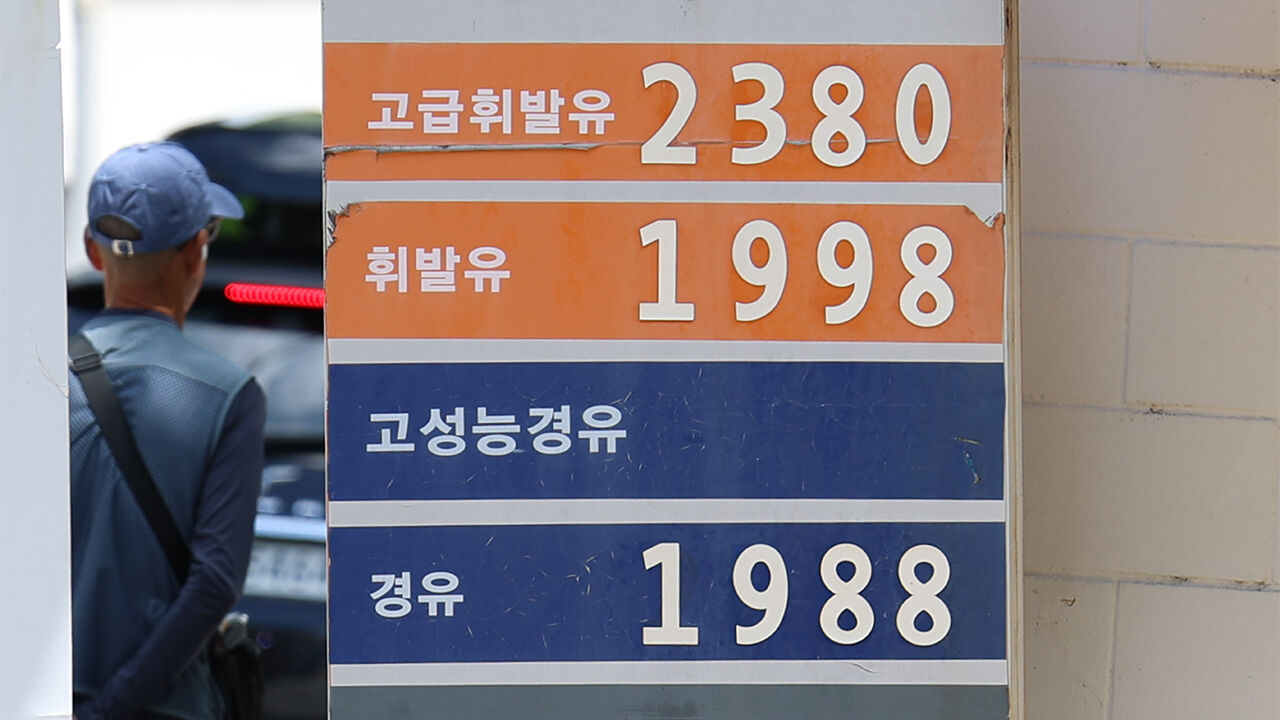
▲ International oil prices return to pre-war levels... Oil price caps set to be lowered
The government will lower the seventh round of oil price caps by 150 won per liter, effective from 12:00 a.m. on June 27.
This marks the first downward adjustment in 106 days since the oil price cap system was introduced on March 13.
As a result, gas station prices are expected to fall from the 2,000 won range to the 1,800 won range.
The Ministry of Trade, Industry and Energy announced today, "We have decided to lower the seventh round of oil price caps by 150 won per liter, effective from 12:00 a.m. on June 27."
With this change, the seventh oil price caps have been set at 1,784 won for gasoline, 1,773 won for diesel, and 1,380 won for kerosene.
The oil price cap system sets a ceiling on the supply price at which oil refineries sell to gas stations.
Gas stations then determine the final consumer price by adding taxes, distribution costs, and profit margins to this supply price.
Since the system was implemented on March 13, the price caps were raised by 210 won per liter for each fuel type during the second adjustment on March 27, and subsequently remained frozen for four consecutive rounds up to the sixth.
With high ex-factory prices of 1,934 won for gasoline and 1,923 won for diesel maintained for nearly three months, the actual prices faced by consumers at gas stations rarely dropped below the 2,000 won range.
However, with the 150 won reduction in the oil price caps, retail prices at gas stations are expected to drop into the 1,800 won range.
The government decided to use its first price-cut card since the system's introduction because international oil prices have stabilized to levels seen before the Middle East conflict.
Following the recent signing of a memorandum of understanding (MOU) to end the war between the United States and Iran, concerns over supply from the Middle East have been significantly eased, as evidenced by an increase in oil tanker traffic through the Strait of Hormuz.
As a result, international oil prices have fallen to the low-to-mid 70-dollar range per barrel.
International prices for petroleum products have also plummeted compared to the beginning of this month, providing sufficient incentive to lower the price caps.
However, there is expected to be a slight time lag before this reduction is reflected in gas station retail prices.
Because gas stations typically receive fuel supplies at intervals of two to three weeks, the structure requires that the existing, more expensive inventory be sold off before prices can be lowered.
In other words, it could take up to three weeks for the retail price drop to take effect.
There are also concerns that the chronic behavior of gas stations—which are quick to raise prices when international oil prices rise but slow to lower them when they fall—might be repeated.
To prevent such intentional delays and ensure that the public can quickly feel the effects of the lower price caps, the government has decided to launch intensive crackdowns on gas stations.
An official from the Ministry of Trade, Industry and Energy stated, "The government, consumer groups, and public institutions will jointly monitor the prices and supply volumes of the 10,000 gas stations nationwide. We plan to conduct high-intensity on-site inspections through an inter-agency market inspection team to identify and strictly deal with any illegal activities."
(Photo: Yonhap News)
※ Please note: This article was translated by AI and may contain errors.



 Video News
 Video News
 Video News