
 KOR
KOR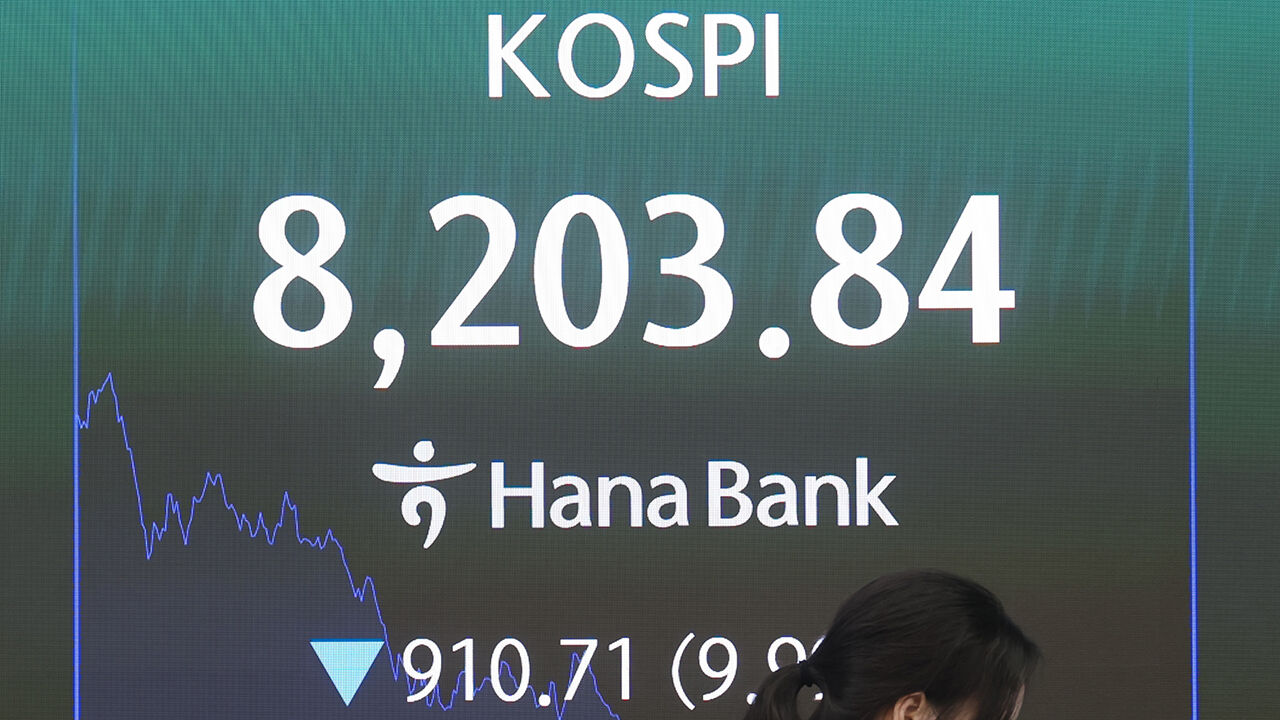
▲ Hana Bank Dealing Room in Jung-gu, Seoul
Financial authorities have begun working on safety measures for investors regarding single-stock leveraged exchange-traded funds (ETFs), following strong concerns expressed by Financial Supervisory Service (FSS) Governor Lee Chan-jin.
Amid a sharp decline in the KOSPI, single-stock leveraged ETFs tracking Samsung Electronics and SK Hynix have also fallen by an average of approximately 25%, turning fears of a shock to investors into a partial reality.
According to financial authorities on Tuesday (June 23), the Financial Services Commission (FSC) and the FSS have started exploring safety measures to address excessive concentration and volatility in single-stock leveraged ETFs.
Various options are being discussed within and outside the financial sector.
One primary proposal is to raise the minimum deposit requirement from its current level.
Currently, retail investors must deposit 10 million won to invest in single-stock leveraged or inverse products. Increasing this amount would raise the barrier to entry.
Strengthening investor education is also being considered as another way to raise the barrier to entry.
At present, investors are required to complete one hour of general training and one hour of advanced training through the Korea Financial Investment Association's learning system before investing in these products.
Some suggest that authorities might urge the securities industry to increase fees for these products to reduce their investment appeal.
Additionally, there is talk of temporarily restricting the listing of further single-stock leveraged and inverse products.
However, some observe that since major asset management firms have already launched such products, any additional listings by latecomers would likely not have garnered significant attention anyway.
During a press conference on Monday (June 22), Governor Lee Chan-jin remarked on single-stock leveraged products, saying, "I personally reflect and regret that I should have somehow blocked [their introduction] back then." He added, "Since most investors are middle-class or working-class individuals, market volatility could deal a major blow to household finances, so we are considering separate safety measures."
(Photo: Yonhap News)
※ Please note: This article was translated by AI and may contain errors.

 Video News

 Video News
 Video News
