
 KOR
KOR
▲ Yoon Suk Yeol
The first-instance court of former Justice Minister Park Sung-jae has ruled that former President Yoon Suk Yeol attempted to amend the Constitution by establishing an emergency legislative body to replace the National Assembly, based on the so-called "Noh Sang-won notebook."
This marks the first time that a court has recognized the probative value of Noh's notebook, and it is also the first time a detailed interpretation of the phrases written in the notebook has been presented.
The 33rd Criminal Division of the Seoul Central District Court (presiding judge Lee Jin-kwan) stated in its first-instance ruling on former Minister Park, who was charged with playing a key role in an insurrection, that "Yoon Suk Yeol and others appear to have attempted to amend the Constitution by establishing an emergency legislative body to replace the National Assembly, similar to the past Legislative Council for National Security."
The court explained this while pointing out the interpretation of each phrase written in Noh's notebook and the parts that were actually executed.
The court added a separate footnote regarding the phrases "Constitutional amendment (re-election to a third term), enactment of the National Safety Management Act" and "Improvement of the election system - number of National Assembly members: 1/2," noting that former President Yoon's plans to amend the Constitution could be glimpsed.
The court also judged that former President Yoon giving former Deputy Prime Minister for Economic Affairs Choi Sang-mok a document containing instructions to "budget for the national emergency legislative body" aligned with these plans.
Under the Public Official Election Act, the number of National Assembly members is fixed at 300, and amending the Constitution is required to reduce this number.
Amending the Constitution requires the approval of more than two-thirds of the sitting lawmakers and a national referendum.
Pointing out these procedural limitations, the court concluded that former President Yoon attempted to establish a legislative body similar to the past Legislative Council for National Security through emergency martial law.
The Legislative Council for National Security was a body established by the Chun Doo-hwan regime after dissolving the National Assembly to seize legislative power. It was composed of members directly appointed by Chun without a public vote.
The court noted that, considering various factors such as former Capital Defense Commander Lee Jin-woo searching "Is it possible to dissolve the National Assembly?" on his mobile phone on the morning of the emergency martial law declaration, former President Yoon and others appear to have attempted to amend the Constitution by establishing such a legislative body.
This is also the main argument presented by the special counsel team led by Cho Eun-suk, which is investigating the insurrection, when they appealed the first-instance ruling on former President Yoon's charge of leading the insurrection.
The special counsel team believes that, considering the military commander appointments and the National Assembly election schedule recorded in the notebook, former Defense Intelligence Commander Noh Sang-won planned the initial martial law concept by December 2023 at the latest and attempted to seize legislative power by establishing an emergency legislative body.
Regarding the parts of the notebook where names were scribbled over to prevent outsiders from recognizing them, former Minister Park's first-instance court also viewed that "it shows that from the time of writing, significant care was taken to maintain security so that sensitive parts would not be disclosed to the outside."
The court determined that phrases in the notebook such as "discarding after use (Tosa Gupaeng)," "the issue of taking the initiative in future political operations," and "can we block it if an investigation proceeds?" were "traces of contemplating countermeasures out of concern that a power struggle with other power groups might arise after the success of the insurrection, or that an investigation against them might proceed as a result."
In addition, the court explained that the phrase "Chief of Staff Park: prior training" aligns with former President Yoon appointing former Army Chief of Staff Park An-su as the martial law commander after declaring emergency martial law.
It also viewed that the phrases "Yeouido - entry - taking over entrances, etc." and "deployment of forces/control - control of all civilian access" led to the act of deploying police to the National Assembly after the declaration of emergency martial law.
Former Minister Park, who was put on trial on charges including playing a key role in an insurrection, was sentenced to 25 years in prison and taken into custody yesterday (June 22).
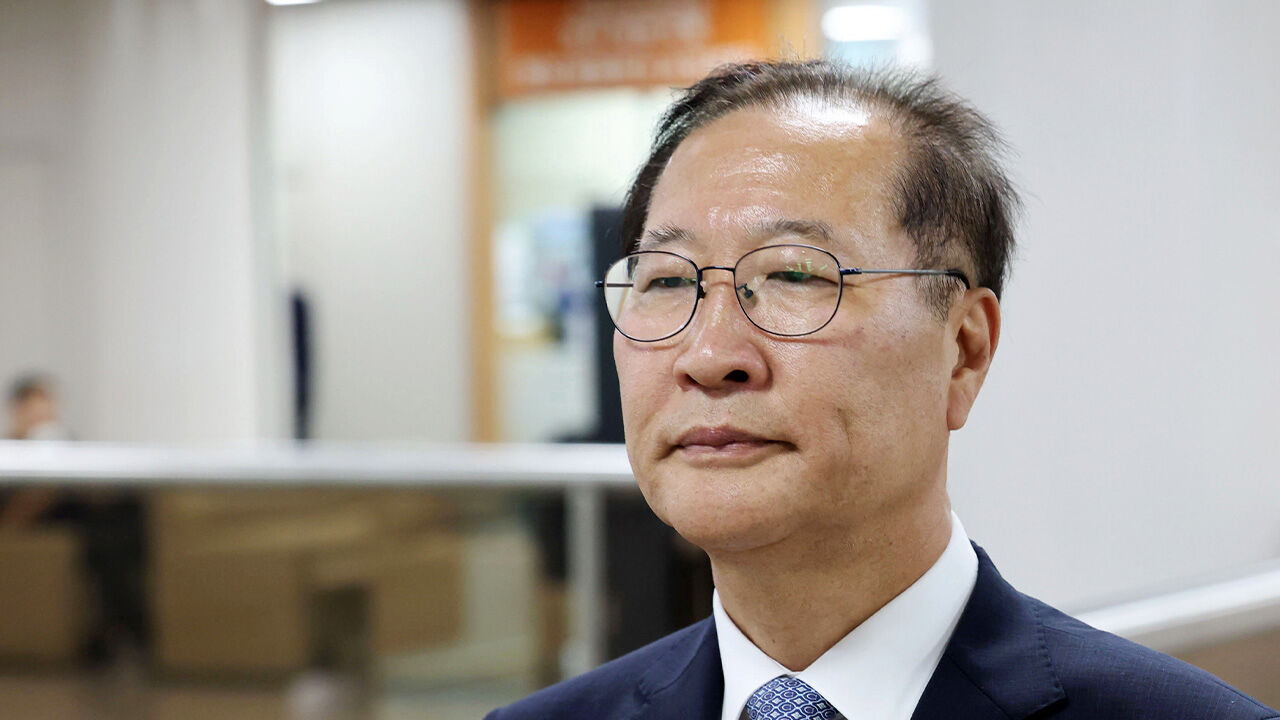
(Photo: Yonhap News)
※ Please note: This article was translated by AI and may contain errors.

 Video News
 Video News
 Video News
 Video News
 Video News