
 KOR
KOR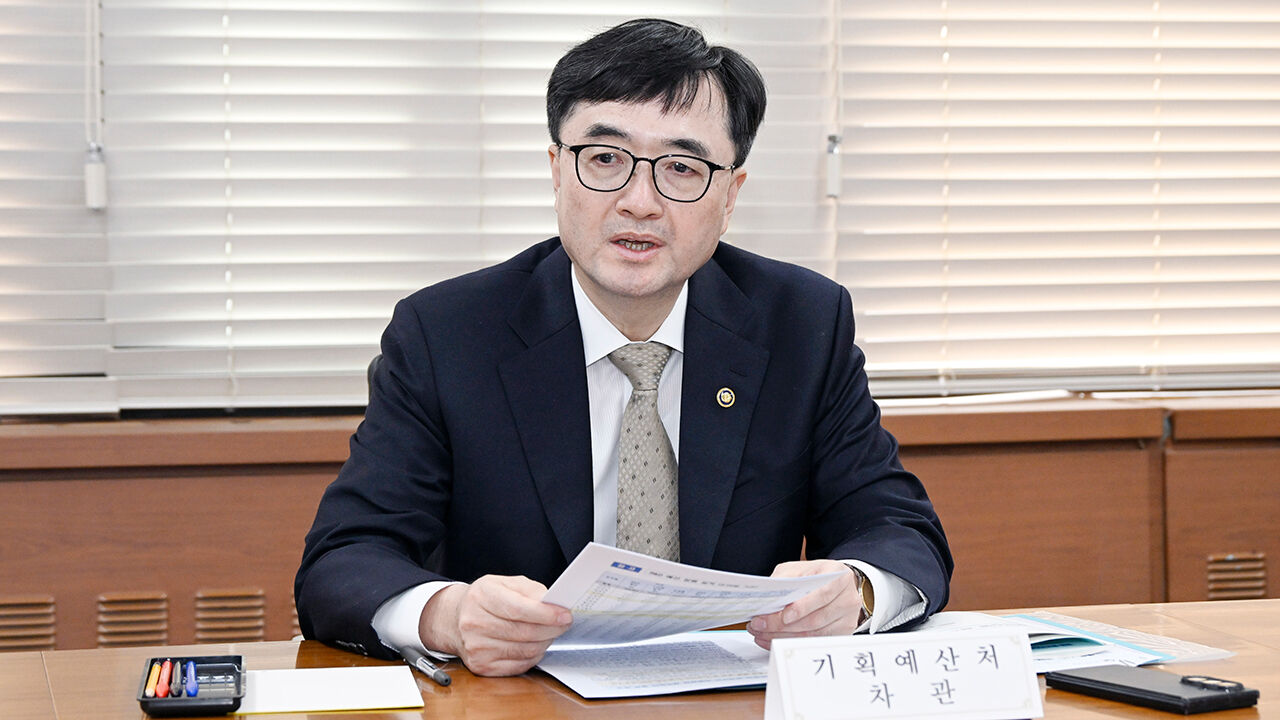
▲ Vice Minister of Planning and Budget Lim Ki-keun
The government has launched comprehensive on-site inspections of approximately 13,000 subsidy projects to eradicate the illegal receipt of state subsidies.
This is the largest scale in history.
The Ministry of Planning and Budget held the 6th Subsidy Management Committee meeting today (June 17), presided over by Vice Minister Lim Ki-keun, to discuss the current status and future plans for measures to root out the illegal receipt of state subsidies.
Since April, the Ministry, in collaboration with the Korea Institute of Public Finance and relevant ministries, has been conducting on-site inspections of 13,240 subsidy projects (private and local government subsidies), the largest number ever.
Once the on-site inspections are completed by the end of October, the Ministry plans to take follow-up measures, including determining whether illegal receipt occurred and imposing sanctions, through deliberations and resolutions by the Subcommittee on Illegal Receipt Review under the Ministry.
As part of the "Measures to Eradicate Illegal Receipt of State Subsidies" announced on March 10, the government has been operating a reporting center for illegal receipts since April 1.
The government also plans to push for an amendment to the Subsidy Management Act in the second half of the year to strengthen follow-up measures for illegal receipts.
Currently, penalty surcharges for illegal receipt are capped at five times the amount to be returned, but the government plans to raise this limit to eight times.
By the end of September, the government will also amend the enforcement decree of the Subsidy Management Act to expand the criteria for reward payments for reporting.
Currently, the reward is set at 30% of the amount ordered for return. In the future, the government plans to base the reward on 30% of the total amount recovered into the national treasury, including the return amount, penalty surcharges, and additional dues.
The Ministry is also clearing out state subsidies that have remained unsettled or unreturned for a long period after the completion of subsidy projects.
This year's target involves 126,000 projects with a total of 2.7 trillion won in unsettled or uncollected subsidies.
As of May, 827 billion won, or 30.9% of the total, has been cleared.
Of this amount, 520.5 billion won was collected in cash for the national treasury between February and May.
The Ministry explained that this is more than double the 205 billion won collected during the same period (April–May) last year, and represents funds collected in addition to the non-tax revenue already reflected in this year's budget.
The Ministry began preparatory work on June 1 to overhaul "e-Nara Help," the state subsidy management system that has been in use for nine years.
The goals include resolving system obsolescence, responding to changes in the administrative environment driven by artificial intelligence (AI), cloud computing, and data, and unifying state subsidy management.
After redesigning the state subsidy management process and establishing a plan for the next-generation system by the end of September, the Ministry plans to proceed with follow-up schedules, such as securing next year's budget, with the goal of launching the system in 2030.
Vice Minister Lim Ki-keun stated, "The illegal receipt of state subsidies is a serious criminal act that undermines the effectiveness of national policies and wastes precious taxpayer money." He added, "We will ensure that the entire process—from detection and recovery to sanctions—is thoroughly managed by linking on-site inspections with relevant systems."
He further emphasized, "We will prevent the leakage of national finances by proceeding with the construction of the next-generation e-Nara Help without setbacks, in order to prevent the issue of unsettled or uncollected state subsidies and eliminate blind spots in monitoring the illegal receipt of state subsidies."
(Photo: Provided by the Ministry of Planning and Budget, Yonhap News)
※ Please note: This article was translated by AI and may contain errors.

![[단독] 해외 출장마다 배우자 동행…철저히 숨긴 선관위](http://img.sbs.co.kr/newimg/news/20260617/202193703_300.jpg) Video News
Video News
![[단독] 친부 때문에 사망한 아이…블랙박스에 충격 장면](http://img.sbs.co.kr/newimg/news/20260617/202193736_300.jpg) Video News
Video News
 Video News
 Video News
 Video News