
 KOR
KOR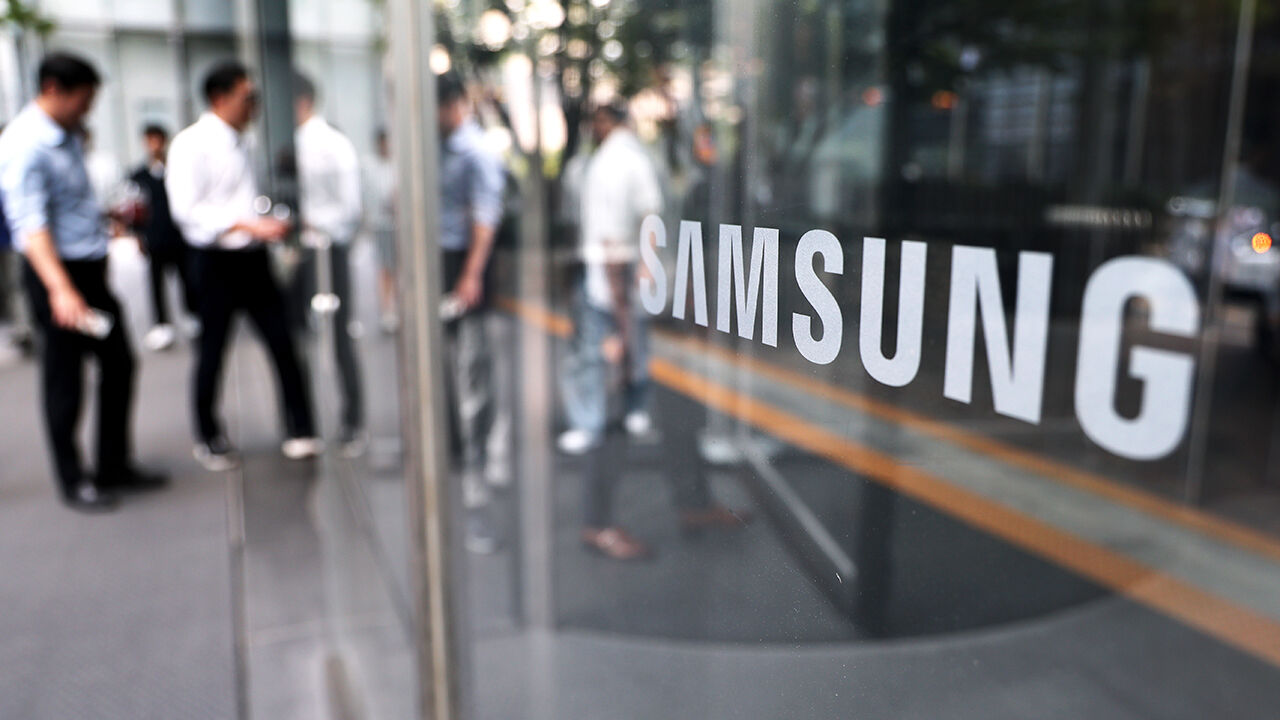
▲ Employees enter and leave the Samsung Electronics building in Seocho-gu, Seoul, on June 16.
Samsung Electronics has reviewed its business strategies for the second half of the year for its Device eXperience (DX) division, which is facing a complex crisis, and decided to accelerate its major transition to artificial intelligence (AI) and business restructuring.
In the industry, expectations are rising that although the DX division is currently facing difficulties, unlike the semiconductor (DS) division, it can turn the crisis into an opportunity if it secures differentiated competitiveness through preemptive preparations for the future, such as strengthening AI manufacturing competitiveness.
According to industry sources today (June 17), Samsung Electronics reviewed the DX division's business strategy for the second half of the year through the DX Division Global Strategy Meeting held for two days from yesterday (June 16) to today.
Amid rising cost burdens due to surging semiconductor prices, attendees reportedly reached a consensus to overcome the crisis through two main approaches: a major AI transition and business restructuring.
Samsung Electronics' Global Strategy Meeting is a regular meeting held every June and December, where key executives and heads of overseas subsidiaries gather to share business status and regional issues, and discuss mid- to long-term strategies.
This year, the meetings began yesterday with the Mobile eXperience (MX) Business, followed today by the Visual Display (VD) Business and the Digital Appliances (DA) Business, with the DS division meeting scheduled for tomorrow (June 18).
This year, attendees resolved to overcome the difficulties facing the DX division and decided to promote AI transition (AX) as a way to surmount the crisis.
They also reportedly agreed that Samsung Electronics must completely redesign its existing work methods to lead the AI era.
In fact, Samsung Electronics' DX division has introduced three external generative AI tools—ChatGPT, Gemini, and Claude—for its employees' work since June 12.
Following special AI training conducted from March to April for about 600 executives at the vice president and managing director levels in the DX division, training was also provided to executives working overseas on June 15.
Samsung Electronics is also pushing forward with a plan to convert its domestic and overseas production plants into 'AI autonomous factories' by 2030.
An AI autonomous factory is a plant that applies AI to the entire manufacturing process, from material receiving to production and shipment. To support this, Samsung Electronics recently launched its self-built High-Performance Computing (HPC) service and embarked on product development innovation based on digital twins.
Samsung Electronics is also accelerating its 'selection and focus' strategy, winding down low-profitability businesses to concentrate on core capabilities.
In May, the company decided to halt sales of TVs and home appliances in mainland China, and the DA Business is also reorganizing its lineup by stopping the production of low-value-added products or outsourcing them, while focusing its capabilities on premium products.
Efforts to expand its revenue structure, which has been hardware-centric, into software and services are also in full swing.
The replacement of the head of the VD Business with President Lee Won-jin in May was interpreted as a signal to shift the focus of the TV business from hardware to software and services.
Recently, the company has also been accelerating its efforts to find new growth engines, such as expanding its investment in the U.S. genetic analysis equipment company Element Biosciences to secure its position as the largest shareholder.
In the industry, expectations are rising that if the DX division strengthens its manufacturing competitiveness through the major AI transition and the shift to AI autonomous factories, it will become one of the two powerful growth pillars of Samsung Electronics alongside the DS division.
An industry insider said, "If work innovation incorporating AI boosts decision-making speed and organizational execution, and AI autonomous factories uniformly raise the quality and productivity of global production bases, the profitability of the DX division will also improve dramatically."
(Photo: Yonhap News)
※ Please note: This article was translated by AI and may contain errors.

![[단독] 해외 출장마다 배우자 동행…철저히 숨긴 선관위](http://img.sbs.co.kr/newimg/news/20260617/202193703_300.jpg) Video News
Video News
![[단독] 친부 때문에 사망한 아이…블랙박스에 충격 장면](http://img.sbs.co.kr/newimg/news/20260617/202193736_300.jpg) Video News
Video News
 Video News
 Video News
 Video News