
 KOR
KOR
▲ Strait of Hormuz
An analysis has emerged suggesting that the current end-of-war agreement between the United States and Iran cannot prevent Iran from re-blocking the Strait of Hormuz in the future.
Citing sources, U.S. broadcaster CNN reported on June 16 (local time) that U.S. intelligence agencies recently made this assessment.
According to the report, U.S. intelligence analyzed that "Iran can now effectively block access to the Strait of Hormuz whenever it wants, from now on."
CNN interpreted this as Iran's theocratic regime acquiring a powerful new weapon to harm the global economy as a result of its war with the United States.
A source familiar with the intelligence assessment said, "We (the United States) have effectively handed over control of the Strait of Hormuz to Iran."
The source emphasized Iran's post-war shift in strategic thinking regarding the Strait of Hormuz, pointing out, "Control of Hormuz is a new weapon more powerful than any nuclear weapon."
The U.S. intelligence community reportedly pointed to Iran's substantial stockpile of weapons as the reason why it believes Iran can continue to weaponize the Strait of Hormuz and other areas.
It was analyzed that even after the war, Iran retains missiles, launchers, suicide drones, and small fast-attack craft, allowing it to lay mines or attack passing vessels.
Furthermore, Iran is reportedly rebuilding its war-damaged weapon manufacturing infrastructure faster than the U.S. expected and has already begun producing new suicide drones.
However, U.S. intelligence assessed that if Iran attempts to block the Strait of Hormuz in the future, it would face self-inflicted consequences.
This means that, as seen during the war, its ally China and neighboring Gulf nations could push back and take actions unfavorable to Iran.
The possibility was also raised that Iran could use attacks on Gulf nations alongside blocking the Strait of Hormuz as its two main deterrents.
CNN reported that according to the intelligence assessment, Iran similarly realized through this war that it could use strikes on Gulf nations as leverage.
During its war with the United States and Israel, Iran bombed energy facilities in neighboring countries, including Saudi Arabia, the United Arab Emirates (UAE), Qatar, and Kuwait.
Due to these attacks, which were carried out in tandem with the blockade of the Strait of Hormuz, the global economy suffered unprecedented pain as energy supplies plummeted and prices skyrocketed.
Analysis also suggested that Iran could additionally use the Red Sea—another major energy transit route like the Strait of Hormuz—as a means of deterrence.
Citing multiple sources, CNN reported that Iran is planning an "economic nuclear option" to block the Bab-el-Mandeb Strait by mobilizing Yemen's pro-Iranian Houthi rebels in case talks with the United States break down.
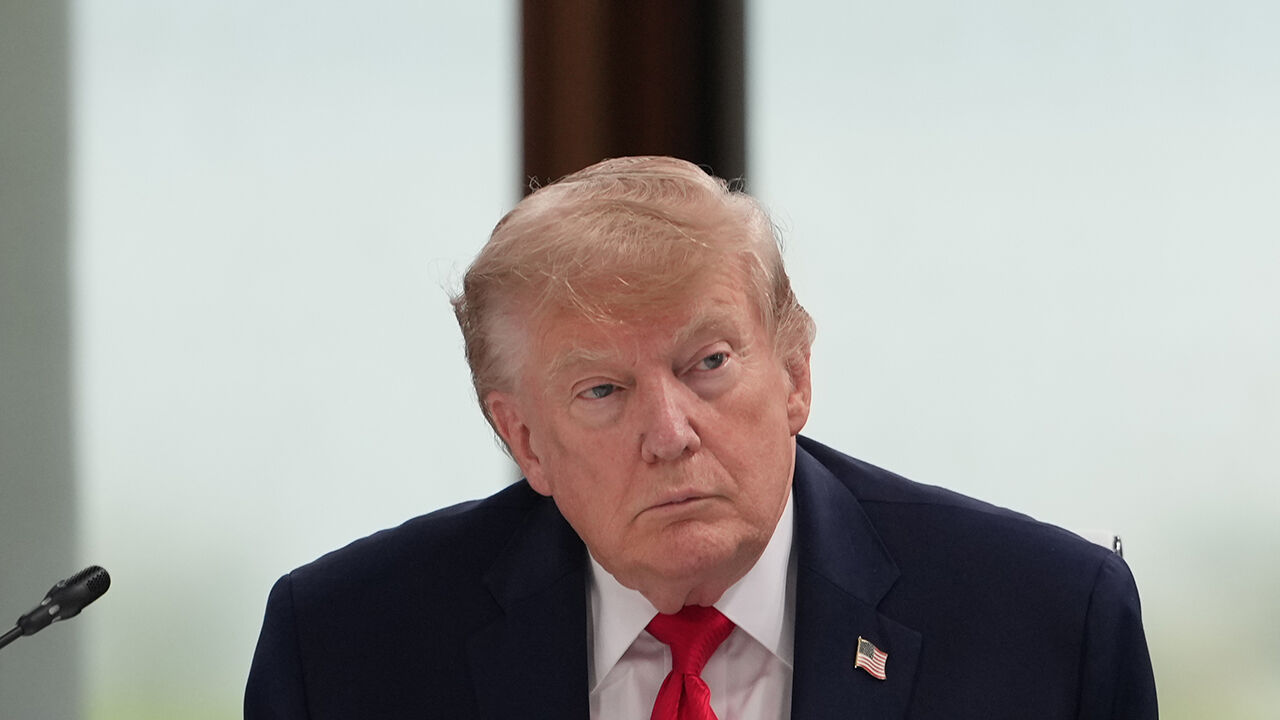
Overall, this intelligence assessment is likely to lead to controversy surrounding U.S. President Donald Trump's decision to go to war and how it was concluded.
CNN pointed out that the intelligence assessment highlights the shock of President Trump starting the war without fully calculating Iran's resolve to block the Strait of Hormuz.
It added that new doubts are being raised about Iran's ability to continue holding the global economy hostage, describing it as a fundamental issue that goes beyond the memorandum of understanding (MOU) between the U.S. and Iran, which includes plans to open the Strait of Hormuz.
The United States and Iran agreed on an MOU to first open the Strait of Hormuz and then negotiate difficult issues, such as Iran's denuclearization and the lifting of sanctions against Iran.
This end-of-war roadmap is set to take effect through an official signing in Geneva, Switzerland, on June 19, but the specific details of the final clauses have not yet been confirmed.
President Trump continues to emphasize, without providing specific details, that the Strait of Hormuz will open without toll collection under the agreement.
At present, it remains uncertain through what mechanism the United States can prevent the future weaponization of the global economy, such as another blockade of the Strait of Hormuz.
(Photo: AP, Yonhap News)
※ Please note: This article was translated by AI and may contain errors.


 Video News
 Video News
 Video News
 Video News