
 KOR
KOR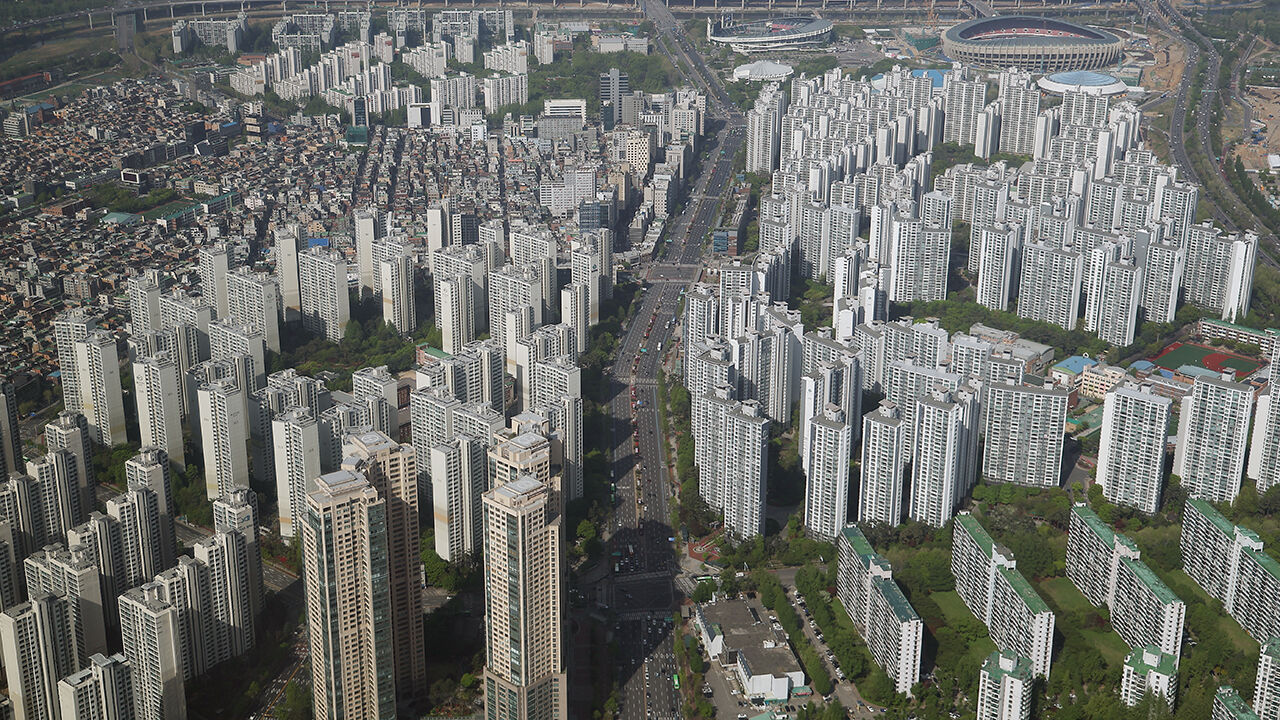
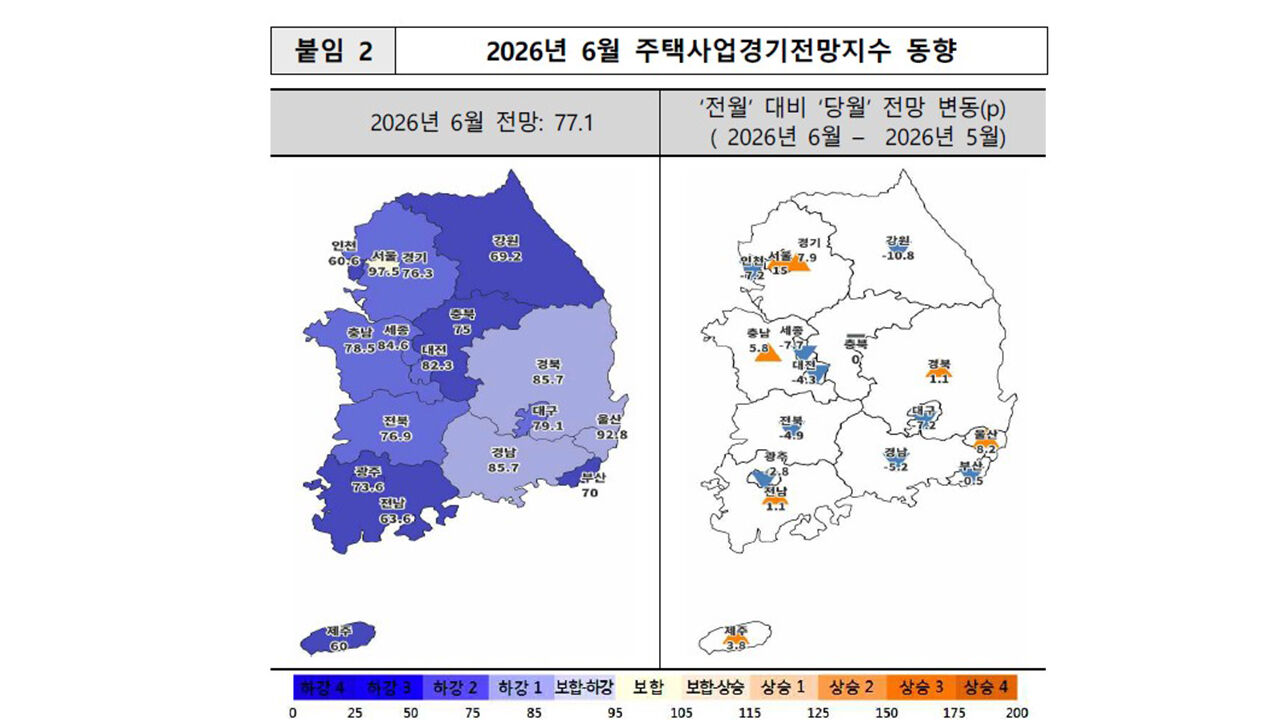
The Korea Housing Institute (KHI) announced that its survey of housing business operators showed the Housing Business Survey Index (HBSI) for Seoul in June rose by 15.0 points from the previous month to 97.5.
The HBSI is a gauge where a reading above the baseline of 100 indicates that a higher proportion of companies have an optimistic outlook for the market.
A reading below 100 indicates the opposite.
While the index for Gyeonggi Province (76.3) rose by 7.9 points, the index for Incheon (60.6) fell by 7.2 points, resulting in a 5.2-point increase for the Seoul metropolitan area (78.1) compared to the previous month.
The institute analyzed that expectations for a housing market recovery in the metropolitan area have risen as the upward trend in both sales and jeonse (long-term deposit rental) prices expanded in May, alongside an increase in transaction volume.
In particular, for Seoul, the upward price trend and the potential inflow of investment capital from the stock market into the real estate market contributed positively to the improved outlook.
However, Incheon saw a worsening outlook, unlike Seoul and Gyeonggi, due to significant variations in regional demand and relatively higher risks associated with new housing presales.
The outlook for non-metropolitan areas (76.9) fell by 1.7 points from the previous month.
Metropolitan cities saw a 2.4-point decline to 80.4, while provincial provinces fell by 1.1 points to 74.3.
Among metropolitan cities, only Ulsan (92.8) saw an increase of 8.2 points, while Sejong (84.6) fell by 7.7 points, Daegu (79.1) by 7.2 points, Daejeon (82.3) by 4.3 points, and Gwangju (73.6) by 2.8 points.
In provincial provinces, South Chungcheong (78.5), Jeju (60.0), North Gyeongsang (85.7), and South Jeolla (63.6) rose by 5.8, 3.8, 1.1, and 1.1 points, respectively. Conversely, Gangwon (69.2) fell by 10.8 points, South Gyeongsang (85.7) by 5.2 points, and North Jeolla (76.9) by 4.9 points.
North Chungcheong remained unchanged from the previous month at 75.0.
The institute analyzed that in non-metropolitan areas, the outlook has worsened as housing prices continue to fall and unsold units accumulate, while recent policy trends favoring single-home ownership have led buying demand in provincial areas to shift toward the metropolitan region.
The institute also explained that negative sentiment has expanded among provincial business operators due to a lack of capacity to pursue new projects, stemming from depleted financial resources, lower credit ratings, and concerns over potential bankruptcy.
As loans from financial institutions have become more difficult to obtain due to concerns over rising interest rates and declining credit ratings for businesses, the national funding index for this month is projected to be 69.6, down 3.4 points from the previous month.
On the other hand, the material supply index (77.7) rose by 10.6 points.
The institute explained that this is a result of a base effect following a sharp decline in the previous month and a partial easing of concerns regarding raw material supply instability related to Middle East risks.
(Photo: Provided by Korea Housing Institute, Yonhap News)
※ Please note: This article was translated by AI and may contain errors.

 Video News
![[단독] "3년째 감감무소식"…투자금 30억 어디로](http://img.sbs.co.kr/newimg/news/20260616/202193364_300.jpg) Video News
Video News

 Video News
 Video News