
 KOR
KOR
▲ The YouTube channel of a pharmacist couple in Jeju that drew attention online due to a premium dispute
Recently, the story of a YouTuber who took over a pharmacy in a building with a hospital after paying a premium (gwonrigeum) of 360 million won, only for the hospital to close down two months later, has sparked controversy online.
Online, posts from self-employed individuals sharing similar experiences followed, along with comments such as "Is a pharmacy premium really that expensive?" and "Is there no legal way to protect the premium?"
A premium (gwonrigeum) is money received by an existing tenant from a new tenant in exchange for handing over business advantages.
Legally, the Commercial Building Lease Protection Act defines it as "money or other compensation paid to a landlord or tenant, in addition to the security deposit and rent, by a person who operates or intends to operate a business in a commercial building that is the subject of a lease, as consideration for the transfer or use of tangible or intangible property values, such as business facilities, equipment, business contacts, credit, business know-how, or business advantages arising from the location of the commercial building."
Simply put, apart from the rent of the commercial building, it is the amount that the existing tenant (transferor of the leasehold right) receives from the next tenant (transferee of the leasehold right) in exchange for inheriting all the value built up while doing business at the location.
Premiums are largely divided into three to four types, including "location premium" (badak-gwonrigeum), "facility premium" (siseol-gwonrigeum), and "operating premium" (yeongeop-gwonrigeum).
The location premium is paid in exchange for geographical advantages.
Since location is crucial for business, it is a payment made for the location itself, and it is higher in areas near subway stations, long-established commercial districts, or places with high foot traffic.
Sometimes, rather than being exchanged between tenants, a location premium is demanded by the building owner in newly constructed buildings up for sale or lease.
The facility premium is the amount paid in exchange for the interior design or various facilities installed by the existing tenant.
It has the character of a purchase price for the existing interior and facilities.
If the value of the commercial property has increased due to the existing tenant's investment, it might seem at first glance that this cost should be claimed from the landlord. However, since most commercial lease agreements contain a special clause for "restoration to original condition," it is difficult to demand this from the landlord.
Instead, it has become a custom for the next tenant to bear this cost under the name of a facility premium.
The operating premium corresponds to the compensation for inheriting intangible assets, such as business know-how or customers built up by the existing tenant.
For example, if the store operated by the existing tenant has a lot of customers due to word-of-mouth, the next tenant can expect the current profits to continue when taking it over.
In return, they pay the corresponding compensation to the existing tenant in the form of a premium.
In addition, there is a "license premium" (heoga-gwonrigeum) paid by inheriting business licenses or the status of an agency contractor.
For instance, if it is difficult for competitors in the same industry to enter the market due to government licensing restrictions or a specific franchise's regional allocation policy, a payment is made for this advantage.
The license premium is sometimes included in the operating premium.
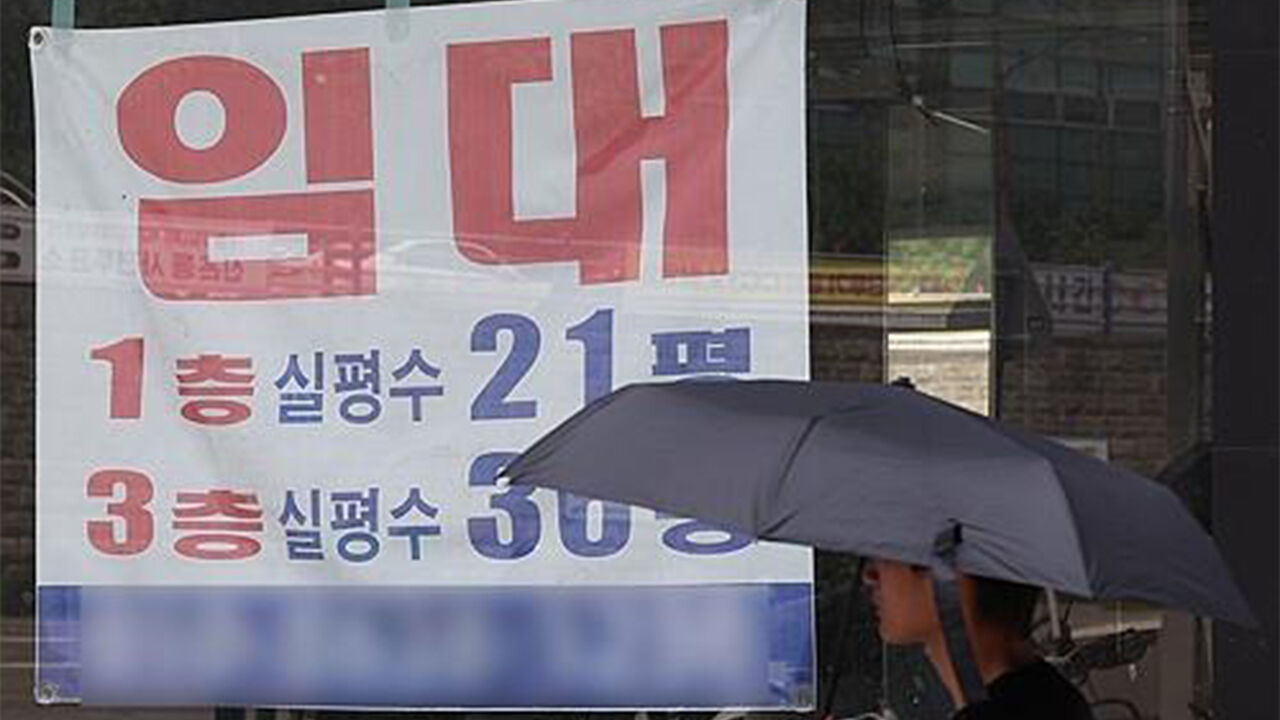
It is easy to think that premiums only exist in some commercial properties with good locations, nice interiors, or many customers.
However, overall, there are more cases where a premium is present when leasing a commercial building than when it is not.
According to the Korea Real Estate Board, as of last year, the nationwide ratio of commercial properties with premiums (the percentage of commercial properties that receive premiums) was 54.6%.
By industry, the accommodation and food service activities sector was the highest at 70.0%, followed by real estate and renting activities (62.3%), and arts, sports, and recreation-related services (56.4%).
By region, Daejeon had the highest ratio of commercial properties with premiums at 70.7%, followed by Gyeonggi (69.6%), Gwangju (67.3%), and Jeju (60.8%).
Seoul recorded 54.8%.
In some areas, the premium accounts for the largest portion of the initial investment cost for a commercial property.
According to a paper titled "The Concept and Types of Commercial Premium: Focusing on Determinants of Premium by Type" published in the Journal of the Korea Real Estate Analysts Association in December last year, a survey on commercial leases in Seoul showed that out of the average initial investment of 115 million won, the security deposit was 40.2 million won (37.8%) and the premium was 43.4 million won (35.0%), indicating that the premium was higher than the security deposit.
In the Korea Real Estate Board's statistics from last year, the average nationwide premium was calculated at 33.94 million won.
Seoul was the highest in the country at 49.38 million won.
However, this is only an average, and premiums in core commercial districts can reach billions of won.
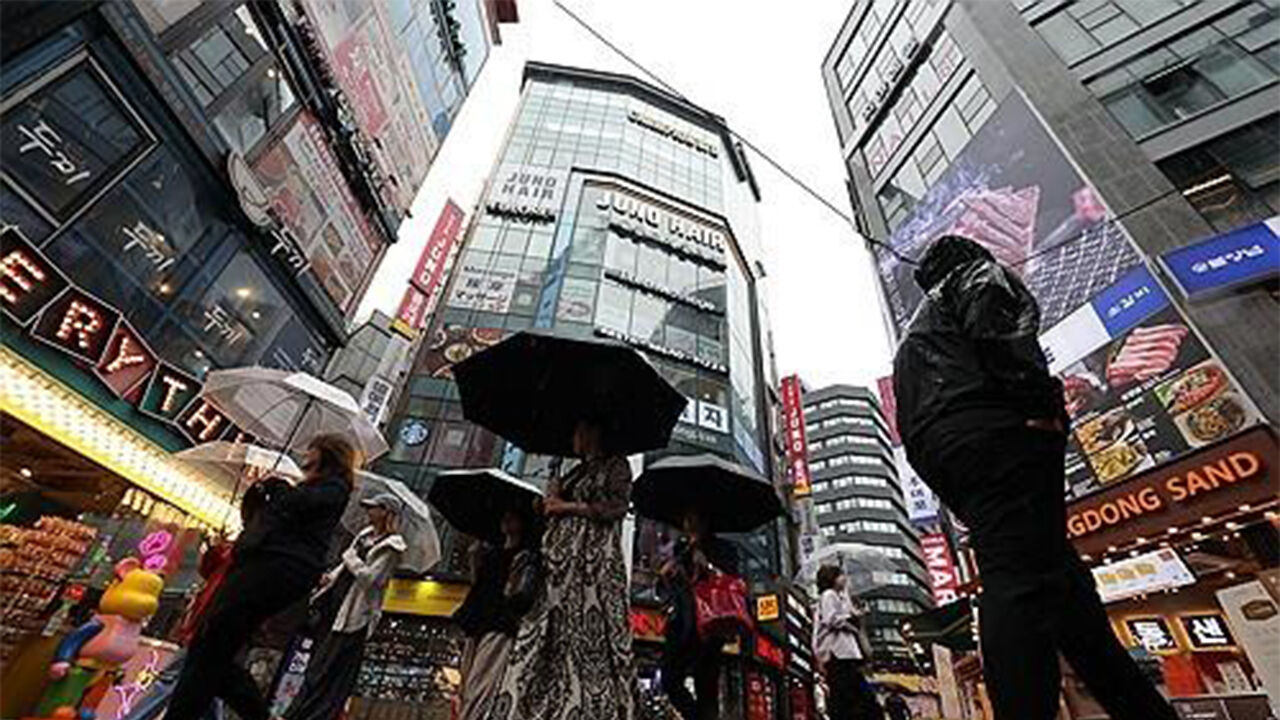
According to a social media account run by a real estate agency specializing in commercial properties to promote listings, the monthly rent for a store with a size of 90 to 165 square meters (30 to 50 pyeong) on Myeongdong Jungang-ro in Seoul ranges from 150 million to 200 million won, with the premium ranging from 500 million to 1 billion won.
The difference in premiums depending on the type of business is as significant as the location.
While premiums for neighborhood hair salons or snack bars are generally in the range of several million to tens of millions of won, those for cafes or franchise stores are higher.
According to industry sources, the premium for a "munjeon pharmacy" (a pharmacy located right in front of a hospital) ranges from hundreds of millions to billions of won.
Among them, pharmacies are classified as a high-premium business, and "munjeon pharmacies" in particular tend to have relatively higher premiums because they guarantee stable sales.
While some reacted with surprise to the fact that the premium in the Jeju pharmacy case was as high as 360 million won, an expert stated that from the industry's perspective, it is not an unusually large amount.
Kim Jae-yoon, managing attorney at J&K Law Firm, which specializes in disputes related to pharmacy and commercial property leases, said, "In some prime pharmacy locations in downtown Seoul, the premium alone reaches 2.5 billion to 3 billion won."
An active pharmacist also shared, "With competition in the pharmacy market intensifying recently, there is a trend of trying to secure locations that generate sales even if it means paying a premium. As a result, premiums seem to be rising even further."
Although premiums have long been established as a custom, they only came under the legal framework in 2015.
This was because, following a series of damage cases where existing tenants were unable to recover their premiums because landlords rejected new tenants or interfered with leases, the government amended the Commercial Building Lease Protection Act to include provisions protecting the leasehold rights and premiums of self-employed individuals, legally guaranteeing opportunities to recover premiums.
Before that, landlords unilaterally held a superior position, and cases where tenants lost hundreds of millions of won in premiums occurred frequently.
The legal definition of a premium was also established at this time.
Through successive amendments, tenants can now request contract renewals for up to 10 years, including the initial lease, unless there is a specific reason for refusal.
In addition, if a landlord demands a premium from a new tenant, prevents a new tenant from paying a premium to the existing tenant, or refuses to sign a contract with a new tenant without a justifiable reason, the existing tenant can claim damages.
However, despite the amendment of the law, disputes between landlords and tenants over premiums are still commonly seen around us.
In online communities for self-employed individuals, one can easily find posts seeking legal advice, with people stating that they could not recover their security deposits or premiums because the building went up for auction, or that they were in a situation where they could not receive their premium because they could not find a new tenant due to the landlord's excessive rent increase demands.
Conflicts between tenants over premiums are also common.
Many of these cases involve demanding the return of the premium after it is later confirmed that sales were inflated to receive a higher premium, or that the commercial district analysis differed from what was previously disclosed.
Lee Il-hyung, representative attorney at Lio Law Firm, who is both a pharmacist and a lawyer, said, "It seems that such cases have become somewhat more frequent lately. As competition among pharmacies intensifies, these incidents happen occasionally."
Attorney Kim Jae-yoon added that there are also cases where tenants move in trusting the commercial district but are evicted without being guaranteed the 10-year contract period because the entire area is redeveloped, or cases where a property is handed over to the next tenant while hiding defects such as building leaks.
Attorney Kim advised, "When signing a pharmacy contract, a special clause stating that the premium will be returned if the hospital relocates within a year is usually included in the agreement. If there is no such clause, there is a risk that the transferee must bear any situation that occurs after the contract is signed."
Attorney Lee said, "Many people sign contracts relying solely on the agreement prepared by the real estate agent, but caution is required. It is best to have it reviewed by a lawyer, but even if that is not possible, you must check it more thoroughly."
There are also arguments that when a premium dispute arises between commercial tenants, the real estate agent who brokered the contract should be held responsible.
However, if the real estate agent did not know in advance, there may be limits to holding them accountable.
An official from the Korea Association of Realtors said, "If a real estate agent brokered the contract while knowing in advance that the new tenant could suffer financial damage, they should bear moral responsibility. However, if they did not know, it is difficult to hold them responsible for that."
(Photo: YouTube capture, Yonhap News)
※ Please note: This article was translated by AI and may contain errors.

 Video News
 Video News
 Video News
![[단독] '용지 부족' 난리났던 당일…선관위 황당 행적](http://img.sbs.co.kr/newimg/news/20260615/202192977_300.jpg) Video News
Video News
 Video News