
 KOR
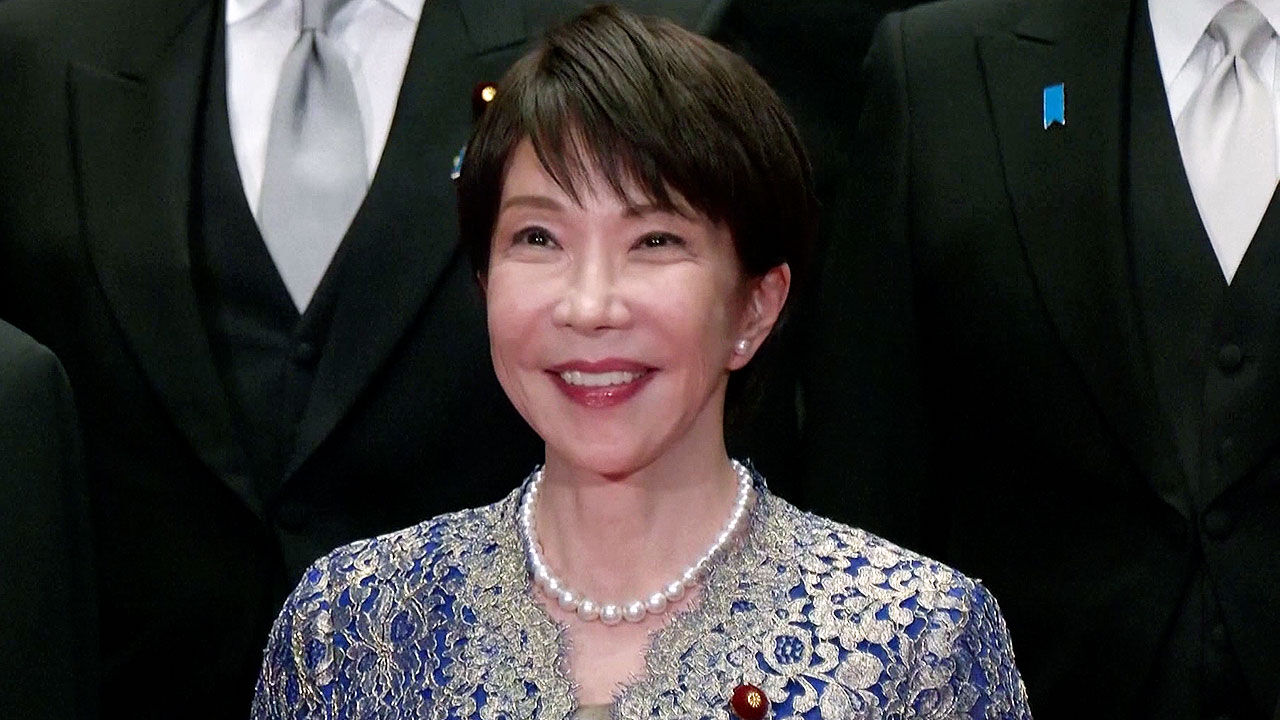
▲ Japanese Prime Minister Sanae Takaichi
As November 7 marks the first full year since Japanese Prime Minister Sanae Takaichi's remarks hinting at intervention in a Taiwan contingency—which triggered a sharp chill in bilateral relations—the Japanese government stated on November 6 that it respects China's position that Taiwan is part of Chinese territory.
However, the Chinese government asserted that the responsibility for the deterioration of China-Japan relations lies with Japan, urging Prime Minister Takaichi to promptly rectify her erroneous remarks.
During a regular press conference, Japanese Chief Cabinet Secretary Minoru Kihara, the government's spokesperson, responded to a question regarding the assessment of the one-year anniversary and future bilateral ties by stating, "The government's position on Taiwan remains as outlined in the 1972 China-Japan Joint Communique."
In the China-Japan Joint Communique adopted when the two countries established formal diplomatic relations in 1972, Japan stated that it "fully understands and respects" China's position that "Taiwan is an inseparable part of the territory of the People's Republic of China."
Prime Minister Takaichi met with reporters at the Prime Minister's Office earlier in the day, saying, "China is an important neighboring country, and despite various existing challenges, we share a long-standing relationship."
She continued, "We will build a constructive and stable relationship by comprehensively promoting a mutually beneficial relationship based on common strategic interests with China, communicating on shared issues, and engaging in dialogue to protect our national interests," reiterating her previous statements regarding China made during parliamentary policy speeches and other occasions.
In response, Chinese Foreign Ministry Spokesperson Guo Jiakun stated during a regular briefing that "the full responsibility for the serious difficulties facing China-Japan relations rests entirely with the Japanese side."
Guo criticized that "one year ago, a Japanese leader made erroneous remarks concerning Taiwan, publicly signaling an intention to militarily intervene in the Taiwan issue, thereby challenging China's national sovereignty and shaking the political foundation of China-Japan relations."
Guo specifically claimed, "Regrettably, a full year has passed, yet the Japanese authorities remain stagnant, merely evading the issue without showing sincerity or action to reflect upon and correct their mistakes. What Japan urgently needs to do is correct its erroneous words and deeds on the Taiwan issue, and crucially, adopt a correct attitude toward historical issues."
Since China-Japan relations soured late last year, high-level official dialogues between the two nations, including between their leaders and foreign ministers, have been virtually suspended.
However, former Japanese Foreign Minister Takeshi Iwaya visited China last September leading a delegation from a private Japan-China economic exchange organization and met with Chinese Foreign Minister Wang Yi, proposing that the China-Japan Joint Communique be used as a means for an "indirect reconciliation" between the two countries.
Regarding China's persistent demands for Prime Minister Takaichi to retract the remarks, former Minister Iwaya suggested that since a formal retraction carries a heavy political burden, the two governments should reaffirm the spirit of the Joint Communique as an opportunity to "effectively retract" Prime Minister Takaichi's remarks.
Nevertheless, Foreign Minister Wang reportedly rejected the proposal, stating that the issue cannot be resolved through ambiguous methods.
Even when Prime Minister Takaichi attempted to ease tensions immediately after making the Taiwan remarks in December of last year by stating that "there is no change in our position regarding the China-Japan Joint Communique," the Chinese side rejected it, demanding a "clear and explicit retraction of her stance."
Although the Japanese government has not issued an immediate reaction to Foreign Minister Wang's remarks, signs of change have recently been detected.
Masaaki Kanai, Director-General of the Asian and Oceanian Affairs Bureau at the Japanese Ministry of Foreign Affairs, appeared before the Committee on Foreign Affairs of the House of Representatives (Lower House) of the Japanese Diet on October 28, stating, "The government's basic position on Taiwan is the same as the 1972 Japan-China Joint Communique."
At the time, Director-General Kanai even read out parts of the joint communique during his parliamentary testimony, drawing evaluations that it was an unusual move mindful of China.
The government spokesperson's reiteration on this day effectively reaffirmed the same message.
While adopting the format of repeating its established stance, the Japanese government's renewed emphasis on respecting China's position on the Taiwan issue allows for interpretations that Japanese government officials are extending an olive branch without Prime Minister Takaichi retracting her remarks.
This is because Japan cannot indefinitely ignore the tangible losses it has suffered, such as export controls on critical minerals and a sharp plunge in Chinese tourists, sparked by the cooling of bilateral relations.
However, as the Chinese government criticized Tokyo and rebuffed the conciliatory gesture, while Prime Minister Takaichi merely repeated her previous stance, projections suggest that the frosty bilateral ties will persist for the time being.
The Nikkei pointed out that over the past year since Prime Minister Takaichi's Taiwan remarks, Japan has pursued a foreign policy overly reliant on the United States rather than actively resolving the issue.
The newspaper analyzed that this strategy is revealing its limitations, especially as the possibility emerges that U.S. President Donald Trump, having suffered defeat in the midterm elections, might bypass Japan and strike a direct deal with President Xi Jinping to secure political achievements.
Seiko Mimaki, a professor of international politics at Doshisha University, told the newspaper that relying entirely on the U.S. in security and economic sectors is not realism, stating, "Japan has no other choice as a middle power than to conduct omnidirectional diplomacy, including with China. Prioritizing national interest over domestic public opinion is the role of a prime minister."
Amid uncertainty over whether Prime Minister Takaichi will be able to hold a summit with Chinese President Xi Jinping on the sidelines of the Asia-Pacific Economic Cooperation (APEC) summit in Shenzhen, China, from November 18 to 19, views within the Japanese government suggest that arranging a meeting realistically remains difficult.
If a summit between Prime Minister Takaichi and President Xi fails to materialize, it would interrupt the annual face-to-face meetings between the two leaders that have continued on the margins of APEC since 2022.
Nevertheless, Chief Secretary Kihara responded regarding future diplomatic schedules, including the status of reviewing a bilateral meeting at APEC, by saying, "I will refrain from making statements based on preconceptions."
(Photo: Yonhap News)
※ Please note: This article was translated by AI and may contain errors.


 Video News
 Video News
 Video News
 Video News
 Video News