
 KOR
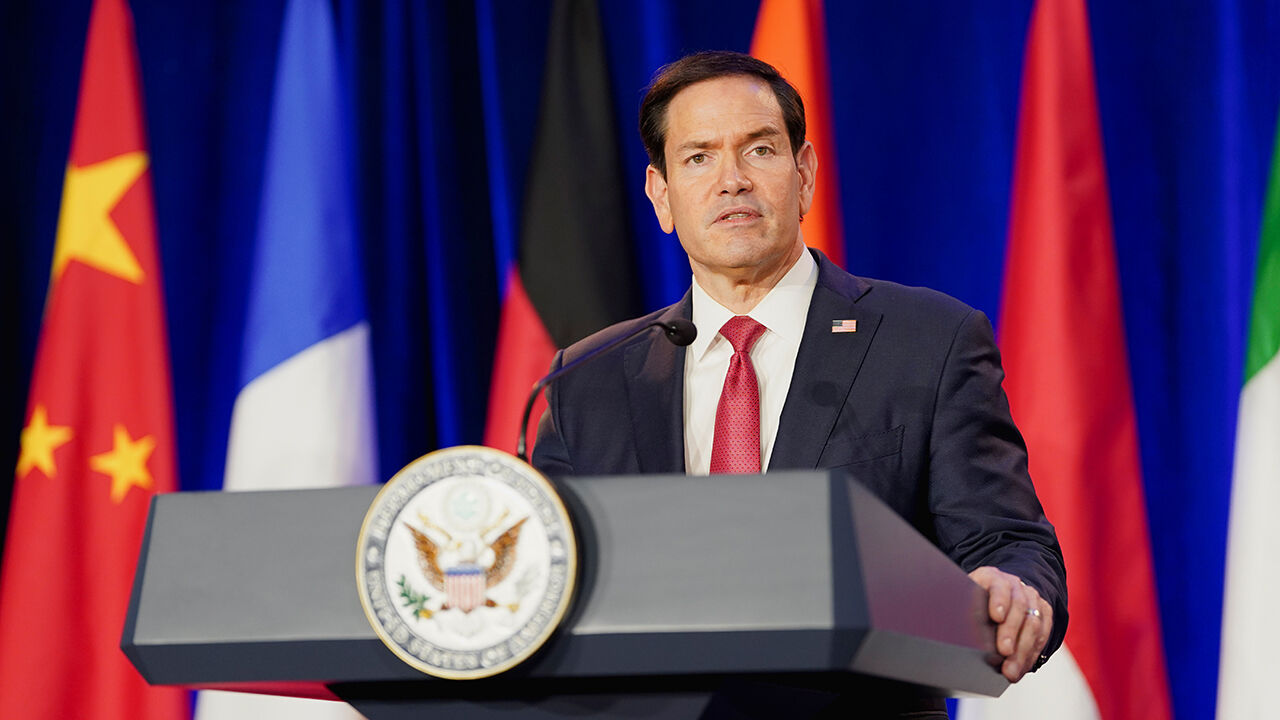
▲ U.S. Secretary of State Marco Rubio
Following the Republican Party's crushing defeat in the U.S. midterm elections, rumors regarding the resignation of Secretary of State Marco Rubio have surfaced consecutively, prompting him to personally step forward to dispel them.
In an interview with The New York Times (NYT) on the 5th (local time), Secretary Rubio dismissed the resignation rumors, stating that it had "always been my plan" to serve until the end of President Donald Trump's term.
Rubio, who is concurrently serving as Secretary of State and National Security Advisor, joked that he did not know where the resignation rumors originated, adding, "Every time I hear stories about leaving, it makes me laugh. It makes me ask, 'What position are they talking about?'"
When asked about running in the next presidential election, he sidestepped the question, saying, "I am not going to talk about 2028 anymore."
Earlier, Britain's The Independent reported, citing an aide to Secretary Rubio, that it would be "entirely logical" for him to resign and leave the administration.
The aide claimed, "Rubio is currently the leading contender for the Republican presidential nomination. He is clearly ahead of Vice President Vance," and argued, "You cannot run while performing the duties of Secretary of State, and being tied to this administration will only have a negative impact on the presidential race."
On the 6th, Bloomberg News also reported, citing sources, that Secretary Rubio is weighing whether to leave the administration.
Bloomberg reported that Rubio discussed the resignation issue with White House officials and was asked to remain in his post.
Both the White House and the State Department denied the reports, calling them "fake news relying on anonymous sources."
As the midterm elections concluded on the 3rd with a landslide defeat for the Republicans, potential GOP heavyweights eyeing the 2028 presidential election are busy calculating the political costs and benefits.
The day after the defeat, Vice President JD Vance attributed the loss to the war in Iran, distancing himself from his "boss," President Trump.
The successive rumors surrounding the resignation of Secretary Rubio, who had initially kept his distance from the midterms, are interpreted in the same context.
Bloomberg pointed out that it is not unusual for cabinet ministers and high-ranking aides to leave an administration as it enters the lame-duck phase in the latter half of its term, especially after a heavy defeat like this election.
If Secretary Rubio steps down before January of next year, President Trump could nominate a successor before the Democrats take control of the Senate.
Projections have also emerged that Secretary Rubio could forgo a run in the 2028 presidential election, return to the private sector, and prepare for the period beyond.
During the 2016 presidential election, he even mentioned that he would like to become the commissioner of the National Football League (NFL).
The current commissioner's term runs through 2031.
Bloomberg reported that aides predicted if Vice President Vance runs, Secretary Rubio might choose not to enter the party primary.
Indeed, Secretary Rubio has stated on multiple occasions that if Vice President Vance runs, he would be the first to endorse him.
Secretary Rubio has also strived to avoid getting involved in the midterm elections.
During the Republican National Convention last September, he went on an overseas trip, and even when President Trump called him up to the stage during a campaign rally, he only offered a brief word of greeting and stepped right back down.
While the justification was that the Secretary of State does not interfere in elections, interpretations emerged that the move was intended to proactively distance himself from the political fallout the Iran war would inflict on the Trump administration, with an eye on the 2028 presidential race.
With the midterm elections over, both the Republican and Democratic parties have already entered campaign mode.
Starting early next year, presidential contenders from both parties will begin declaring their candidacies, and by summer, the full-fledged primary race will kick off, spearheaded by intra-party televised debates.
As the Republicans' midterm defeat inevitably weakens the influence of President Trump's core support base, MAGA, Secretary Rubio—who was originally closer to traditional conservative figures in the GOP—is expected to contemplate differentiation and weigh his future moves.
Nevertheless, Secretary Rubio shielded President Trump in his interview with the NYT.
Regarding President Trump's mention of the Iran war as an election variable during a rally in Kansas on the 1st, Rubio remarked, "High gas prices at the pump are not something to boast about in a campaign," but added, "Doing what is necessary even when it is unpopular is the price of leadership."
Vice President Vance, a strong rival to Secretary Rubio, published a lengthy article the day after the defeat attributing the loss to the war in Iran, distancing himself from President Trump.
When asked if he agreed with Vice President Vance's diagnosis, Secretary Rubio sidestepped a direct answer, stating, "I do not get involved in domestic politics."
The Wall Street Journal (WSJ) commented in an editorial that Vice President Vance jumped ship at a critical juncture, undermining his boss to prepare for a presidential bid.
Even if they are not at the very top like the two figures, forecasts suggest that other "Trump loyalist" figures holding key positions in the administration could resign in succession.
Harmeet Dhillon, who led the Civil Rights Division at the U.S. Department of Justice, resigned on this day.
This marks the first resignation of a high-ranking Trump administration official just two days after the midterms.
Dhillon significantly scaled back the role of the Justice Department's Civil Rights Division—which had taken the lead in eradicating racial discrimination and expanding civil rights—and massively reorganized the agency to focus on conservative policies.
During this midterm election, the division spearheaded the largest-scale voting monitoring operations in history.
Dhillon is also expected to find it difficult to evade the blade of various investigations that Democrats plan to launch targeting the Trump administration starting next year.
(Photo: AP, Yonhap News)
※ Please note: This article was translated by AI and may contain errors.


 Video News
 Video News


 Video News