
 KOR
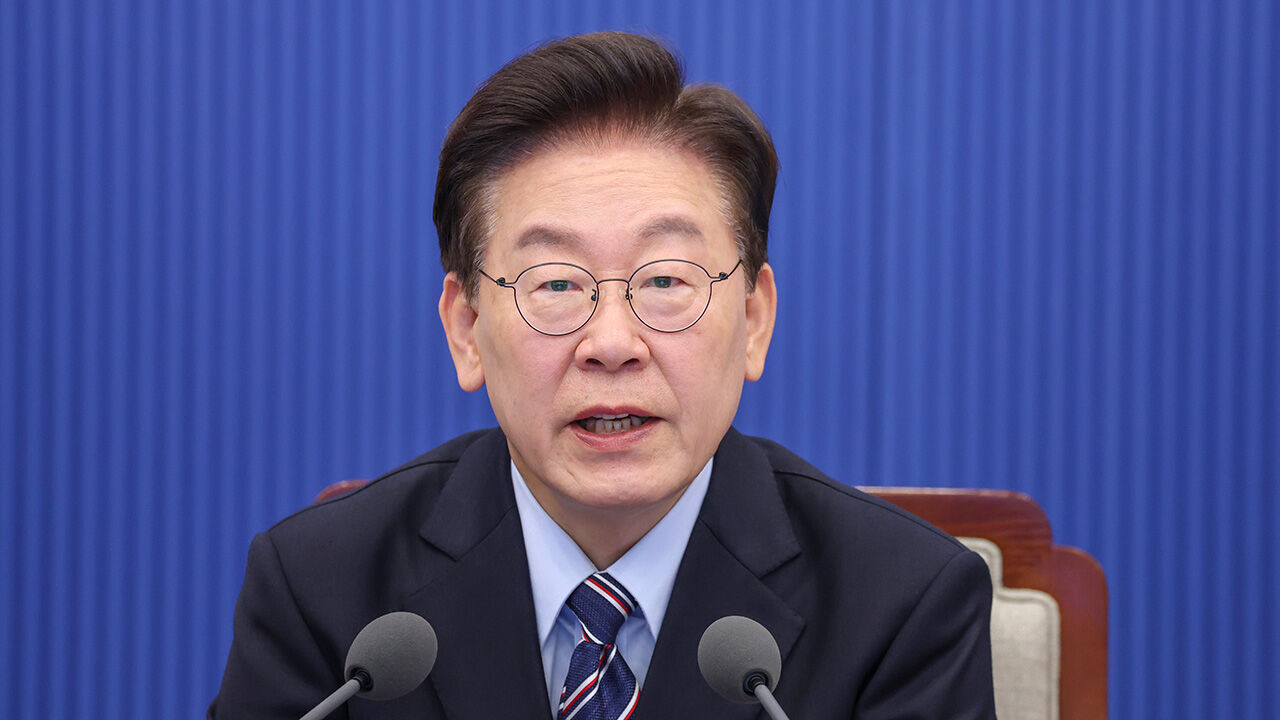
▲ President Lee Jae-myung
A public opinion poll released today (November 6) showed that President Lee Jae-myung's job approval rating rebounded slightly from last week, regaining the 40% mark in two weeks.
According to a survey conducted by Gallup Korea from November 3 – 5 among 1,001 adults aged 18 and older nationwide, positive evaluations of President Lee's job performance stood at 41%.
President Lee's approval rating rose by 2 percentage points compared to the poll for the fifth week of October released on October 30.
Negative evaluations that he is doing a poor job stood at 50%.
Those reserving judgment accounted for 9%.
Positive assessments of his performance had been hovering between 37% and 40% since first entering the 30% range in the poll for the second week of September.
He maintained a majority approval rating in South Jeolla, Gwangju, and North Jeolla, while recording ratings in the 40% range in Incheon, Gyeonggi, and the Busan, Ulsan, and South Gyeongsang region.
In contrast, approval ratings remained in the 30% range in Daejeon, Sejong, and the Chungcheong provinces as well as Seoul, and stayed in the 20% range in Daegu and North Gyeongsang.
By age group, his approval rating exceeded half among people in their 40s, and recorded figures in the 40% range among those in their 50s and 60s.
Among those aged 18 – 29 and in their 30s, the approval rating hovered around 30%.
By political orientation, 71% of progressives and 42% of moderates positively assessed President Lee's state administration.
Diplomacy was the most cited reason for positive evaluations, followed by the economy and livelihoods, communication, welfare and policies for ordinary citizens, and "doing well overall."
Reasons for negative evaluations were real estate policy, the economy and livelihoods, national defense, security, and North Korea policy, and ethical issues and avoiding his own trials, in that order.
In terms of political party support, the Democratic Party recorded 36%, while the People Power Party recorded 28%.
As the Democratic Party rose by 1 percentage point from the previous week's survey and the People Power Party fell by 2 percentage points, the gap between the two parties widened outside the margin of error again.
The Rebuilding Korea Party registered 3%, the Reform Party 2%, and the Progressive Party 1%, while the unaffiliated made up 28%.
Support for the Democratic Party neared half among respondents in their 40s and 50s, while the People Power Party surpassed 40% among those aged 70 and older.
Among those aged 18 – 29, support stood at 24% for the Democratic Party and 26% for the People Power Party, while among those in their 30s, support was 25% for the Democratic Party and 28% for the People Power Party.
The survey was conducted through telephone interviews with interviewers using randomly sampled virtual mobile phone numbers.
The margin of sampling error is ±3.1 percentage points at a 95% confidence level, with a contact rate of 40.8% and a response rate of 9.7%.
For more details, refer to the website of the National Election Survey Deliberation Commission.
(Photo: Yonhap News)
※ Please note: This article was translated by AI and may contain errors.


 Video News
 Video News


 Video News