
 KOR
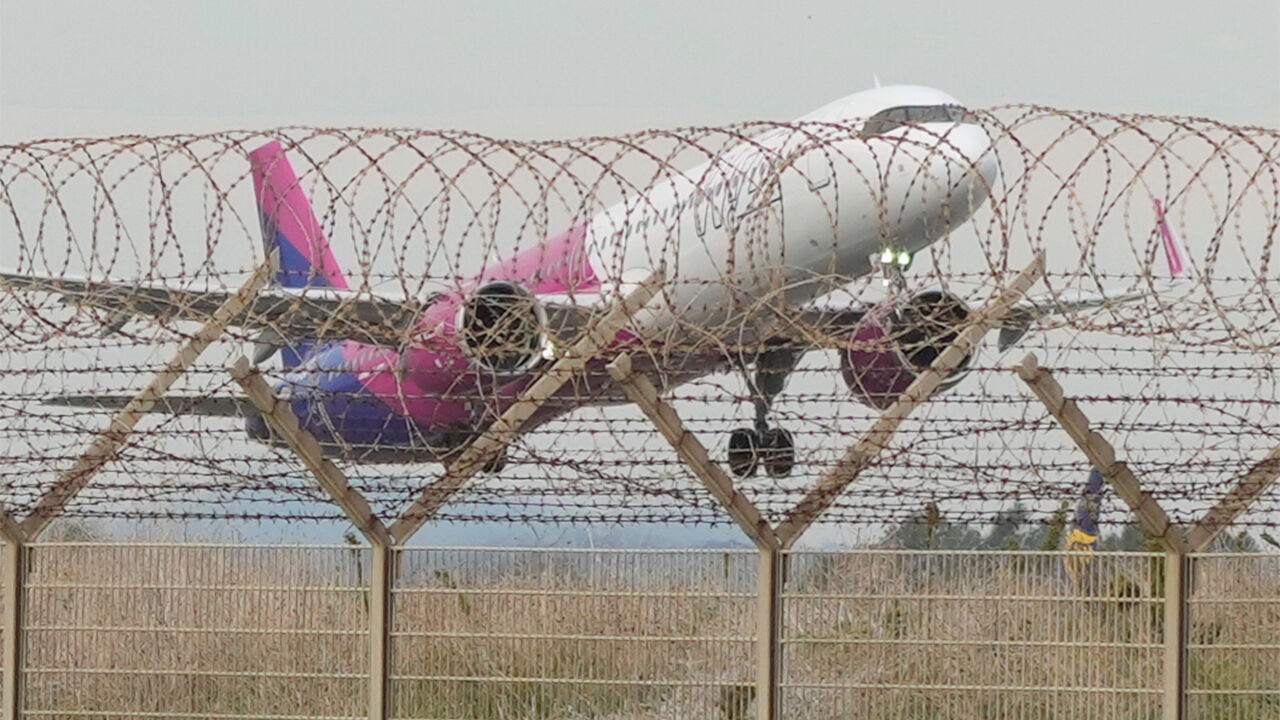
▲ An aircraft takes off from Leonardo da Vinci-Fiumicino Airport after a flight from Dublin to Rome was diverted to France following a bomb threat.
A fresh wave of bomb threats targeting passenger planes flying across European airspace has sparked widespread disruption, prompting the scramble of fighter jets and continuing chaos.
According to AP and Reuters on the 5th (local time), more than 25 passenger planes departing from locations across Europe—including Copenhagen in Denmark, Dublin in Ireland, Helsinki in Finland, Madrid in Spain, Milan in Italy, and Warsaw in Poland—received bomb threats that day.
The number of threats recorded on this day surged to more than three times that of two days prior.
On November 3, explosive device reports were filed successively across seven European passenger planes, causing disruptions such as emergency landings.
A multitude of airlines fell victim regardless of their nationality, including Aer Lingus, Wizz Air, LOT Polish Airlines, Finnair, easyJet, and Iberia.
While most made emergency landings at alternative airports rather than their destinations to undergo safety checks, it was reported that no hazardous materials were found.
On this day, a Finnair passenger plane departing from Helsinki, Finland, received a report that explosives were on board while en route to Rome, Italy.
Escorted by scrambled fighter jets, the passenger plane landed safely at Rome Fiumicino Airport.
Italian authorities conducted safety inspections on the aircraft, but no bombs were reportedly found.
Finnair stated that two of its aircraft had received unfounded bomb threats.
An Aer Lingus passenger plane traveling from Dublin, Ireland to Rome, Italy also received a bomb threat that day, causing the aircraft to divert to Evreux Air Base in northern France.
There were 151 people on board the flight, including passengers.
Passengers were reportedly divided into groups of 10 to be questioned by French aviation security authorities.
Czech police stated that four aircraft that received bomb threats made emergency landings in Prague, Czech Republic as well, though no hazardous elements were discovered.
A passenger plane flying from Warsaw, Poland to Brussels, Belgium also received a bomb threat, but no suspicious circumstances were identified.
Austrian police stated that threats were also made against four passenger planes at Vienna Airport, though specific flight details were not disclosed.
A Wizz Air flight from Milan, Italy to Warsaw, Poland also received a bomb report that day, prompting an emergency route change.
In Bulgaria, three aircraft departing from places such as Copenhagen, Denmark and Madrid, Spain were escorted by fighter jets due to bomb reports and made emergency landings in Sofia and elsewhere.
While bomb threat reports targeting European passenger planes have continued recently, the masterminds or perpetrators behind them have not been identified.
European Union Commissioner for Transport Apostolos Tzitzikostas wrote on social media, "It is still too early to draw conclusions on whether the reported incidents are linked," adding, "Any threat targeting civilians is unacceptable."
Amid the bomb threat reports targeting European aircraft, a recent wave of supermarket refrigerator hacking incidents across various European countries has raised suspicions that it may be a hybrid operation by Russia aimed at stoking anxiety in Western society.
Cyberattacks that remotely raised the temperatures of supermarket refrigerators and freezers to as high as 55°C have been identified in at least 11 countries recently, including Belgium, Luxembourg, the Netherlands, Sweden, Estonia, Ireland, Finland, Italy, Portugal, Germany, and the United Kingdom.
Citing hybrid threats, Sweden announced that it will reintroduce internal border controls for a six-month period until May 11 of next year.
The Swedish government stated, "Russia's invasion of Ukraine has created a grave security situation, giving rise to hybrid threats and enabling hostile actors to move and operate within the Schengen area."
(Photo: AP, Yonhap News)
※ Please note: This article was translated by AI and may contain errors.


 Video News
 Video News


 Video News