
 KOR
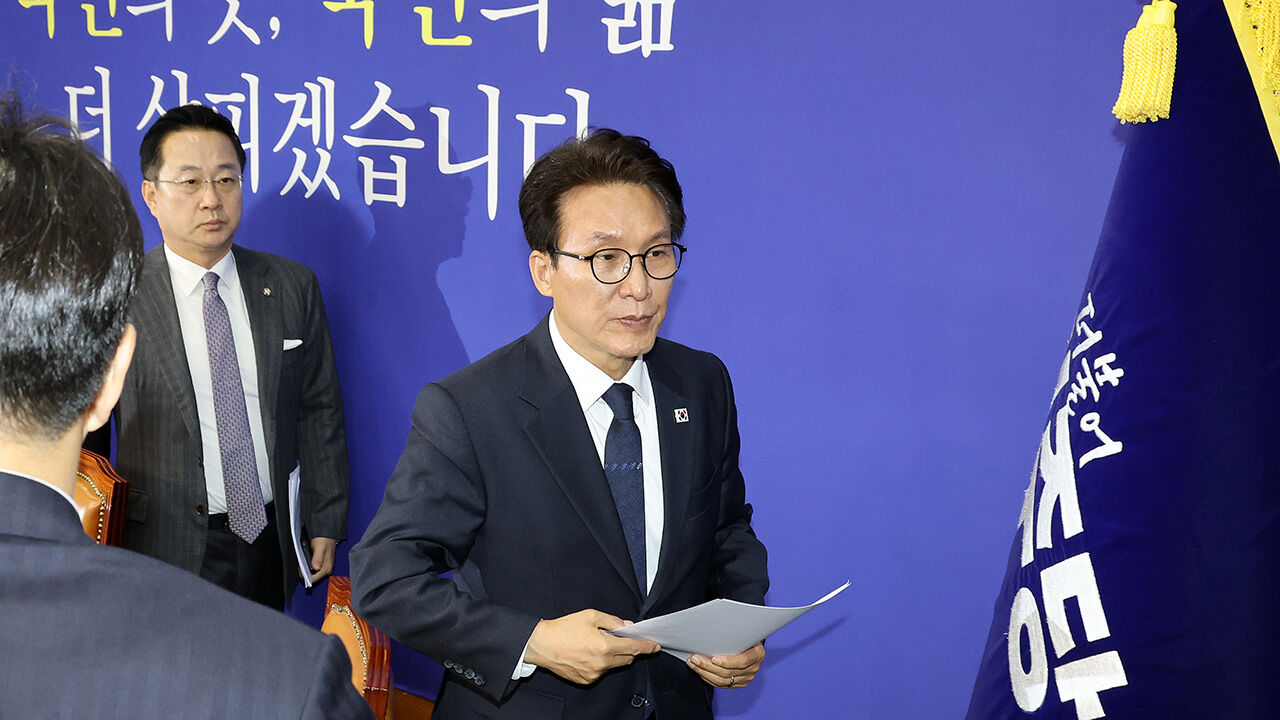
▲ Democratic Party of Korea Leader Kim Min-seok leaves the meeting room after attending the Supreme Council meeting held at the National Assembly on November 4.
Democratic Party of Korea Leader Kim Min-seok has officially requested the government to once again delay the taxation on virtual asset income, which is scheduled to take effect next year.
Kim made the remarks at the Supreme Council meeting held at the National Assembly today (November 4), stating, "We gave it careful thought through government-party consultations and meetings with virtual asset service providers, centered around the National Assembly's Finance and Economy Committee."
He explained, "After taking into comprehensive consideration taxation principles, domestic industrial conditions, and fairness among users, we reached a consensus that it is desirable to first enact the Digital Asset Basic Act to establish an overall framework and allow an adjustment period for businesses and investors."
He added, "We also took into consideration that taxation on virtual asset income has been postponed in the past," and said, "This time, we will clearly establish a grace period and thoroughly prepare prerequisite tasks such as utilizing overseas transaction information, computer verification, and taxpayer guidance methods."
Taxation on virtual assets has been deferred three times since the system was introduced in 2020, and is slated to take effect in January next year if implemented as scheduled.
At its core, a 22% tax rate combining other income tax and local income tax is to be levied on amounts exceeding the basic deduction of 2.5 million won from annual income generated through the transfer or lending of virtual assets.
Within the party, opinions clashed between those who argued that taxation should proceed this time so as not to undermine policy credibility and those who called for another delay citing incomplete infrastructure preparations, but the party ultimately settled on a postponement policy.
Earlier, Democratic Party members of the National Assembly's Finance and Economy Committee reached a consensus the previous day (November 3) to convey to party leadership their stance that delaying the virtual asset tax is necessary.
The committee mainly discussed a two-year extension for the grace period.
A final conclusion regarding the postponement of the virtual asset tax is expected to be reached through future high-level government-party consultations.
(Photo: Yonhap News)
※ Please note: This article was translated by AI and may contain errors.


 Video News
 Video News
 Video News
 Video News
 Video News