
 KOR
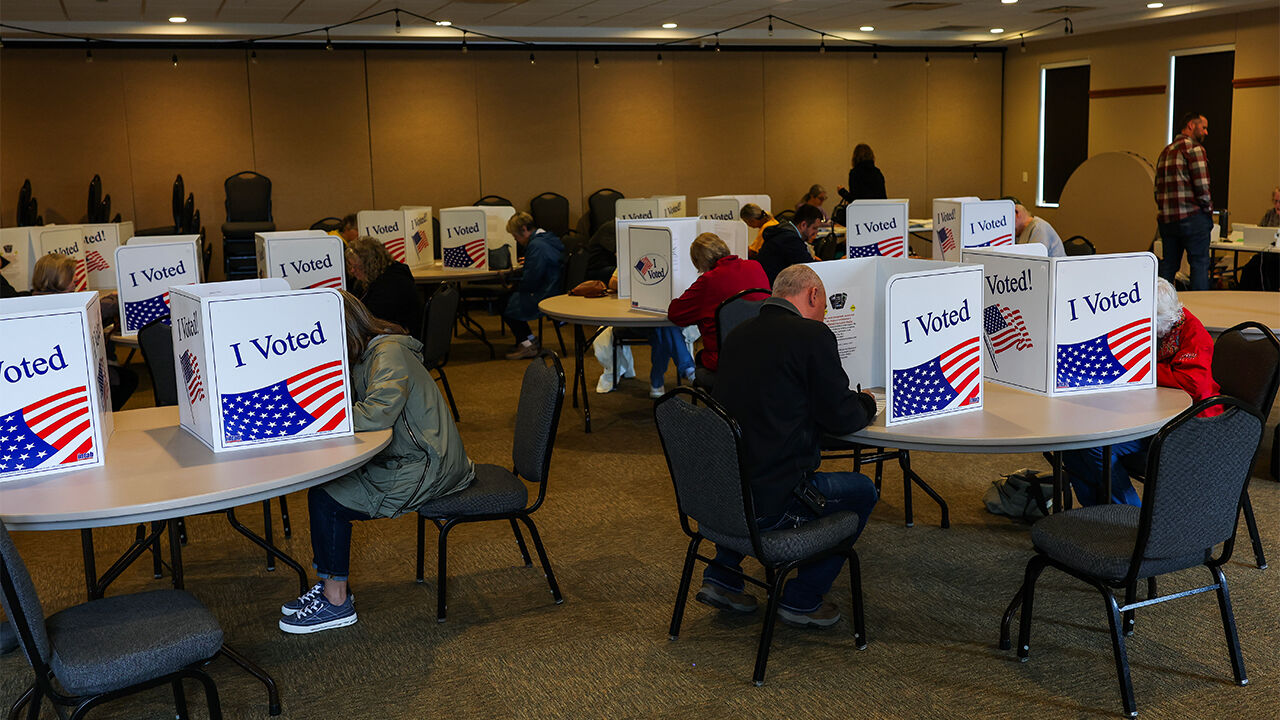
▲ A polling station in Iowa
Outcomes for four of the most closely watched U.S. Senate battlegrounds in the midterm elections taking place on the 3rd local time are projected to emerge as early as midnight today in Eastern Time (2:00 PM on the 4th, Korean time).
Currently, attention is focused on seven key Senate battlegrounds: Maine, Ohio, Michigan, Iowa, Kansas, Texas, and Alaska.
NBC News forecasted that the winners in Ohio, Iowa, Kansas, and Texas among these states could be confirmed before midnight.
In these states, vote counting proceeded quite rapidly even during the 2024 presidential election, and more than 80% of the total votes are expected to be counted before midnight.
NBC explained that if the margin between candidates is larger than initial polls suggested, its Decision Desk will project and announce the winner earlier than expected, and vice versa.
The Associated Press (AP) also anticipated that, compared to the 2024 presidential election, the vote-counting rate in states like Ohio would reach 90% past 11:00 PM, allowing for winners to be called.
For South Carolina, which some media outlets counted as a battleground, the outline of the results is projected to emerge around 11:00 PM.
Assuming that the Senate election results in the remaining 28 non-battleground states end up as predicted by existing polls, the vote-counting results from these four battleground states are expected to serve as the primary watershed that will determine the fate of the Republican and Democratic parties.
If the Democratic Party captures all four places, the probability of it becoming the majority party in the Senate becomes very high.
However, it falls short of the "magic number" by 1.
This is because the Democratic Party must win 5 out of the 7 battleground states to become the Senate majority.
Conversely, if the Republican Party wins 3 or more of the 4 places, maintaining its Senate majority status becomes likely.
The secondary watershed is Michigan, where vote counting progresses more slowly than in those areas.
Michigan manages its elections at the township level rather than by county, so the vote-counting process is decentralized, and regional disparities are significant.
In particular, Wayne County, which includes the population-dense city of Detroit, is projected to release its vote counts all at once between midnight and 3:00 AM the following day (5:00 PM, Korean time).
The AP reported that during the 2024 presidential election, Michigan's vote-counting rate did not reach 90% until 5:00 AM the following day.
If the Democratic Party manages to snatch all four Republican incumbent seats announced earlier while successfully defending the seat in Michigan where its own party is the incumbent, it can virtually confirm its recapture of the majority on the morning of the 4th.
However, if the Democratic Party fails to meet the magic number by this time, it may take several more days for the overall Senate political landscape to be determined.
The reason for this lies in the ranked-choice voting (RCV) systems of the remaining battlegrounds, Maine and Alaska.
Voters rank all candidates on their ballots, and first-preference votes are tallied first; if no candidate wins a majority, the last-place candidate is eliminated, and votes for the eliminated candidate are redistributed to second-choice candidates, repeating this process until a majority winner is determined.
Alaska, located at the western edge of the North American continent, has not only the slowest voting and counting processes, but it has also frequently taken weeks to confirm a majority winner.
In short, it could take a long time to clear the final watershed of the Senate election race.
The AP reported that in the 2024 election, about 25% of all votes in Alaska were not tallied by the night of the election.
It is expected that even this time, most of the mail-in ballot results that will decide the victory or defeat will be difficult to emerge before the 18th.
In the case of the House of Representatives elections, the Democratic Party needs to gain only 3 more seats than it currently holds to become the majority.
U.S. media outlets view the Democratic Party's recapture of the House majority as smooth sailing.
If the difference in the number of seats between the two parties remains in the single digits, NBC projected that it could take about a week to confirm the majority status because the House seats in Maine and Alaska must also be factored into the calculations.
However, even in this case, there are areas considered "barometers" to gauge the direction of the House elections.
NBC highlighted Kentucky's 6th congressional district and Florida's 14th congressional district, and the AP also reported that attention should be paid to the results of Kentucky's 6th congressional district.
Kentucky is a Republican stronghold.
President Donald Trump won there by a 15-percentage-point margin in the last presidential election.
If the Republican candidate wins by a single-digit percentage margin this time, it will be a green light for the Democratic Party's takeover of the House.
If the margin is in double digits, the difference in House seats between the two parties may not be large.
If the Democratic candidate wins, it would herald a "blue tsunami."
(Photo: Getty Images)
※ Please note: This article was translated by AI and may contain errors.


 Video News
 Video News
 Video News
 Video News
 Video News