
 KOR
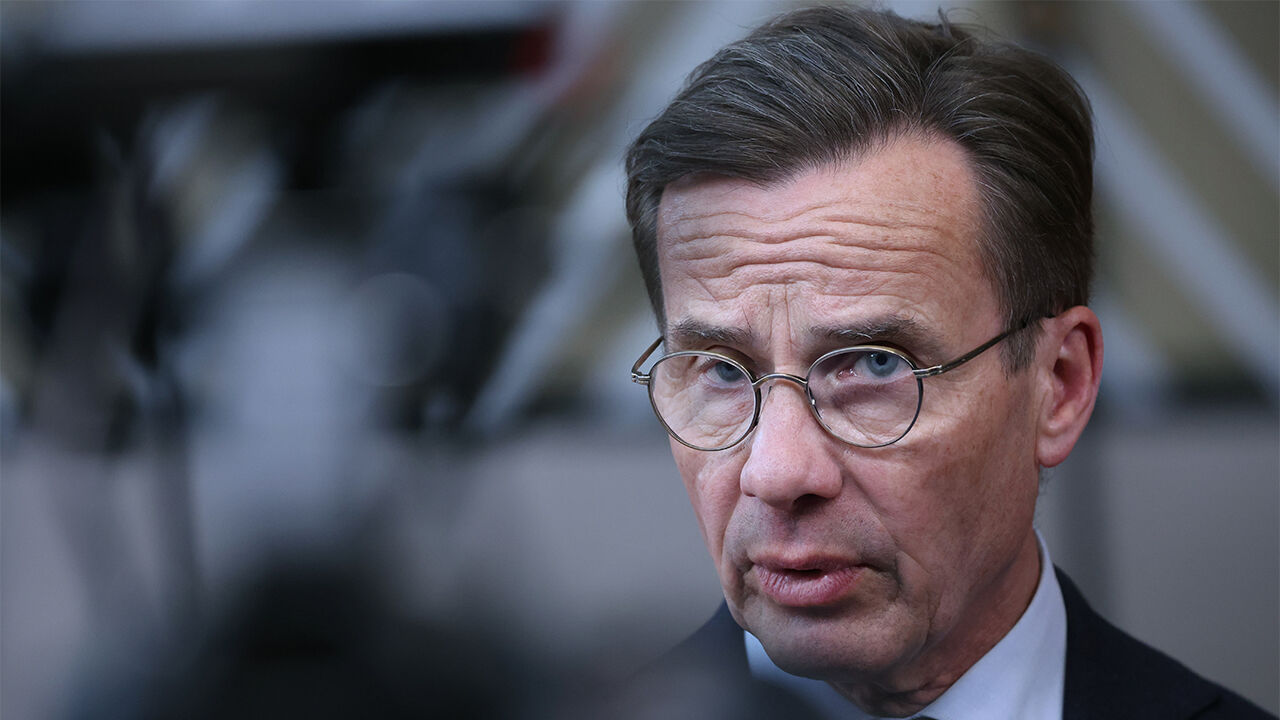
▲ Swedish Prime Minister Ulf Kristersson
Sweden has been struggling to form a new government for nearly two months following a general election.
With two parliamentary votes to appoint a new prime minister having been rejected, incumbent Prime Minister Ulf Kristersson is expected to attempt to secure a successive term.
According to Reuters and other sources, the Swedish parliament held a vote today (local time) on electing Elisabeth Thand Ringqvist, leader of the centrist Liberal Party, as prime minister, but the motion was voted down.
Ringqvist received the mandate to form a government from parliamentary Speaker Andreas Norlén last month.
She had pursued a pan-centrist coalition government excluding the far-right Sweden Democrats and the radical left Left Party.
However, ahead of the vote, she failed to form a government last week and had declared that she had no intention of serving as prime minister.
Sweden held a general election on September 13, but has failed to establish a new government for 51 days.
The left-wing bloc consisting of four parties—the Center Party, the Social Democratic Party, the Green Party, and the Left Party—won 176 seats, defeating the right-wing bloc led by Prime Minister Kristersson with 173 seats.
However, the Center Party and the Left Party disagreed on policies and cabinet formation, leading to a failure to form a coalition.
The parliament previously voted on former Prime Minister and Social Democratic Party leader Magdalena Andersson as the new prime minister candidate on October 15, but that motion was also rejected.
Consequently, Speaker Norlén asked Ringqvist, leader of the fifth-largest Center Party, to seek a centrist alternative and form a government.
With two prime ministerial votes rejected, Prime Minister Kristersson is now set to make a third attempt at coalition negotiations and aim for another term.
Speaker Norlén had previously stated that if Ringqvist's nomination for prime minister was voted down today, he would give the opportunity to Prime Minister Kristersson.
If Prime Minister Kristersson forms a new government, the possibility cannot be ruled out that the far-right Sweden Democrats could officially participate in a coalition for the first time in Sweden's constitutional history.
The Sweden Democrats, which advocate anti-immigration and nationalist policies, secured 73 seats—the most within the right-wing bloc—during the 2022 general election, but did not join Prime Minister Kristersson's center-right coalition government.
Prime Minister Kristersson, who formed a center-right minority government consisting of the Moderate Party, the Christian Democrats, and the Liberals, cooperated with the Sweden Democrats by receiving support for bill votes and reflecting their policies.
During this general election campaign, Prime Minister Kristersson pledged to officially bring the Sweden Democrats into the coalition.
In Sweden, a prime minister can be elected and a government formed as long as a majority of the parliament's total members do not vote against it.
The parliamentary speaker can propose candidates up to four times, and if all are rejected, a new general election must be held.
It is also common to form a minority government first and then run state affairs by concluding cooperation agreements with opposition parties.
Research results show that more than 70 percent of governments established after World War II were minority governments.
(Photo: AP, Yonhap News)
※ Please note: This article was translated by AI and may contain errors.


 Video News
 Video News
 Video News
 Video News
 Video News