
 KOR
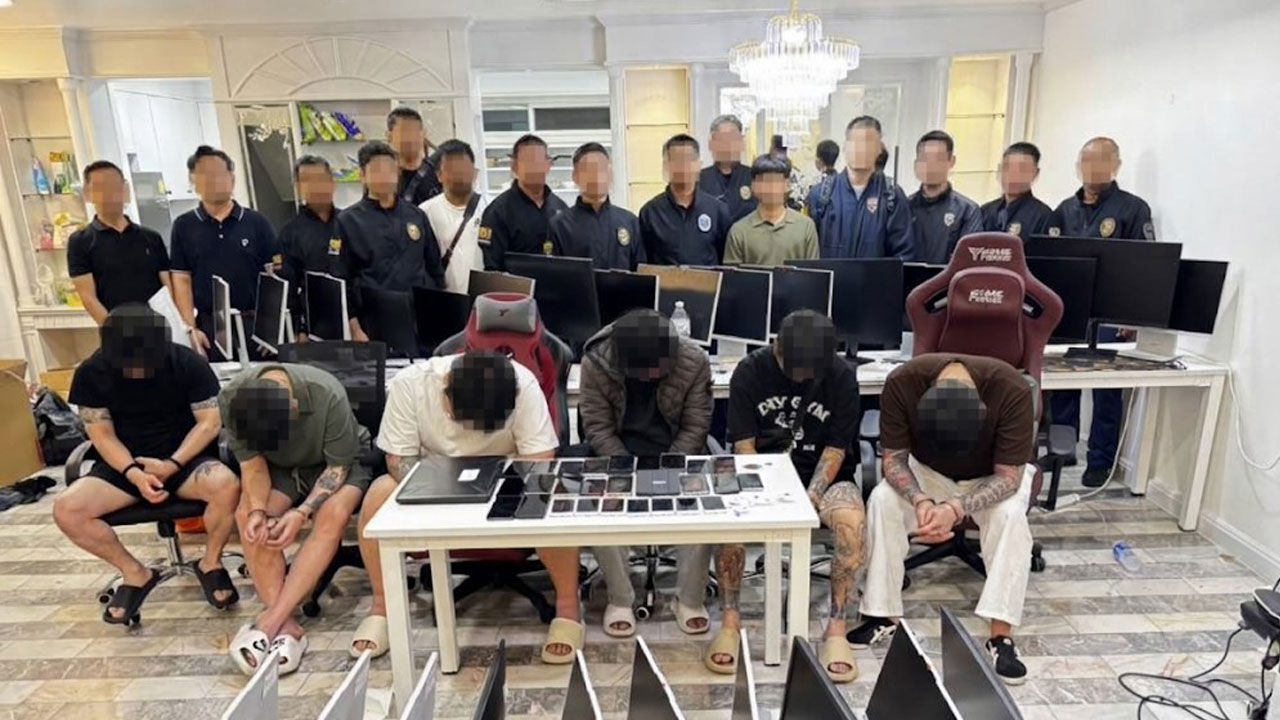
▲ Local police (top) and arrested phishing gang members (bottom)
A criminal organization based in Thailand that swindled about 1.8 billion won by using celebrities and prostitution as bait has been rounded up by police.
The Seoul Songpa Police Station announced today (November 3) that it has successively transferred 10 organization members to the Seoul Dongbu District Prosecutors Office since last July on charges of joining and operating a criminal organization and violating the Act on Prevention of Damage from Telecommunications-based Financial Fraud.
Among them, 9 were handed over to the prosecutors office in police custody.
Songpa Police also referred 14 holders of borrowed-name accounts used in the crime to prosecutors without detention.
About 10 others involved in the crime are also under booking and investigation.
The gang is accused of operating multiple fake prostitution websites and tricking men who expressed intent to purchase prostitution by claiming that additional fees were needed during security authentication processes.
Individual victims paid anywhere from a minimum of 20,000 won to more than 100 million won under the guise of website registration fees and security review costs.
One man was defrauded of approximately 150 million won across 16 instances under various pretexts, including a meeting deposit with a sex worker, security authentication fees, system recovery costs, withdrawal data fees, and credit score recovery costs.
In the process, a fabricated scenario was even utilized, claiming that the sex workers were influencers, models, and other celebrities who wished to avoid public exposure.
Police explained that an analysis of the criminal accounts estimated the total amount of damage at around 1.77 billion won.
This is the result of investigating about 100 out of roughly 200 accounts used in the crimes, and the damage amount could increase further depending on the status of the remaining accounts.
The number of victims identified so far is around 100, and they were found to be men in their 20s to 40s.
Police did not separately book these individuals, as the laws concerning prostitution do not contain provisions for punishing attempts.
To evade crackdowns by investigative authorities, the organization rented an entire four-story villa in Bangkok, Thailand, set up an office, and recruited members via Telegram and other channels.
It was revealed that they meticulously managed the organization by establishing a hierarchical structure ranging from a ringleader down to counselors, and even forcing members to live together in group quarters to prevent defection.
In addition, circumstances pointing to preparations for investigations were captured, such as changing their criminal plans every two weeks based on 19 borrowed-name accounts.
Police began their full-scale investigation into this organization last June.
Having obtained intelligence from the National Intelligence Service and the Songpa Police Station that an overseas scam organization was operating, the police, through cooperation and a joint operation with Thai authorities, first apprehended 7 suspects in Bangkok on June 22 of that year.
Following this, through three operations until early August, they repatriated the suspects to South Korea and took over 53 pieces of evidence related to the crimes.
Police are also tracking down the rest of the gang, including a ringleader surnamed Lee who directed them and planned the crimes.
Arrest warrants have been issued for 8 individuals believed to be staying overseas, and requests for Red Notices have been made to INTERPOL.
A police official advised that if an unidentified person contacted online demands registration fees, commissions, or remittances, it should immediately be suspected as a phishing crime, and if suspicious, people should decisively cut ties and immediately end SNS conversations and other contacts.
(Photo provided by Songpa Police Station, Yonhap News)
※ Please note: This article was translated by AI and may contain errors.


 Video News

 Video News
 Video News
 Video News