
 KOR
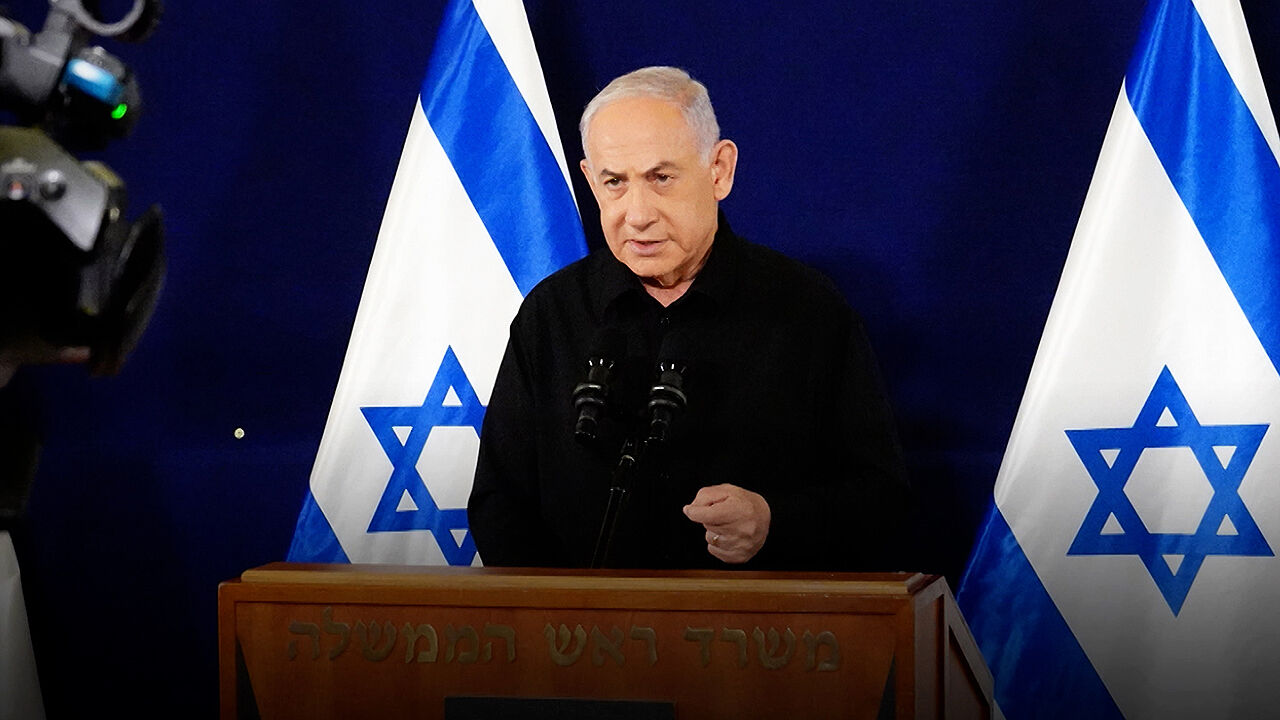
▲ Israeli Prime Minister Benjamin Netanyahu
Israeli Prime Minister Benjamin Netanyahu, whose political standing has weakened following the general election, is continuously urging U.S. President Donald Trump to launch a massive strike against Iran after the U.S. midterm elections, the Associated Press reported on the 2nd (local time).
According to the report, Prime Minister Netanyahu has been contacting high-ranking U.S. administration officials to persuade President Trump to initiate swift and sweeping airstrike operations.
Having failed to secure a majority—the minimum requirement for forming a coalition—in the general election on October 27, Prime Minister Netanyahu is reportedly viewing the resumption of an all-out war with Iran as a means to turn the political tide and form an emergency coalition government.
This suggests that he is eyeing escalating the conflict as a winning gamble to prevent the opposition from forming a government by allying with the Arab factions holding the casting vote in the inconclusive election, thereby allowing him to maintain his position as prime minister.
Within Israel, public opinion largely favors ending the war with definitive results rather than an unconditional cessation, making it possible that Netanyahu's scenario could unfold if a war breaks out.
Prime Minister Netanyahu has frequently cited strikes on Iran as one of the key cards to highlight his security competence to the Israeli public, whose security anxieties have grown since Hamas's surprise attack on October 7, 2023.
Prime Minister Netanyahu repeatedly urged U.S. airstrikes during a phone call with President Trump over the weekend, but President Trump reportedly avoided giving a definitive answer.
Meeting with reporters afterward, President Trump did not disclose the details of the discussion, saying only that he had "a very good phone call with Prime Minister Netanyahu."
On this day, just one day ahead of the midterm elections, Trump also drew a line, stating that there was no need to rush a decision on whether to resume attacks on Iran after the elections.
This was interpreted as a sign that he places more weight on negotiations than resuming attacks for the time being.
U.S. Secretary of State Marco Rubio similarly conveyed the complex currents to reporters, stating that President Trump has not yet made a decision and adding, "While he has strong confidence in military action when necessary, he fundamentally prefers a diplomatic solution."
In fact, diplomatic resolution efforts have also shown some progress.
A Qatari delegation, acting as a mediator between the U.S. and Iran, visited Iran late last month and held two rounds of talks with high-ranking officials.
They reportedly discussed a proposal where the U.S. would lift its blockade of Iranian ports in exchange for Iran halting attacks on commercial vessels passing through the Strait of Hormuz.
Additional talks are also scheduled for this week.
Andreas Krieg, a professor at King's College London, analyzed, "The current standoff between the U.S. and Iran is essentially no different from a fight between Qatar and Israel. Qatar is trying to secure a diplomatic exit backed by Arab support, while Israel is seeking a military solution that could put the entire region at risk."
Indeed, Arab nations have been warning that additional U.S. and Israel strikes against Iran could drag the entire Middle East into catastrophe.
If Iran is attacked again and the Houthi rebels in Yemen and Iran-backed militias in Iraq intensify their offensives against Saudi Arabia and Red Sea shipping lanes, global energy prices could skyrocket.
Anwar Gargash, diplomatic adviser to the UAE president, pointed out while attending a conference in Manama, Bahrain, on the 1st, "If the gap in stances between the U.S. and Iran is not reconciled, we must fear the worst."
Egyptian Foreign Minister Badr Abdelatty also expressed concern, saying, "The next phase of military escalation will be far more dangerous and destructive."
Meanwhile, China plans to dispatch special envoys to Iran, Oman, Saudi Arabia, and other countries in early and mid-this month to mediate the Middle East conflict.
During a summit with Sultan Haitham bin Tariq Al Said of Oman, who is on a state visit to China, Chinese President Xi Jinping urged resolving disputes through diplomatic means, stating that the Middle East Gulf region must not become an arena for major power competition and geopolitical clashes.
However, there are also observations that President Trump, who needs justification to wrap up a war with Iran, might launch a massive attack on Mount Kouh-e-Sorkh, suspected to be Iran's new underground nuclear facility, and declare victory by claiming he "completely neutralized Iran's nuclear complex."
※ Please note: This article was translated by AI and may contain errors.


 Video News

 Video News
 Video News
 Video News