
 KOR
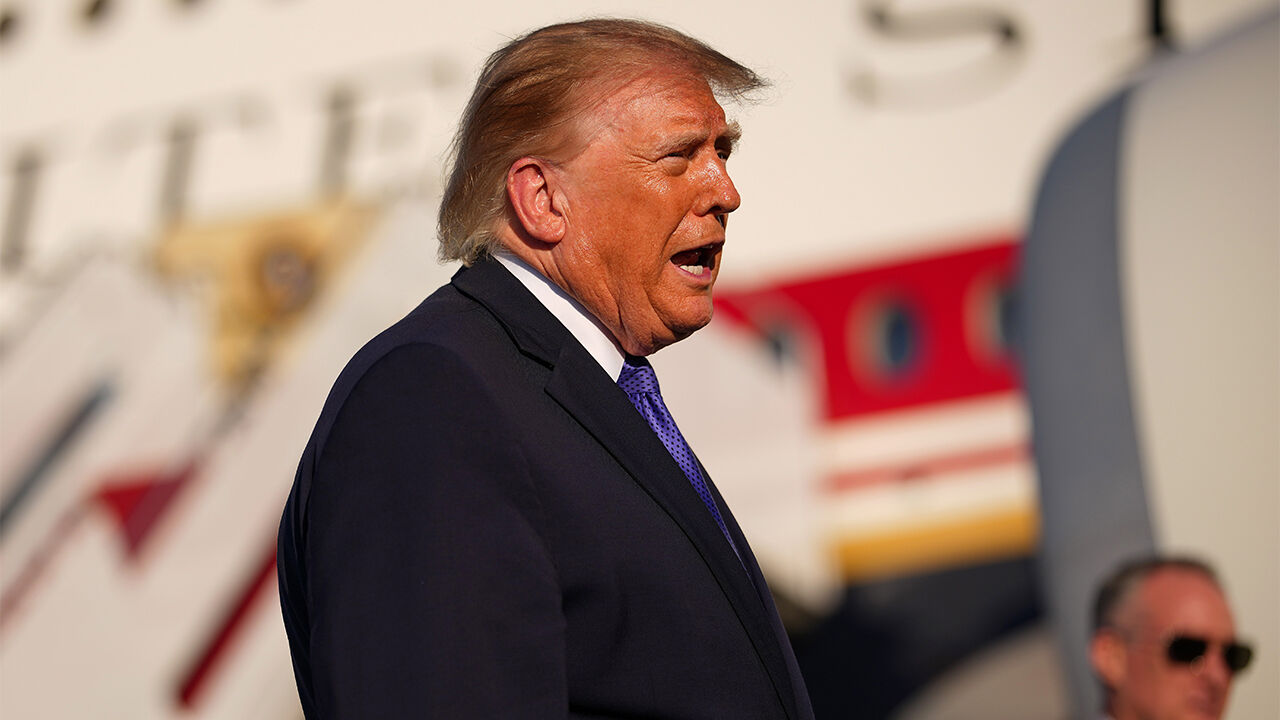
▲ U.S. President Donald Trump
U.S. President Donald Trump drew a line on Monday (local time), stating that there is no need to rush a decision on whether to resume attacks on Iran following the midterm elections.
He also raised expectations for a potential agreement by mentioning that Iran wants a deal as soon as possible.
Observations suggest that President Trump, who had previously pressured Iran by repeatedly hinting at the possibility of resuming strikes, may be leaning toward monitoring negotiations for the time being.
Speaking to reporters after delivering a speech in front of the Lincoln Memorial reflecting pool in Washington, D.C., that day, President Trump answered a brief "No" when asked whether he was considering resuming attacks on Iran after the midterm elections.
In an interview with the U.S. online media outlet Axios, President Trump also remarked regarding the potential resumption of attacks on Iran, "We will do something in some way, but there is no need to rush."
He added, "We are talking with them, and it is going well," while noting, "The urgency [from the Iranian side to reach a deal] is less than people think, but they want a deal more than ever."
On his social media platform Truth Social, President Trump claimed, "Oil prices are plummeting. Down to nearly $10 dollars a barrel, a record," adding, "That's because people feel there will be no war with Iran."
President Trump further stated, "Iran wants a deal, and they want it as fast as possible. [A deal] can be made!"
He made similar remarks during his speech that afternoon.
This is interpreted as an indication that he will place more weight on negotiations rather than resuming attacks for the time being.
This tone is quite different from his previous repeated mentions of striking Iran to pressure them into a deal.
While these remarks could stem from a judgment that negotiations with Iran are genuinely making progress and the likelihood of producing meaningful results has grown, they are also interpreted as an intention to stir expectations of an end to hostilities just a day before the midterm elections, thereby turning around public opinion critical of the war with Iran.
Vice President JD Vance also said during a midterm campaign rally that several good discussions had been held with the Iranian side, stating, "Both the president and I feel pretty good about the prospect that a deal can be reached. We will continue to work on it."
Vice President Vance also remarked that no deadline has been set for the decision to resume U.S. attacks on Iran.
Amid expectations of progress in negotiations between the United States and Iran that day, international oil prices plummeted by more than 7%.
On the New York Mercantile Exchange, West Texas Intermediate (WTI) crude futures for December delivery settled down 7.36% from the previous session at $96.46 a barrel.
The surge in oil prices driven by the prolonged war with Iran had been the biggest headache for President Trump ahead of the midterm elections.
With disappointment accumulating among his base—whose farms and businesses have been hit hard by high inflation—President Trump has also struggled to find a viable exit strategy.
(Photo: Getty Images)
※ Please note: This article was translated by AI and may contain errors.


 Video News
 Video News
 Video News
 Video News
 Video News