
 KOR
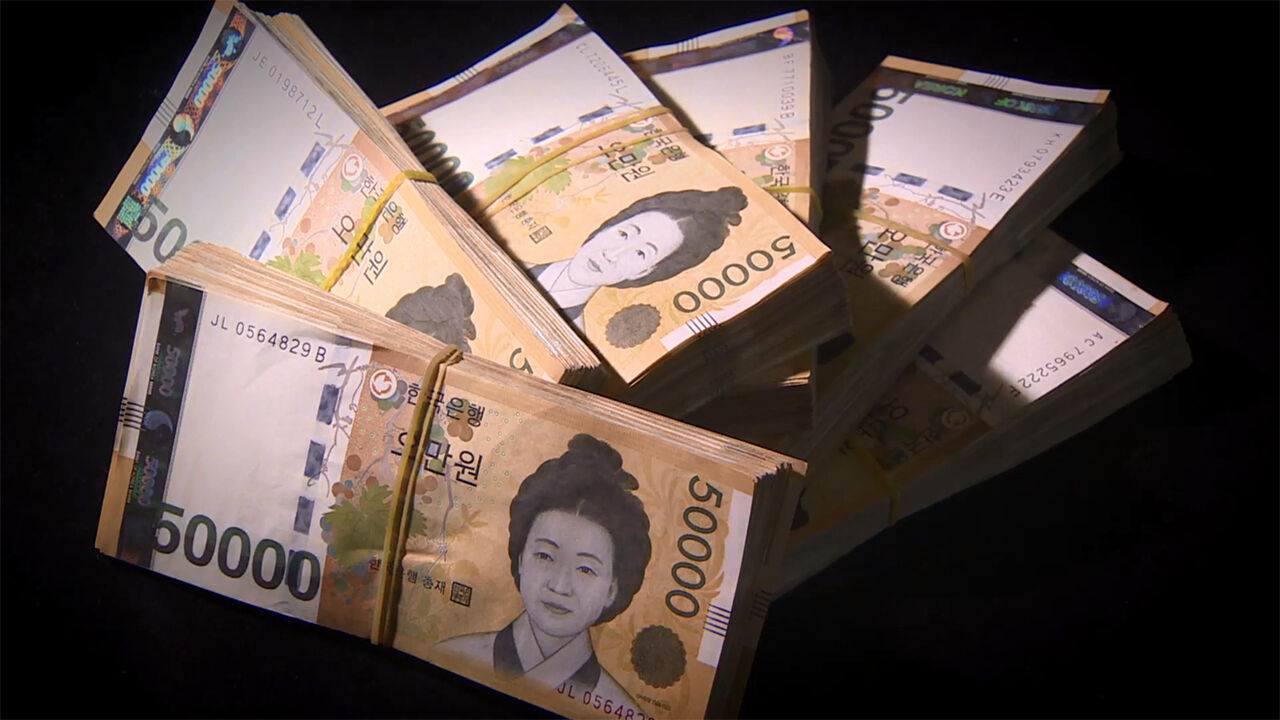
▲ Cash
About 4 in 10 middle-income earners saw their wage and business income decrease, data showed.
The proportion of individuals experiencing a drop in income was the highest in four years since 2020, when the shock of COVID-19 hit.
According to the 2024 Income Mobility Statistics released by the Korea National Statistical Office on November 1, 38.9% of individuals who belonged to the middle-income bracket (the 3rd quintile) based on their wage and business income in 2023 experienced a decrease in income the following year.
This is the highest level since 2020 (41.2%) during the COVID-19 pandemic.
The proportion of those with declining incomes fell for three consecutive years—reaching 38.6% in 2021, 35.8% in 2022, and 35.2% in 2023—before turning upward with a 3.7 percentage point increase in 2024.
The proportion of individuals whose income plummeted by 50% or more stood at 12.8%, up 0.5 percentage points from the previous year.
This means that roughly 1 in 3 people (32.9%) whose incomes decreased saw their earnings cut in half or worse.
Conversely, the proportion of those whose incomes increased dropped to 57.3%, down 5.7 percentage points from the previous year (63.0%).
This marks the lowest level since 2021.
The proportion of people whose income rose by 50% or more fell by 2.3 percentage points to 9.7%, marking the lowest figure since the statistics began in 2018.
Among all income quintiles (1st to 5th), the 3rd quintile saw the largest increase in the proportion of income decline.
The proportion rose by 2.5 percentage points for the 2nd quintile (from 38.0% to 40.5%), 3.3 percentage points for the 4th quintile (from 33.2% to 36.5%), and 1.0 percentage point for the 5th quintile (from 34.1% to 35.1%).
Meanwhile, the 1st quintile saw a 0.2 percentage point decrease (from 29.3% to 29.1%).
Although economic growth is projected to climb into the 3% range this year, bolstered by a semiconductor boom, observations suggest that the warmth of economic recovery may be relatively concentrated among high-income earners.
An official from the statistical office explained, Performance bonuses and benefits from select manufacturing sectors like semiconductors tend to be concentrated in the 4th and 5th quintiles, which largely consist of middle-aged workers in their 30s and 40s. For middle-income groups such as the 3rd quintile, there may be limitations to directly feeling the warmth of this export boom.
The Bank of Korea also analyzed in a report titled Why This Terms of Trade Improvement Is Different, published last July, that wage increases and capital gains resulting from the recent semiconductor market boom are concentrated among high-income and high-asset groups, who have relatively lower marginal propensities to consume and weaker wealth effects.
(Photo: Yonhap News TV screen capture, Yonhap News)
※ Please note: This article was translated by AI and may contain errors.




 Video News
 Video News