
 KOR

The SBS program "Unanswered Questions," which aired yesterday (October 31), tracked "prone juveniles" and the "Juvenile Classification Review Board."
"Prone juveniles," who face trials because of the possibility that they might commit crimes, stepped in front of the cameras. They described the "Juvenile Classification Review Board," where they spent time, as "a juvenile detention center disguised under the name of a classification review board."
Prone juveniles refer to individuals aged 10 to under 19 who have not committed crimes, but are subject to protective measures under the Juvenile Act due to the possibility of committing offenses. Consequently, these prone juveniles stood in court simply for reasons such as running away from home, smoking, or wandering the streets at night.
And many of them were escorted to the Juvenile Classification Review Board under the name of protection, where they were detained for a certain period.
Information about the prone juvenile notification system was being widely shared among parents of adolescents entering puberty who were beginning to act out. Choosing notification as a last resort aims to protect uncontrollable children from larger crimes.
Accordingly, some youths were accommodated in the Juvenile Classification Review Board following hearings triggered by notifications from their biological parents. One informant stated that they had been detained in the classification review board due to their father's notification and still could not understand their father's action.
The child's father explained that he chose notification because there was no other way to turn his wandering child around. However, catching attention, he revealed that upon seeing the child separated from parents and escorted away immediately after the hearing ended, he thought, "Ah, something is wrong here. I wanted to say, 'Please give me back my child.'"

Contrary to the expectation that the child returning home would change from before, the child engaged in further rebellious behavior out of a sense of betrayal toward the family, worsening the father-son relationship even further.
Recently, the father and son even engaged in a physical fight and were reportedly punished for offenses including assault against an ascendant and child abuse, respectively.
One child, who suffered sexual assault by helpers after running away from home, was detained despite her family filing a missing person report and was subsequently housed in the Juvenile Classification Review Board.
Having become a prone juvenile simply for running away from home, the child—despite being a victim—spent time in the same place without separation from youths who had committed crimes, and ultimately received a disposition of 6 months of custody commitment and 2 years of probation through a trial.
After returning home, the child blamed everything on herself and even engaged in self-harm. She ran away because she enjoyed spending time with friends, but as that time grew longer, she could not return home out of fear of being scolded, ultimately falling victim to a sex crime. Moreover, despite being a victim, she could not make this fact known to the outside world, and even had to bear the stigma of having been to a juvenile facility by wearing a smart watch that monitored her nighttime activities, even though it was not a juvenile detention center.
In contrast, it was revealed that the 14 male perpetrators are currently undergoing police investigation and trial without detention on the grounds that there is no risk of fleeing, causing shock.
In response, an official from the Juvenile Classification Review Board stated regarding the reason for the facility's existence, "Children without delinquency such as violence or theft are referred to as simple prone cases. However, many of these cases require urgent protection due to attempted suicide or risks of prostitution victimization, and the emphasis is on protecting the students."

An expert expressed regret, saying, "Children and adolescents who have suffered sexual exploitation are frequently notified as prone juveniles and detained. It is a method of separating children from dangerous environments. But was that truly the best choice? They are victims yet stand trial with the status of criminals, which leads me to think that prone juveniles are being viewed as preemptive criminals."
Children who received notifications due to reports by the director of an orphanage complained that such children from the orphanage were not just one or two, and that the director used notifications as a threat. They also asked whether they easily became prone juveniles simply because they came from an orphanage.
In response, the orphanage director explained, "The problem with the orphanage is that 100 children live there at once." When children rebelled and refused to go to school despite persuasion, and other children began copying them, they had no choice but to use the notification system as a last resort.
The director added, "I would have done the same for my own biological child. Doing nothing amounts to neglect and abandonment," noting that after utilizing the notification system, there are currently zero children who refuse to attend school.
While some agreed with the orphanage director's actions, others expressed concern. An official from the orphanage pointed out, "If they genuinely caused social trouble, committed crimes, and continued such behaviors, I would not oppose using the notification system. However, the children did not exceed that level."
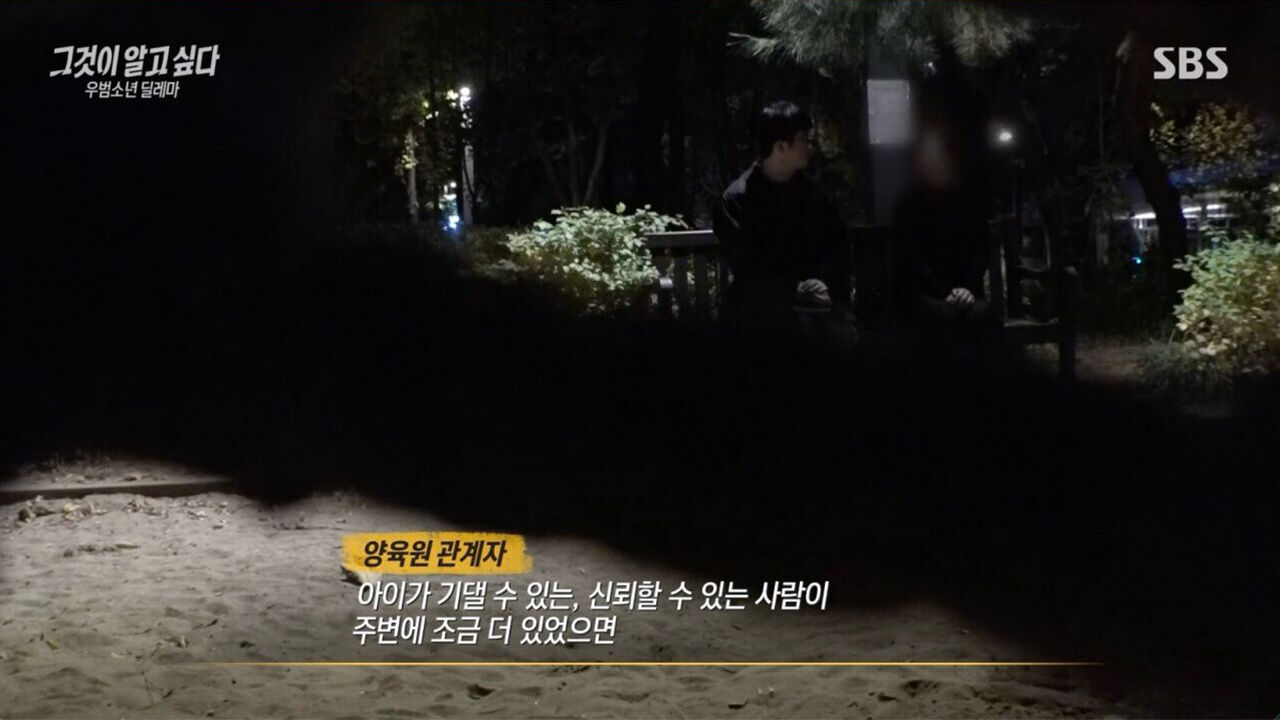
The official also expressed regret, saying, "If the children had more people around them to lean on, perhaps they wouldn't have even faced notification," calling the method of branding children as prone juveniles when they had not even committed crimes an excessively violent approach.
An expert criticized the prone juvenile system and notifications, stating, "It is anachronistic thinking. The times are vastly different from when juvenile crimes were established in '58."
However, a legal official remarked, "Is there an alternative when there is no prone juvenile law? If a system capable of protecting vulnerable children is put in place first, state intervention should gradually step back and be minimized, but reality is not like that."
Points were also raised that a shift in societal perception regarding prone juveniles is necessary. An expert stated, "For the past 70 years, roles and responsibilities have been dumped solely onto the judiciary. There is an alternative. This is a problem that must be resolved through the joint deployment of various welfare support systems and welfare support resources within the communities where the children live."

Another expert pointed out, "There is no verification of effectiveness showing that the prone system actually works. Other overseas countries protect children through education and welfare after verifying a lack of effectiveness."
Regarding opinions that multiple government ministries should seek improvement measures together, the Crime Prevention Policy Bureau of the Ministry of Justice stated its stance, saying, "We maintain the direction for improvement that excessive dispositions must be restricted. We plan to actively support related legislative discussions moving forward."
(Photo: Yonhap News)
(Reported by Kim Hyo-jung)
※ Please note: This article was translated by AI and may contain errors.




 Video News
 Video News
 Video News