
 KOR
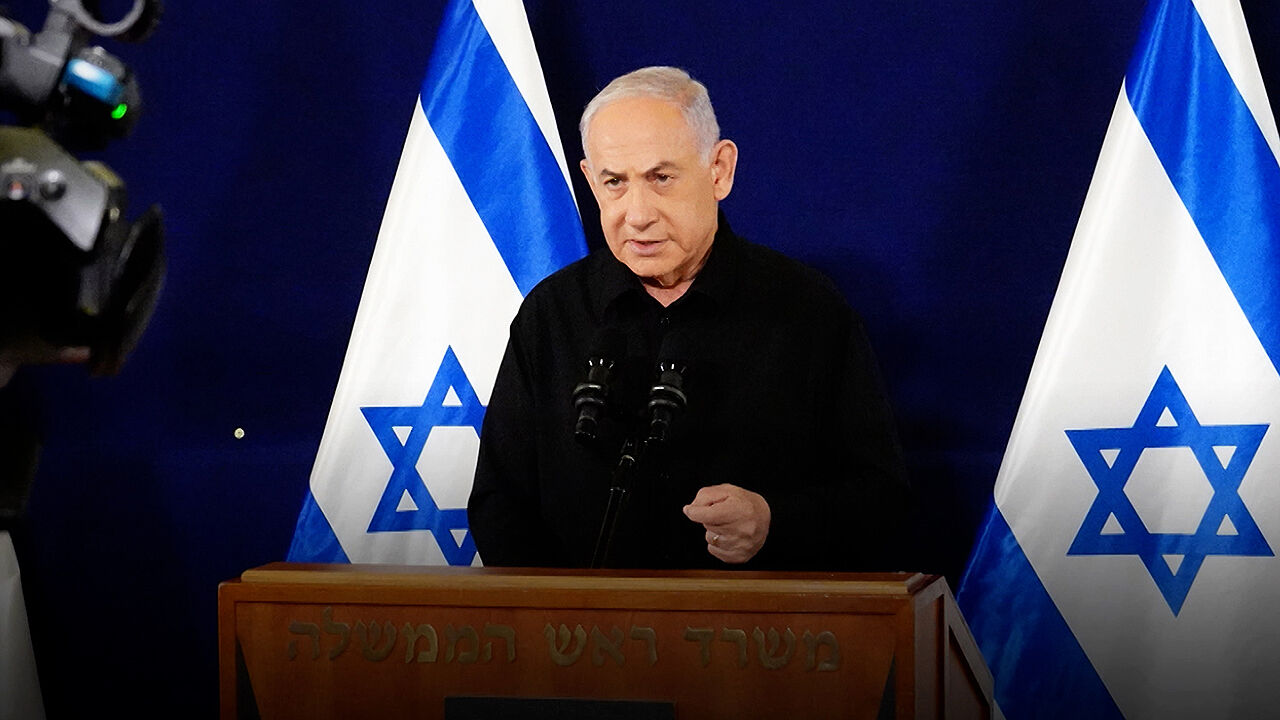
▲ Prime Minister Benjamin Netanyahu
While the ruling bloc led by Prime Minister Benjamin Netanyahu won the most seats in Israel's general election, neither the ruling nor opposition camps secured a parliamentary majority.
Following the completion of vote counting at dawn on the 30th, Prime Minister Netanyahu's Likud party and the hardline right-wing bloc secured 53 seats, a loss of 11 seats compared to the election four years ago.
The opposition bloc, led by former military Chief of Staff Gadi Eisenkot, secured 48 seats, leaving neither camp with a majority of 61 seats in the 120-seat parliament.
Two Arab parties, Ra'am and the Joint List, won a record 19 seats.
Likud won the most seats as a single party with 27, followed by Eisenkot's Yesh Atid with 21.
They were followed by the opposition Together with 12 seats, the Joint List with 11, the opposition Democratic Party with 8, and Ra'am with 8.
The ultra-Orthodox United Torah Judaism (UTJ), the right-wing opposition party Yisrael Beytenu, and the far-right Otzma Yehudit won 7 seats each, while the ruling parties Religious Zionism and Shas secured 6 seats each.
With no camp securing a majority and signs of defection from Netanyahu's long-time allies, the ultra-Orthodox UTJ and Shas, coalition negotiations face a high likelihood of plunging into chaos.
In addition, Arab parties that made significant gains in this election now hold a formidable 19 seats, and their future moves are expected to heavily impact the Israeli parliament and coalition dynamics.
If the opposition joins hands with Arab parties, they would easily reach a majority with 67 seats, but the opposition also includes right-wing parties, and Eisenkot is not receptive to cooperating with them.
The New York Times (NYT) assessed that "many of Netanyahu's supporters are relieved that he has a chance to stay in power, while those who expected his definitive defeat are deeply frustrated by the prospect of recurring political deadlock."
The Central Election Commission explained that vote counts could be subject to minor revisions before the final results are submitted to President Isaac Herzog on the 4th of next month.
President Herzog grants the mandate to form a government to the party leader deemed most likely to secure majority support.
Asaf Shapira of the Israel Democracy Institute (IDI), a non-partisan research organization in Israel, forecasted that President Herzog is likely to give Eisenkot the first opportunity to form a government.
If Eisenkot is given the mandate to form a coalition, he will have to decide whether to join hands with Arab parties to force Netanyahu out or to join forces with Netanyahu to form a national unity government.
If the first attempt to form a coalition fails, the president can grant the mandate to up to three figures, and if those efforts also fall through, another general election will be held.
According to the IDI, past coalition formations in Israel have taken anywhere from 20 to 100 days.
Until a coalition is formed, Netanyahu can continue to serve as prime minister of a caretaker government.
※ Please note: This article was translated by AI and may contain errors.


 Video News
 Video News
 Video News
 Video News
 Video News