
 KOR
⚡ Quick Take
A 'six-month reign' proven by a sharp drop in raw material imports: According to data from the Korea Customs Service and the Ministry of Food and Drug Safety, imports of pistachios, a key ingredient in Dubai chewy cookies ("dujjonku"), plunged 92.6% in five months, while import inspections of kataifi plummeted 93.5% in four months, signaling a steep collapse of the trend.
Fatigue over high prices, calorie bombs, and toxic inventory losses for small business owners: An unreasonable price tag reaching 8,000 won per piece, a heavy calorie load equivalent to a full meal (300 to 1,000 kcal), and a delayed flood of mass production by large corporations have left small merchants with nothing but toxic deadstock of expensive ingredients and business closure losses.
The repeated cycle of sensational social media fads driving up consumer prices: Short-lived consumption trends driven by social media algorithms—such as tanghulu, yogurt ice cream, and bomdong (spring cabbage) bibimbap—are causing raw material prices to spike, creating negative ripple effects that destabilize grocery and dining costs for ordinary households.
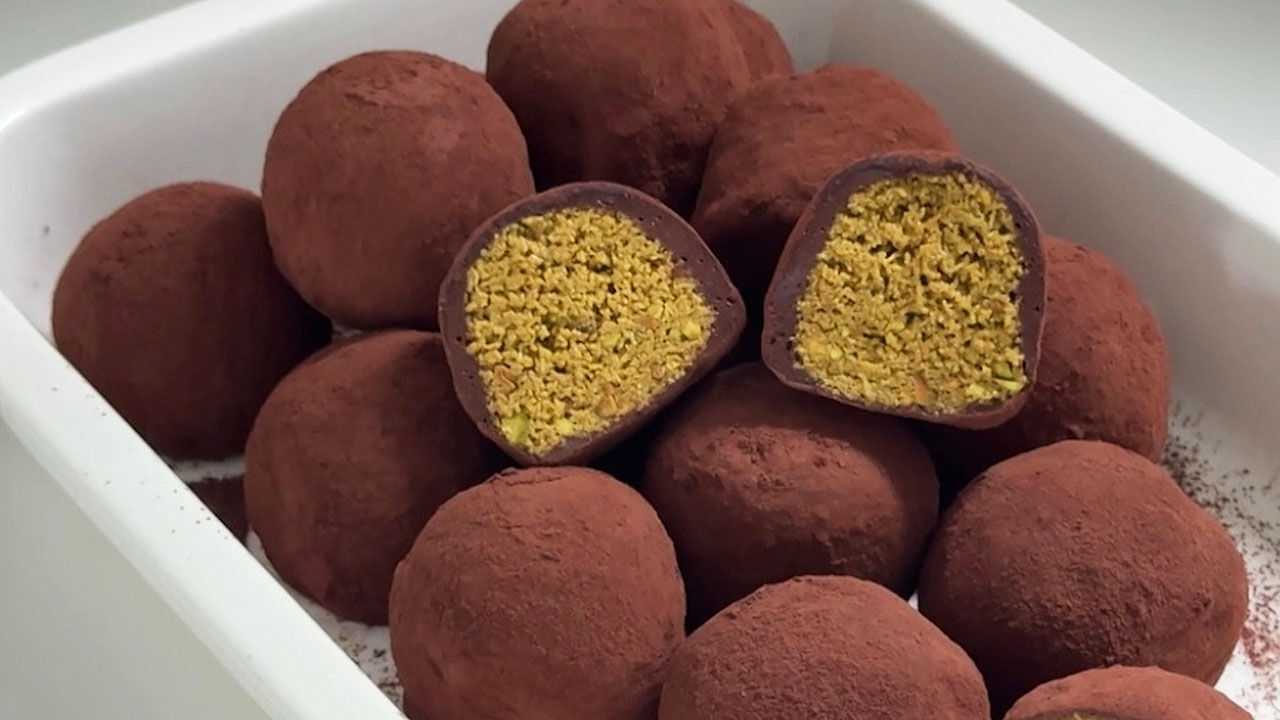
Dubai chewy cookies, or "dujjonku." A dessert that sounds like it came from Dubai, but cannot actually be found there. A treat that was re-exported from South Korea to Dubai only around January this year. While many have wondered where all those cookies went, objective data tracking their trajectory has now emerged.
01. The 'Dujjonku Craze'

Crowds wrapping around storefronts—all of them queuing up just to buy dujjonku.
Park Seeun | Mapo, Seoul
Every place around my house was sold out, so I couldn't buy any.
Every place around my house was sold out, so I couldn't buy any.
Dujjonku proved irresistible even to Winter Olympic stars.
Choi Ga-on | Snowboarder
I really wanted to eat dujjonku so badly...
I really wanted to eat dujjonku so badly...
With such overwhelming demand, fraudsters quickly multiplied.
SBS News (Aired on January 15, 2026)
On social media, reviews from disappointed customers who bought fake dujjonku—made with regular somyeon noodles instead of kataifi or missing pistachios entirely—are not hard to find.
On social media, reviews from disappointed customers who bought fake dujjonku—made with regular somyeon noodles instead of kataifi or missing pistachios entirely—are not hard to find.
02. The Disappearance of Dujjonku Proven by Statistics
Dujjonku, which arrived like the season's first snow, melted away in just half a year. Statistics have now confirmed that the frenzy has completely deflated. According to data from the Korea Customs Service, the Ministry of Food and Drug Safety, and the Korean Intellectual Property Office, import volumes of key dujjonku ingredients fell by more than 90%. Imports of light-green pistachios, which began rising in December last year from 372 tons, peaked at 731 tons in February this year before plummeting to 54 tons in July. That represents a steep 92.6% drop in just five months. The import value also shrank from $15.46 million (around 21.3 billion won) to $990,000 (around 1.4 billion won).
A similar pattern was observed with kataifi, which provided the cookie's signature crunchy texture. This trend can be tracked through import inspections, which rose from 168 cases in January this year to 340 in February, but fell to only 22 cases in June. That marks a 93.5% decrease in just four months since February. In stark contrast to the period when everyone rushed to register trademarks, trademark applications related to the keyword "Dubai" dropped from 23 cases in January this year to just a single case in June. It was truly a "six-month reign."
03. Why Dujjonku Cooled Down
Why did dujjonku, which people scrambled to buy and shops could not stock fast enough even at 8,000 won apiece, end up like this? Here is what consumers who were once swept up in the craze had to say.
Kwon Young-chae | Videomug The Intern
I think people thought, 'This is extremely expensive and not a reasonable price.' But the reason they readily bought it was purely curiosity and following the trend. Once that curiosity and novelty wore off, people felt they didn't want to consume it anymore.
I think people thought, 'This is extremely expensive and not a reasonable price.' But the reason they readily bought it was purely curiosity and following the trend. Once that curiosity and novelty wore off, people felt they didn't want to consume it anymore.
Park JIMIN | Videomug The Intern
When dujjonku was at the height of its popularity, cafes had huge signs outside saying 'Dujjonku Sold Here.' That really caught people's eyes. But these days, not many cafes have those signs up, and people seem far less interested than before—it just faded away naturally...
When dujjonku was at the height of its popularity, cafes had huge signs outside saying 'Dujjonku Sold Here.' That really caught people's eyes. But these days, not many cafes have those signs up, and people seem far less interested than before—it just faded away naturally...
The "calorie bomb" issue also played a significant role in stripping away the dessert's appeal.
Professor Lee Yu-jeong | Department of Family Medicine, Korea University Guro Hospital
It has about 300 to 400 kcal, which is far more than a bowl of rice or a regular meal. In the case of giant dujjonku, some exceed 1,000 kcal.
It has about 300 to 400 kcal, which is far more than a bowl of rice or a regular meal. In the case of giant dujjonku, some exceed 1,000 kcal.
And where dujjonku once stood, only the deep sighs of small business owners remain.
Koh Jang-su | Chairman of the National Cafe Owners Cooperative
After the boom started, we tried to source ingredients like kataifi and pistachios, but their prices surged dramatically by the day. So instead of ordering items that would arrive the next day, many shop owners placed large overseas delivery orders. In the meantime, major corporations began selling dujjonku, flooding the market with supply, and the scarcity dissipated. Those ingredients are useless unless you are making dujjonku. They turned into toxic deadstock, and some owners simply had to throw them away.
After the boom started, we tried to source ingredients like kataifi and pistachios, but their prices surged dramatically by the day. So instead of ordering items that would arrive the next day, many shop owners placed large overseas delivery orders. In the meantime, major corporations began selling dujjonku, flooding the market with supply, and the scarcity dissipated. Those ingredients are useless unless you are making dujjonku. They turned into toxic deadstock, and some owners simply had to throw them away.
04. But Was It Just Dujjonku?
Yet dujjonku is far from the only food fad to flare up and fizzle out. In recent years, there have been numerous instances where food trends spread like wildfire on social media only to be extinguished in the blink of an eye.
A prime example was tanghulu just three years ago. Dalkom Wangga Tanghulu, which spearheaded the tanghulu trend, had 531 franchise locations nationwide as of late 2023. By July this year, however, the brand had only 20 official stores left across the country, with just two remaining in Seoul. While not quite as extreme as dujjonku, a business lifespan of under three years clearly highlights just how perilous this territory is for self-employed merchants. Other food items such as bomdong bibimbap and yogurt ice cream have followed the same repetitive cycle: an explosion on social media followed by an aggressive expansion of stores and subsequent steep closures.
This cycle has also taken a toll on consumer prices. Looking at dujjonku, pistachios cost 18,000 won and kataifi cost 18,900 won prior to the boom, but once the fad took off, their prices jumped to 24,000 won and 31,800 won, respectively. In the case of tanghulu, the craze pushed strawberry prices up by 50% and sugar prices up by 20%. Bomdong bibimbap saw a similar effect: bomdong cabbage, which cost 4,500 won before the boom, surged 33% to 6,000 won afterward, while egg prices rose from 8,500 won to 9,000 won. The wave of shop closures among small merchants is disheartening enough, but because food prices rarely drop once they rise, these short-lived fads create lasting price pressures that weigh on ordinary households.

Now, the wheel has turned toward Chinese tea. Is it driven by a culture that cannot bear a vacuum in trending fads, or is someone deliberately pushing this wave? Riding word-of-mouth claims like "freshly landed from Shanghai" and "unique designs on the back of receipts," CHAGEE tea is becoming the latest viral sensation on social media. How long will this new craze last? And what mark will it leave on the retail landscape?
Deep Dive Q&A
Q1. How severe is the decline in raw material imports and trademark applications related to dujjonku according to statistical data?
A1. Imports of pistachios, a core ingredient of dujjonku, plunged 92.6% in five months, falling from a peak of 731 tons ($15.46 million) in February 2026 to 54 tons ($990,000) in July. Import inspections of kataifi, responsible for the cookie's crunchy texture, also dropped 93.5% in four months, from 340 cases in February to 22 cases in June. Furthermore, trademark applications containing the keyword "Dubai" fell sharply from 23 in January to just one in June, statistically proving the complete collapse of the trend.
Q2. What negative consequences do short-lived viral food trends like dujjonku and tanghulu have on small business management and consumer prices?
A2. For small business owners, high-cost overseas inventory purchased during initial supply shortages becomes toxic deadstock once the craze fades, leading to widespread disposal and cascading store closures—a severe risk of short-term business ventures. On the price front, the surge in demand during the trend causes spikes not only in specialty ingredients like pistachios and kataifi, but also in basic staples like strawberries (up 50%), sugar (up 20%), and bomdong cabbage (up 33%). Because ingredient prices tend to remain sticky even after the trend subsides, this creates a vicious cycle that heightens overall living-cost instability for ordinary citizens.
※ Please note: This article was translated by AI and may contain errors.


 Video News
 Video News
 Video News
 Video News
 Video News