
 KOR
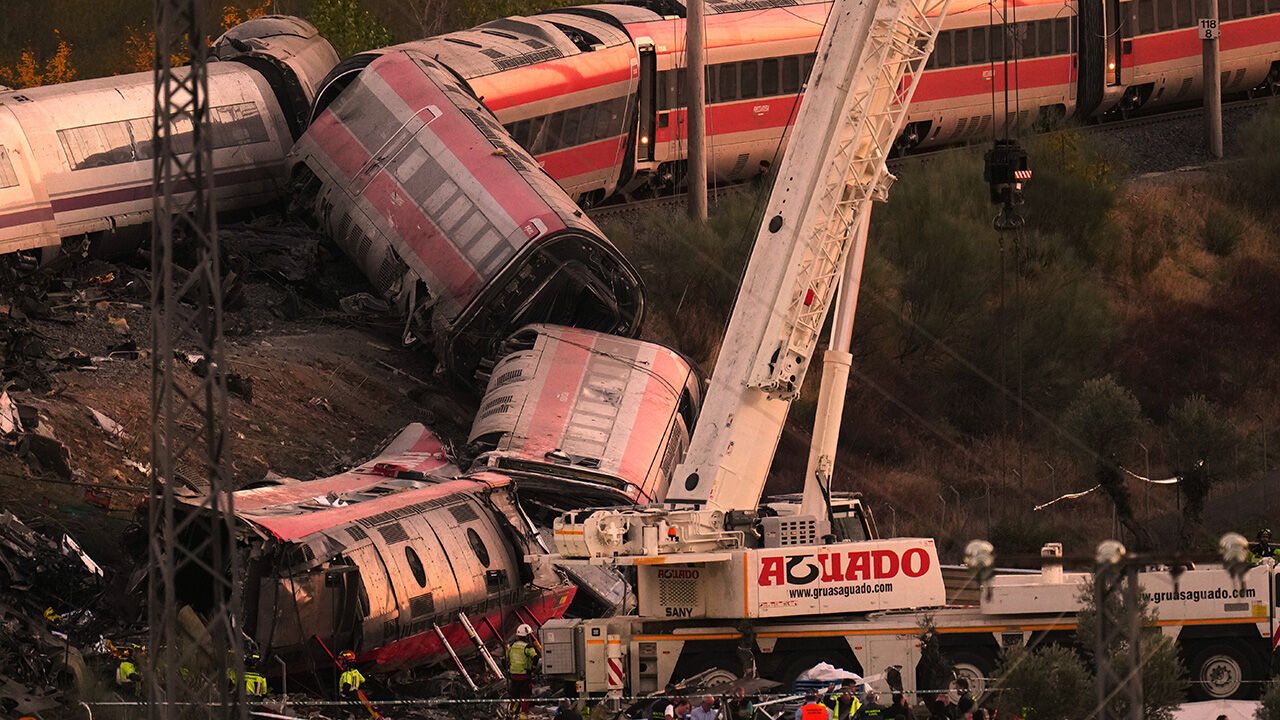
▲ Scene of the high-speed rail accident in Spain
As high-speed rail disasters have occurred twice this year alone in Spain, controversy continues over the underlying causes of recurring major accidents.
While Spanish authorities have pointed to signal system errors as the primary cause, critics raise questions about whether structural issues such as maintenance are at play.
Synthesizing foreign media reports such as the Guardian and Reuters on the 28th (local time), Spanish authorities initially pointed to incorrect signals as the superficial cause of the accident.
On the morning of the day the accident occurred, a computer malfunction occurred in the railway security and signaling system.
Consequently, safety measures were implemented in which the automated system was suspended between the capital Madrid and the southern Andalusia section, causing trains to simultaneously halt operations and stop on the tracks.
According to initial investigation results, under such circumstances, the central control center unexpectedly instructed only a Renfe train to resume operation, causing it to rear-end a stationary train.
Oscar Puente, Spain's Minister of Transport, made remarks that seemed to blame the human error of a traffic controller regarding this.
Minister Oscar Puente stated, "From our perspective, it is an incomprehensible situation where a decision to resume operations was made at the control center, and there was no speed reduction recommendation."
However, regarding Minister Oscar Puente's remarks, Spain's civil servant union is rebuking him, calling it an evasive attitude.
They are strongly protesting, claiming that from the very moment the investigation into the cause of the accident began, the minister has been trying to evade responsibility for policy failures and make the traffic controller a scapegoat to cut losses.
Global media outlets are also pointing to more fundamental causes behind this fatal error that triggered a typical developing-country-style accident.
Britain's the Guardian pointed out that both the accident that occurred in January and this latest one involved the same route and the exact same railway operator.
Both accidents occurred on the route connecting Madrid and Andalusia, involving collisions between a train operated by private rail company Iryo and a state-owned Renfe AVE train.
The Guardian reported that as this section is one of the oldest among Spain's high-speed rail lines, questions are being raised over whether sufficient budget was invested in maintenance.
Since Spain opened its railways to the private sector, the number of train passengers surged by 40% between 2019 and 2024.
However, according to data analysis by Reuters of European Union data, while the budget injected into the high-speed rail network is at a top-tier level of approximately 1.5 billion euros annually, a significant portion of the funds has been concentrated on building new infrastructure.
The proportion of the budget injected into the maintenance of existing facilities stood at a mere 16%, trailing far behind other European countries such as Germany and Switzerland.
This is why critics point out that while the high-speed rail network expanded enough to serve 25 million people in the first half of this year alone, infrastructure maintenance failed to keep pace with the growing number of passengers.
Attention is also drawn to the fact that the Spanish railway union had already announced a strike ahead of the accident, demanding the implementation of railway safety measures.
The Spanish railway union claimed that it has been demanding safety measures since the accident in January, but proper measures have not been implemented to date.
In response, it had warned that it would halt operations of Renfe high-speed trains for a day on the 29th, but the accident occurred just one day before the strike was set to begin.
Joan Rodriguez, a spokesperson for the Spanish railway union, pointed out in an interview with state broadcaster TVE that increased traffic due to privatization has placed additional burdens on the railway infrastructure, but it has not matched maintenance issues, explaining, "Even if this issue is not the decisive cause, it is a matter that must be kept in mind."
The railway union demanded practical and definitive solutions regarding safety issues, stating, "Our goal is to change the system and make it safer."
Spain is a country with Europe's largest high-speed rail network spanning approximately 4,000 km, but news of railway accidents has been incessant recently.
A train collision near Adamuz in Cordoba, Andalusia, last January killed 46 people, and the death toll from the accident on the 28th has reached 68.
Train accidents in Spain, including derailments and collisions, increased from 45 cases in 2016 to 57 cases in 2024, and 69 cases last year.
(Photo: AP, Yonhap News)
※ Please note: This article was translated by AI and may contain errors.


 Video News
 Video News


 Video News