
 KOR
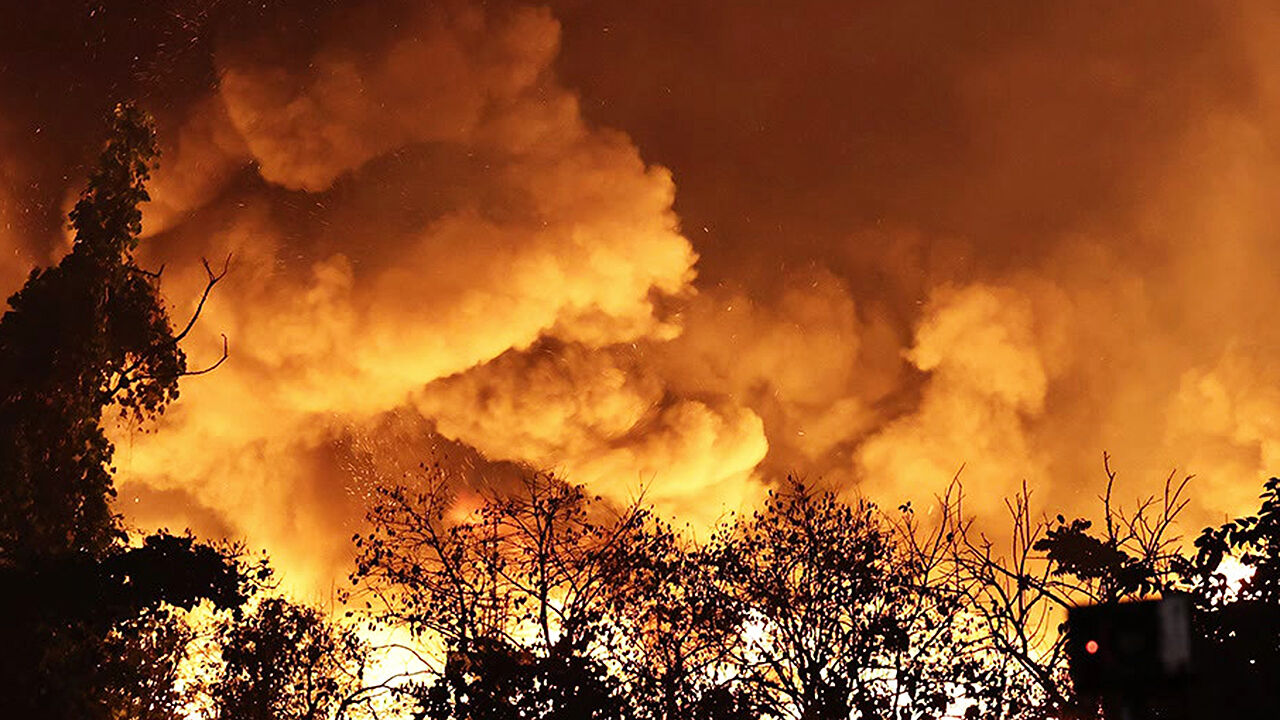
▲ Fire at Guryong Village
As the fire at Guryong Village in Gangnam-gu, Seoul, was extinguished after about 13 hours, a shortage of firefighting water, narrow access roads, and a residential environment densely packed with flammable makeshift housing have been cited as factors that aggravated the damage.
According to fire authorities, the fire that broke out in a makeshift building in District 2 of Guryong Village at around 3:51 p.m. yesterday spread to Districts 1, 3, and 7 before being completely put out at around 4:39 a.m. today (October 28).
The fire injured one woman in her 30s and caused property damage to the living quarters of 127 residents across 91 households.
Authorities tentatively estimate that about 99 makeshift homes and an area of approximately 28,000 square meters were burned down, while the exact scale of the damage is currently under investigation.
Approximately 960 personnel from related agencies and about 160 pieces of equipment were deployed to extinguish the fire, along with six helicopters used to drop water.
Firefighters at the scene faced particular difficulties due to a shortage of water.
The fire department explained that the water shortage was caused by the lack of municipal water hydrants inside Guryong Village.
Installing hydrants requires municipal water pipes to be laid first, but such pipes are not installed in Guryong Village.
The fire department stated that, given the complex legal procedures and costs involved in laying pipes on private property, installing municipal water supply in the village was deemed practically impossible.
While Gangnam-gu Office explained that it had installed and managed 13 fire hydrants and 14 fire extinguisher boxes within the village, it stated that it needs to verify whether there were hydrants near the exact point of origin.
Residents reported that even with fire extinguishers available, it was difficult to do anything against the rapidly spreading flames.
Lee Kang-il, head of the Guryong Village Land Resident Consultative Association, said that while there were fire extinguishers placed throughout the village, "Everyone was busy escaping. The people here are either sick or elderly, how can they grab those and fight it?"
The structure, consisting of makeshift buildings constructed with easily combustible materials such as plywood, vinyl, and styrofoam clustered closely together, also caused the flames to spread faster.
The alleys are narrow, making it difficult for fire trucks to enter deep inside, and cotton wadding placed on roofs to block the cold was also pointed out as having acted like tinder.
Lee stated, "It is a place where dust naturally accumulates enormously and sparks or electrical leaks are routine," adding, "Fires break out several times a day, but this one happened to be a massive one."
Large fires have repeatedly occurred in Guryong Village in the past.
A fire in November 2014 killed one resident, and in January 2023, 60 homes burned down, forcing about 500 residents to evacuate.
Another major fire in January of this year left 181 residents from 129 households without shelter.
This time, strong winds added to the difficulties in extinguishing the fire.
According to Korea Meteorological Administration observation data, a northwest wind with a momentary maximum wind speed of 9.3 meters per second was recorded at Irwon-dong, Gangnam-gu, near Guryong Village, at 5:51 p.m. yesterday.
At 3:50 p.m., right after the fire broke out, the humidity at this location was at a low level of 25%.
The flames also spread to parts of nearby Mount Guryong, forcing firefighting authorities to battle the fires in both the residential area and the forest simultaneously.
Apart from the background of how the flames spread, the exact cause of this fire has not yet been identified.
Fire authorities stated that there are no confirmed details regarding the possibility of arson.
Although speculations had been raised in the past asking if it was arson aimed at redevelopment, investigations previously confirmed cases to be accidental fires caused by residents' mistakes or presumed electrical causes.
There are only a few closed-circuit televisions (CCTV) within the village, limiting the ability to check the ignition point via footage.
According to Gangnam-gu Office, four CCTV cameras facing multiple directions are installed at a single location about 120 meters from the entrance of the village.
A district official explained that while the occurrence of a fire can be recognized through smoke and other signs, it is difficult to specifically identify where the spark started, noting that during the fire in January of this year, CCTV also had limitations in identifying the ignition point.
Police, fire authorities, and the Korea Electrical Safety Corporation conducted a first joint inspection from 10:00 a.m. to 2:30 p.m. today.
Gangnam Fire Station explained that today's work was closer to setting up sectors for future investigations rather than identifying the cause of the fire.
Authorities have narrowed down the area presumed to be the initial ignition point to around 7 households and are investigating, with plans to conduct a second investigation at 10:00 a.m. on October 30 to determine the exact cause of the fire.
※ Please note: This article was translated by AI and may contain errors.


 Video News
 Video News
 Video News
 Video News
 Video News