
 KOR
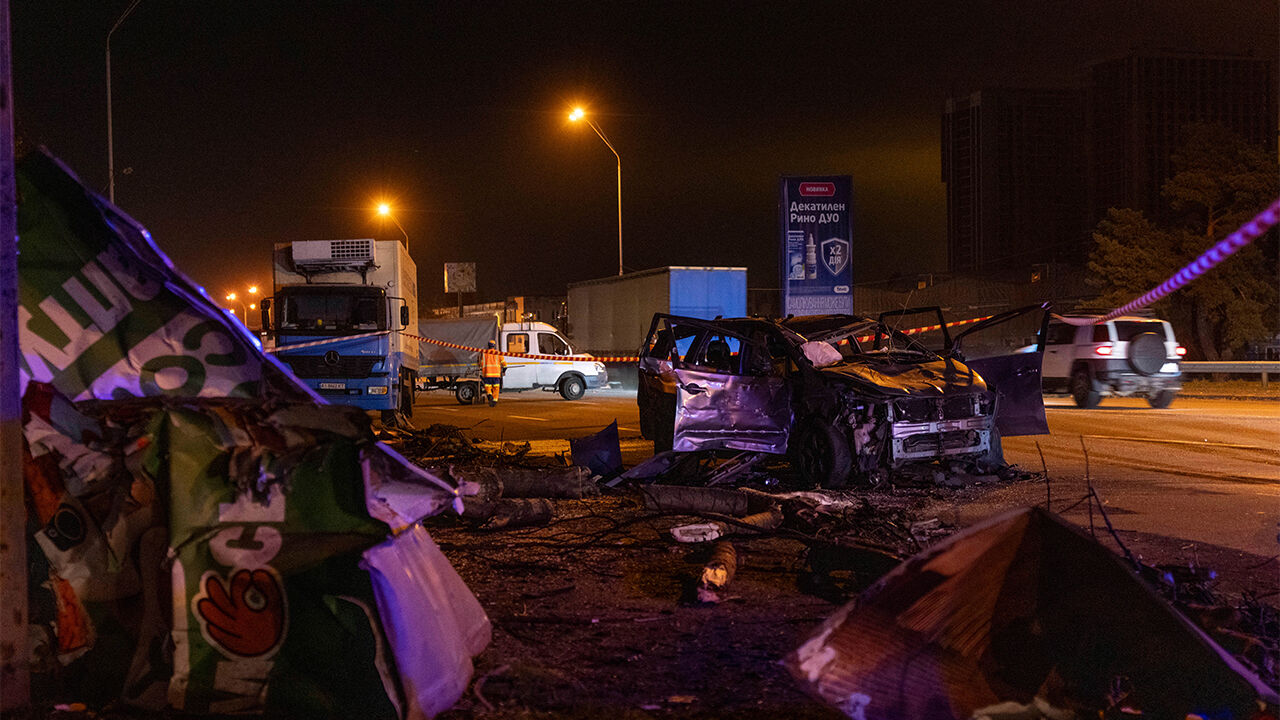
▲ Debris from a bombing in Kyiv, Ukraine, on October 27
A localized ceasefire brokered by Melania Trump, wife of US President Donald Trump, went into effect at local time today (October 27) in Oleshky, a city in Ukraine's southern Kherson region occupied by Russia.
However, as Russian attacks continue in areas outside the ceasefire zone, such as the capital Kyiv, it remains uncertain whether this localized truce will lead to an easing of the overall war situation.
According to Reuters and AP, the Russian military announced it would halt fire on the Kherson front starting at 4:00 AM Moscow time, which is 3:00 AM local time in Ukraine.
Dmytro Lubinets, the Ukrainian parliament's human rights commissioner and chief negotiator for Ukraine, also confirmed that the localized ceasefire began at the same time.
This ceasefire is intended to temporarily halt military operations in Oleshky and neighboring areas necessary for humanitarian relief operations, supporting the delivery of relief supplies and the evacuation of civilians.
The truce is expected to last until October 31 or beyond.
Medical staff, pharmaceuticals, food, and drinking water are planned to be brought in during the latter part of this week, followed by the establishment of safe corridors for civilian evacuation.
Oleshky is a city facing the Russian-controlled Kherson city across the Dnipro River, and was captured by Russian forces in the early days of Russia's full-scale invasion in February 2022.
In June 2023, the city suffered severe damage when the Kakhovka Dam collapsed, flooding most of the area.
According to the White House, Oleshky, which had a population of about 24,000 before the war, is currently estimated to have about 1,700 to 2,000 people remaining.
Most of them are elderly, and about 50 children are reportedly included.
However, as no official census has been conducted since 2022, the exact scale has not been confirmed.
Local residents are suffering from shortages of daily necessities such as food and medicine, and are also facing difficulties in evacuating due to the risks of landmines and drone attacks in the surrounding areas.
Previously, Russia and Ukraine agreed on October 23 to a localized ceasefire to bring humanitarian aid into Oleshky and support civilian evacuation through designated safe corridors.
The White House stated that Melania Trump served as an 'Exclusive Intermediary' in these negotiations, consulting with both countries to coordinate the goals, technical procedures, timing, and conditions of the ceasefire.
While the White House initially announced the start date of the truce as October 29, both Russia and Ukraine decided to implement the ceasefire starting on October 27.
This relief operation comes ahead of US-brokered Russia-Ukraine peace talks scheduled for next month.
However, Russian attacks continued in other parts of Ukraine around the start of the localized truce.
Reuters reported that multiple explosions were heard in Kyiv on the morning of October 27, when the ceasefire began, and air raid sirens were issued across various parts of Ukraine.
On October 26, Russian attacks also damaged a university site and other areas in Kyiv, with at least one person killed and more than ten injured in Kyiv.
Casualties were also reported from attacks in Kharkiv and Pavlohrad on the same day.
Ukrainian President Volodymyr Zelenskyy condemned the Russian attacks and urged a response from the international community.
However, this ceasefire is a localized agreement applicable only to Oleshky and adjacent areas necessary for the relief operations, meaning that attacks on other regions like Kyiv do not directly constitute a violation of the truce.
While fighting continues on other frontlines, whether the delivery of relief supplies and civilian evacuation can be implemented as agreed in Oleshky is expected to be the key factor.
(Photo: AP, Yonhap News)
※ Please note: This article was translated by AI and may contain errors.




 Video News
 Video News
