KOR
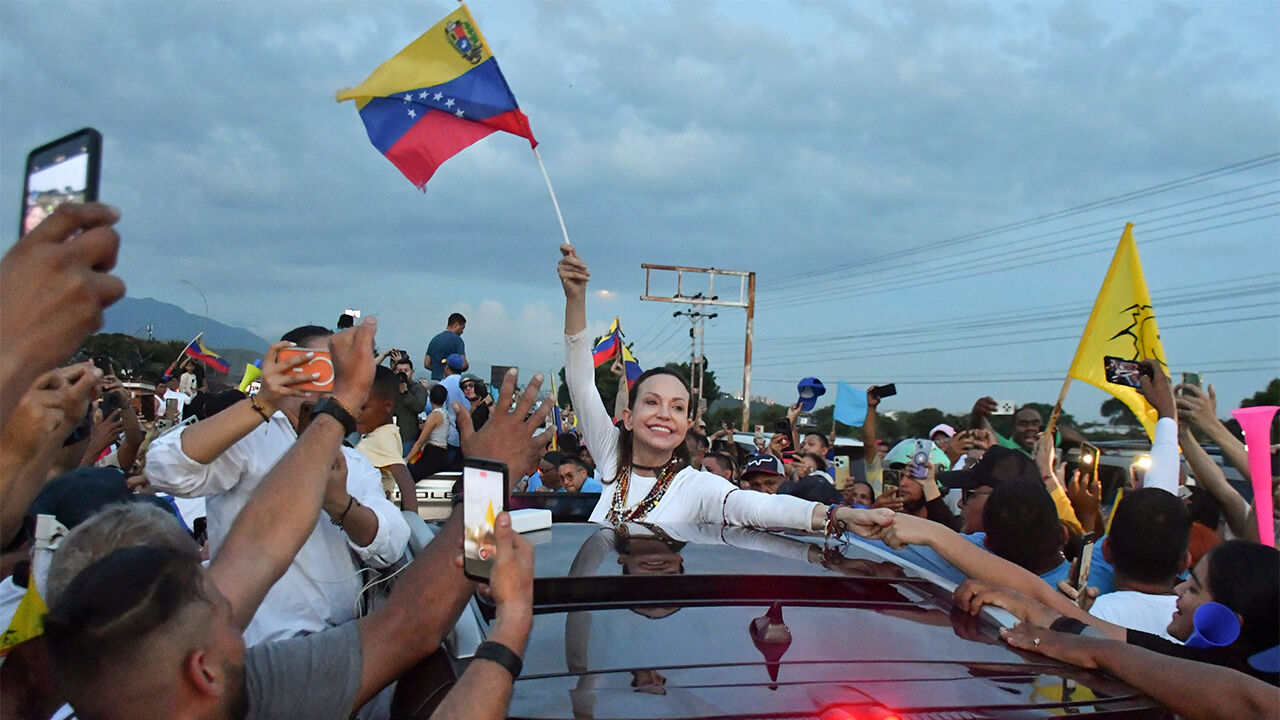
▲ Maria Corina Machado, Venezuela's returned opposition leader
Venezuela is expected to enter a new political phase following the return of opposition leader Maria Corina Machado.
While attempts to clear away the remnants of authoritarianism and build a democratic system are likely to spread, it remains unclear how cooperative the United States, which holds decisive influence over the transition, will be.
Machado confirmed her return to Venezuela via social media on the 25th, local time, and even posted a photo with supporters at a church in the western part of the country.
As an opposition figure who spearheaded Venezuela's democratization movement from the front lines, Machado enjoys widespread support from the international community.
Machado was barred from running in the 2024 presidential election held during the dictatorship of President Nicolas Maduro, but she supported the opposition candidate and led them to victory.
However, Venezuelan authorities declared Maduro the winner without releasing detailed vote counts, arrested opposition figures, and cracked down harshly on protests.
Feeling her safety threatened, Machado went into hiding and fled into exile abroad after receiving the Nobel Peace Prize in December of last year.
Amid these circumstances, U.S. forces successfully infiltrated Venezuela last January in an operation to bring Maduro to the United States.
Believing that a decisive moment for Venezuela's democratization had arrived, Machado subsequently attempted to return home several times but failed.
The New York Times (NYT) reported that Machado's previous attempts to return failed due to opposition from the U.S. government led by President Donald Trump.
The Trump administration reportedly signaled to countries surrounding Venezuela that it did not support Machado's return, forcing her to turn back seven times this year.
Behind U.S. authorities repeatedly blocking Machado's return is the cozy relationship between President Trump and Venezuelan Interim President Delcy Rodriguez.
After ousting Maduro, President Trump tolerated Rodriguez—who had served as minister of finance, minister of petroleum, and then vice president under the Maduro regime—as a partner.
A deal was struck allowing Rodriguez to maintain power in exchange for the U.S. securing dominant interests in Venezuela's oil, which boasts the world's largest reserves.
The leaders of the two countries signed an agreement in August of this year granting a joint venture supervised by the U.S. government exclusive 100-year lease rights to major Venezuelan oil fields.
Machado strongly criticized the Rodriguez regime's deal, condemning it as resource plundering and territorial usurpation.
Machado's return was reportedly achieved with the escort of private U.S. security personnel and the support of the governments of Colombia and Panama.
The Wall Street Journal (WSJ) reported that the Trump administration notified Interim President Rodriguez not to obstruct Machado's entry.
However, the Trump administration's forward-leaning stance is viewed as a temporary shift for the upcoming midterm elections in November rather than a fundamental change of position on Machado.
U.S. local media outlets have noted that growing dissatisfaction is brewing in Florida over President Trump's lukewarm stance on Venezuela's democratization.
Florida features a large voter base of Latin American immigrants from countries like Venezuela and Cuba, who hold strongly anti-communist and anti-authoritarian views.
The possibility that Machado's return is an electoral gambit suggests that her democratization movement is still likely to face interference and containment from the Trump administration.
Indeed, when meeting with reporters on this day, President Trump limited his remarks on Machado's return to personal affection rather than political support.

▲ U.S. President Donald Trump
"She seems like a very nice woman," President Trump said, adding, "She gave me a Nobel Peace Prize, so how else could I speak about her?"
Despite checks from the United States, which exerts dominant influence over the Venezuelan regime, the fallout from Machado's return is projected to be significant.
Given that a formidable rival has emerged against Interim President Rodriguez, the current Venezuelan government is expected to suffer additional blows.
With Venezuela suffering from an inflation rate approaching 400% and severe electricity shortages, the Rodriguez regime faces disapproval from two-thirds of the population.
Amid this situation, Machado has proposed holding a presidential election in July of next year, but the U.S. and Venezuelan regimes have remained silent.
The United States has launched a gradual reconciliation process between the Venezuelan regime and other opposition figures excluding Machado, but a re-election schedule has yet to be materialized.
Observers note that if Machado leverages popular support to intervene in the U.S.-led reconciliation process, Venezuela's political landscape could be severely shaken.
She has declared that she will tour across Venezuela to reactivate grassroots networks for the democratization movement.
As a new focal point for the democratization movement emerges, the mobilization of the public dissatisfied with the current regime is expected to strengthen, raising the likelihood of large-scale protests.
Machado's democratization movement is drawing attention as a variable that could upend resource-centric, managed regime change—where U.S. pragmatic diplomacy and the survival strategy of the Venezuelan regime intersect—by fueling public aspirations for reckoning with the past and democratization.
(Photo: AP, Yonhap News)
※ Please note: This article was translated by AI and may contain errors.