KOR
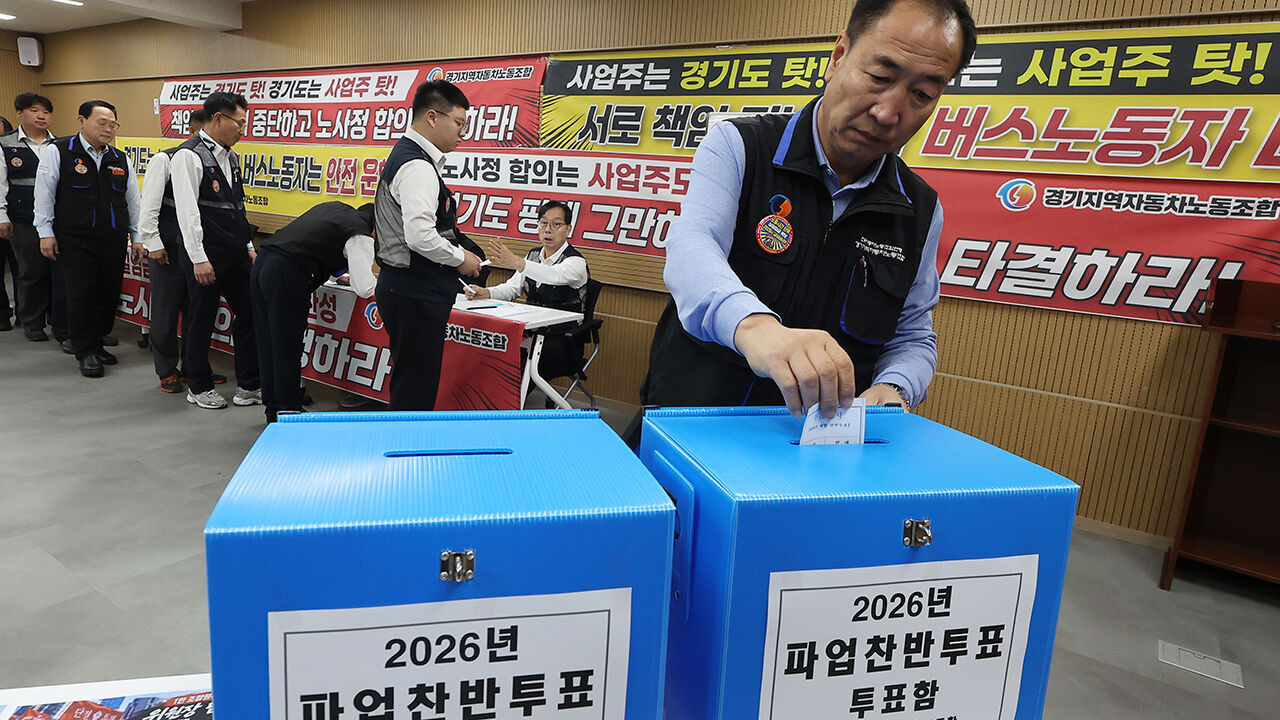
▲ Gyeonggi Province Bus Union Strike Authorization Vote
The Gyeonggi Regional Automobile Labor Union under the Federation of Korean Trade Unions (hereinafter referred to as the union) is considering going on strike as early as the 30th.
Previously, the union passed the strike authorization in a dispute act vote held on the 23rd, with 97.7% of participating union members voting in favor.
The union plans to go on strike starting from the first buses on the 30th if no agreement is reached during the final mediation session scheduled for 3:00 p.m. on the 29th.
Earlier, the union declared a breakdown in negotiations during the 5th central collective bargaining session held with management on the 14th and applied for labor dispute mediation with the Gyeonggi Regional Labor Relations Commission on the same day.
The two sides also failed to narrow their differences during the first mediation meeting on the 21st.
The participants in this potential strike include 4,130 buses (across 854 routes) belonging to 29 companies within the province, including Suwon, Yongin, Goyang, and Seongnam.
Among them, 942 buses across 63 metropolitan bus routes are included.
The union's core demand is to honor the promise previously agreed upon by labor, management, and the government to "reach wage parity with Seoul region buses by January 1, 2026."
Accordingly, reflecting the wage gaps widening in the wake of the recent Supreme Court ruling on ordinary wages for Seoul buses, the union is demanding a 21.56% wage increase for quasi-publicly managed routes and a 30% increase for privately managed routes.
They also demanded a reduction in working hours.
The union stated that its members work approximately 2,400 hours per year, which is 1.4 times the national average, and demanded the introduction of a 4.5-day workweek for quasi-public routes and a reduction of one scheduled working day per month for private routes.
The demands also include the establishment of a paid incentive system for accident-free drivers and influenza vaccinations for all union members.
On the other hand, management is arguing for a wage freeze on privately managed routes citing the worsening fiscal conditions of Gyeonggi Province, and has not presented a specific wage increase proposal for quasi-publicly managed routes.
(Photo: Yonhap News)
※ Please note: This article was translated by AI and may contain errors.