
 KOR
⚡ Subuk Core Summary
Revisiting a 90-Year Mystery: An object suspected to be the airplane wing of legendary aviator Amelia Earhart, who disappeared over the Pacific Ocean during her round-the-world flight in 1937, was captured via satellite imagery on Nikumaroro Island in the South Pacific, prompting a large-scale expedition.
Purdue University Expedition Team's On-Site Investigation: A 17-member expert team, including Steve Schultz from Purdue University and Rick Pettigrew of the Archaeological Legacy Institute, was dispatched to the site to conduct field inspections using advanced equipment.
Optical Illusion of Wood Fragments and Coral Sand: As a result of the investigation, the object suspected to be an airplane wing that shone like metal was confirmed to be a collection of marine debris, including a carbonate crust formed by hardened coral sand and a Y-shaped wooden piece, plunging Earhart's whereabouts back into mystery.
A legendary aviator who vanished without a trace over the Pacific Ocean after setting out on a round-the-world flight. With not even a trace of the aircraft found, it remains one of the greatest unsolved mysteries in aviation history for nearly 90 years. Recently, a 17-member exploration team headed to the presumed disappearance area to search for her whereabouts. What traces did they find there?
01. "Wait! Could That Be an Airplane Wing?"
In 2020, while browsing maps on the internet, amateur researcher Michael Ashmore spotted something resembling an airplane wing in shallow water at the tip of "Tariha," a small peninsula extending into the lagoon of Nikumaroro Island in the South Pacific. The thought that crossed his mind was whether this could be the airplane of Amelia Earhart, who vanished without a trace long ago.
02. One of the Greatest Mysteries in Aviation History
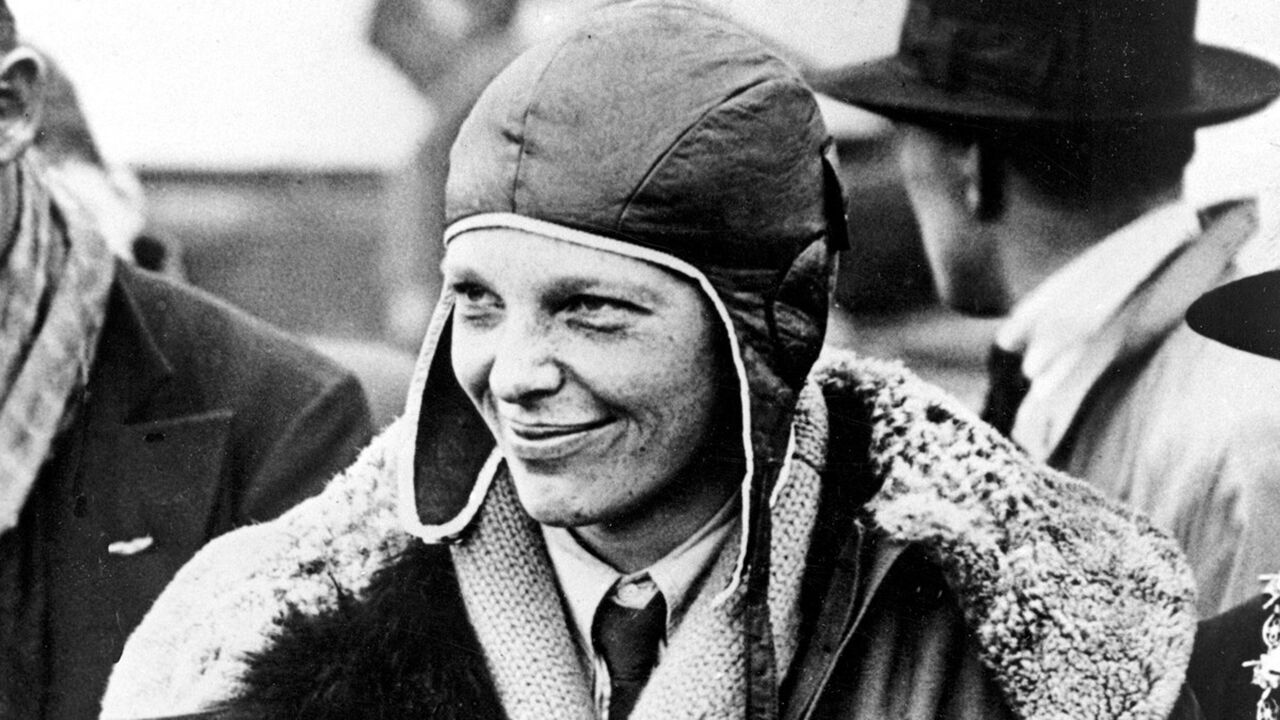
Amelia Earhart became the first woman to fly solo across the Atlantic Ocean in 1932, and earned the nickname "First Lady of the Air" after flying nonstop from Hawaii to California in 1935.
In 1937, she set out on a round-the-world flight along the equator with navigator Fred Noonan. Following her schedule, she departed from Lae, New Guinea, heading for Howland Island. However, she vanished without a trace over the Pacific Ocean. She was 39 years old at the time.
The U.S. government conducted an extensive search for 16 days but ultimately failed to find the two people and the plane, concluding that they most likely crashed into the Pacific Ocean due to a fuel shortage. Nevertheless, countless speculations surrounding her disappearance continued to surface afterward, such as "she was abducted by aliens, is living under an alias in New Jersey, was executed by the Japanese military, or drifted to an island and died." Amelia Earhart's final flight remains a mystery.
Some researchers have raised the possibility that Earhart did not crash into the ocean, but rather made an emergency landing on Nikumaroro Island and drifted. It was on that very island that the object suspected to be plane wreckage was captured. This expedition was launched to test that long-standing hypothesis.
03. Setting Out in Person for the Investigation
Steve Schultz of Purdue University and Rick Pettigrew of the Archaeological Legacy Institute formed a 17-member Tariha Artifact Expedition Team and headed to Nikumaroro Island. The team departed from Tarawa, Kiribati, on October 7 and arrived at their destination. Having spent 3 of the 5 days originally allocated for the search on a boat due to bad weather, they extended their schedule and conducted on-site investigations for 4 days.
Steve Schultz | Legal Counsel and Field Assistant, Purdue University
We are going to find out what was captured in the satellite imagery. Thanks to the advanced equipment, tide gauges, and meteorological measurement tools brought by Rick, we will secure far more real-time data about Nikumaroro Island than anyone else in the world. However, as we are just in the early stages of the expedition, we hope to soon narrow down our search range and verify what is there.
We are going to find out what was captured in the satellite imagery. Thanks to the advanced equipment, tide gauges, and meteorological measurement tools brought by Rick, we will secure far more real-time data about Nikumaroro Island than anyone else in the world. However, as we are just in the early stages of the expedition, we hope to soon narrow down our search range and verify what is there.
The exploration team was also filled with anticipation, hoping for meaningful results.
04. Is It Really Plane Wreckage?
Having completed the on-site investigation, the expedition team announced the results on October 19.
Steve Schultz | Legal Counsel and Field Assistant, Purdue University
People around the world have been awaiting the results of our investigation conducted here at the "Trio Objects" site. Having completed the investigation, we can conclude that the object is not related to Amelia Earhart's aircraft. Instead, we have determined that this object is most likely a collection of debris accumulated here.
People around the world have been awaiting the results of our investigation conducted here at the "Trio Objects" site. Having completed the investigation, we can conclude that the object is not related to Amelia Earhart's aircraft. Instead, we have determined that this object is most likely a collection of debris accumulated here.
Regrettably, the conclusion of the investigation was that "it is not Amelia Earhart's plane wreckage." When the expedition team arrived at the site, a significant portion of the object had already broken apart and washed away, leaving only a single Y-shaped wooden piece. The shiny surface that looked like metal turned out to be due to a carbonate crust. This was a trace formed as coral sand hardened over time.
Though they failed to find the airplane, Schultz wrapped up the expedition by quoting Amelia Earhart. He stated, "There is no better way to express this expedition than Earhart's words: 'The most effective way to do it, is to do it.'"
A mystery that seemed close to being solved. Yet, the object that looked like an airplane ultimately turned out to be wooden debris. Where Earhart vanished to remains unknown. Will someone set out on an adventure once again to solve this mystery?
Deep Dive Q&A
Q1. What was the decisive background behind the object captured on Nikumaroro Island in the South Pacific being suspected as the wreckage of Amelia Earhart's missing airplane?
A1. It is because amateur researcher Michael Ashmore spotted an airplane wing shape and a shiny metallic surface in the shallow waters of the Tariha Peninsula on Nikumaroro Island via satellite maps in 2020. Global interest focused on the object in particular because the "drift theory"—suggesting that Earhart did not crash into the ocean but instead made an emergency landing on Nikumaroro Island, drifted, and died—has been continuously raised among aviation researchers.
Q2. According to the on-site investigation results by the Purdue University expedition team, what was the actual identity of the object that appeared to be airplane wreckage in the satellite imagery?
A2. As a result of the on-site investigation, the object was revealed to be a "collection of marine debris" unrelated to an airplane. The surface that shone like metal was an optical illusion caused by a "carbonate crust" formed as coral sand hardened over a long period, and the actual shape of the object was ultimately confirmed to be nothing more than a Y-shaped wooden piece.
※ Please note: This article was translated by AI and may contain errors.


 Video News
 Video News
 Video News
 Video News
 Video News