
 KOR
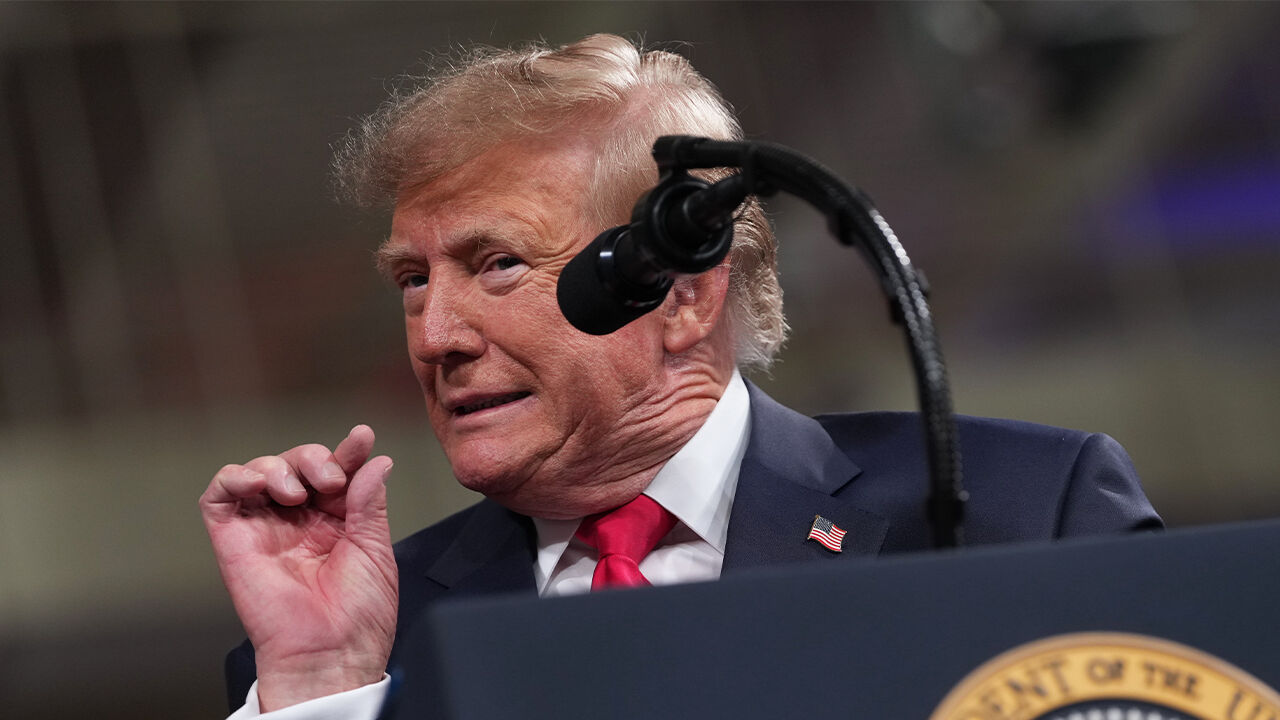
▲ U.S. President Donald Trump
For U.S. President Donald Trump, the worst-case scenario in the midterm elections on the 3rd of next month would be the Democratic Party taking control of both the House and the Senate in the federal legislature.
Synthesizing election forecasts reported by U.S. media up to the 25th (local time), this possibility cannot be ruled out.
What would be President Trump's countermeasure if the Democrats secure majority status in both houses and seize legislative power?
President Trump hinted at his "Plan B" during a brief Q&A with reporters at the White House on the 23rd.
He warned that if the Democrats regain control of Congress, he would "veto every single bill."
President Trump stated, "Veto, veto, veto. Then they (Congress) will come and say, 'How can we make this work?' That is how you negotiate."
This means that even if bills misaligned with his stance pass both houses under Democratic leadership and reach the White House, he can simply veto all of them and send them back to Congress.
The veto mentioned by President Trump is an authority stipulated in the U.S. Constitution.
The Constitution states that every bill which has passed the House of Representatives and the Senate shall, before it becomes a law, be presented to the President; if not approved, he shall return it, with his objections, to that House in which it shall have originated.
For Congress to override a presidential veto, a two-thirds majority vote in both the House and the Senate is required.
Assuming full attendance, 290 out of 435 members in the House and 67 out of 100 members in the Senate must vote in favor to override the president's veto and enact the bill into law.
The probability of the Democrats achieving a landslide victory in this election large enough to secure a two-thirds majority in both chambers is not high.
However, bills submitted to the president are frequently passed by Congress with bipartisan support through consensus between the ruling and opposition parties.
Therefore, if President Trump confronts them by exercising his veto power, the potential for a clash between congressional and executive powers exists.
The first time President Trump exercised his veto power since entering his second term was on December 30 of last year, targeting the Arkansas Valley Conduit (AVC) completion bill and the Miccosukee reservation amendment bill.
Although they passed with bipartisan support from both parties, it was assessed that President Trump exercised his veto as a form of "retaliation" against his political opponents.
Those bills were defeated in the House re-vote.
In July, President Trump also did not sign the "21st Century Housing Supply Expansion Act," which similarly passed both the House and Senate with bipartisan support.
However, he did not go so far as to exercise a veto, and the bill automatically went into effect after ten days of being sent.
(Photo: AP, Yonhap News)
※ Please note: This article was translated by AI and may contain errors.


 Video News
 Video News
 Video News
 Video News
 Video News