
 KOR
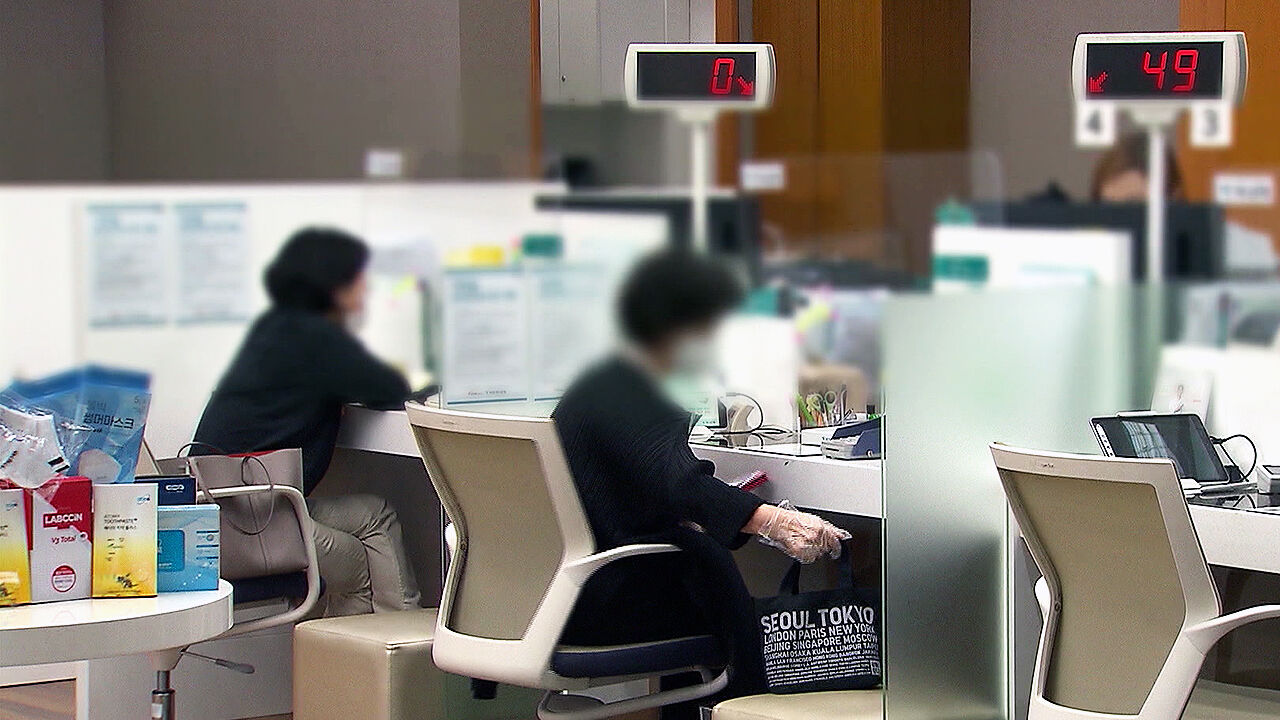
▲ Loans
Household loans at commercial banks are rapidly growing again as home prices continue to rise in the outer areas of Seoul and southern Gyeonggi Province.
At the same the same time, liquid funds are flocking into time deposits at commercial banks due to the stock market downturn and rising deposit rates.
According to the financial sector on the 25th, the total household loan balance of the five major banks (KB, Shinhan, Hana, Woori, and NH Nonghyup) stood at 783.4397 trillion won as of the 22nd, an increase of 2.6058 trillion won from the end of last month.
This marks a rebound just a month after dropping by 1.2852 trillion won in September, which had been the first decrease in six months.
By loan type, both mortgage loans and credit loans increased simultaneously.
Mortgage loans (622.3978 trillion won) rose by 99.95 billion won from the end of the previous month (621.3983 trillion won).
The growth expanded after staying at a mere 125.2 billion won in September.
Among mortgage loans, jeonse (lump-sum housing deposit) loans fell by 371.9 billion won from the previous month to 118.9261 trillion won, but group loans increased by 481.2 billion won to 150.2333 trillion won, as they were excluded from total household loan regulations.
Credit loans (109.3513 trillion won) surged by 1.121 trillion won from the end of the previous month (108.2303 trillion won), turning to an upward trend for the first time in three months.
The recent stock market decline appears to have driven an increase in debt-financed stock investments using overdraft accounts.
The growth in the household loan balance is attributed to heightened loan demand to secure funds for purchasing homes amid the persistent upward trend in housing prices.
Based on the Korea Real Estate Board's weekly apartment price trends, apartment sales and jeonse prices in Seoul have risen for 88 consecutive weeks since February of last year, continuously setting records for the longest upward streak every week.
While high-priced areas are showing weakness—with sales prices in Gangnam and Seocho districts falling for 10 consecutive weeks—mid-to-lower-tier areas maintain a steady upward trend, driving the overall rise in Seoul.
A commercial bank official explained, "It is analyzed that a rise in jeonse deposits has led to an increase in real demand shifts to purchase apartments with loans," adding, "Demand from the autumn moving season and the execution of group loans for newly moving-in complexes were reflected, increasing the loan balance."
In the case of banking sector reception (deposits), a recent inflow trend is clearly evident.
With the stock market declining and banks consecutively raising deposit rates following market interest rate hikes, deposits have become more attractive to consumers who favor safe assets.
As of the 22nd, the balance of time deposits at the five major banks stood at 1,017.3593 trillion won, an increase of 11.2722 trillion won from the end of the previous month.
Loan interest rates are also expected to face upward pressure for the time being.
This is because banks' rising funding costs are reflected in loan rates with a time lag, and additional benchmark interest rate hikes have been signaled.
As of the 23rd, the variable mortgage rates (based on new COFIX) at KB Kookmin, Shinhan, Hana, Woori, and NH Nonghyup banks ranged from 4.42% to 6.795% per annum, with the lower bound rising by 0.07 percentage points and the upper bound by 0.03 percentage points compared to the end of September.
However, mixed-type (fixed) mortgage rates (based on 5-year bank bonds) ranged from 4.62% to 6.993%, with both the lower and upper bounds falling by 0.28 percentage points each compared to late September.
COFIX (Cost of Funds Index), a major indicator for variable rates, rose from 3.18% to 3.43%, up by 0.25 percentage points.
On the other hand, the yield on 5-year bank bonds, a major indicator for fixed rates, fell from 4.525% to 4.283% over the same period.
The Monetary Policy Board of the Bank of Korea froze the benchmark interest rate during its meeting on the 22nd, but hinted at additional hikes, stating that the tightening stance must be maintained.
※ Please note: This article was translated by AI and may contain errors.


 Video News

 Video News
 Video News
