
 KOR
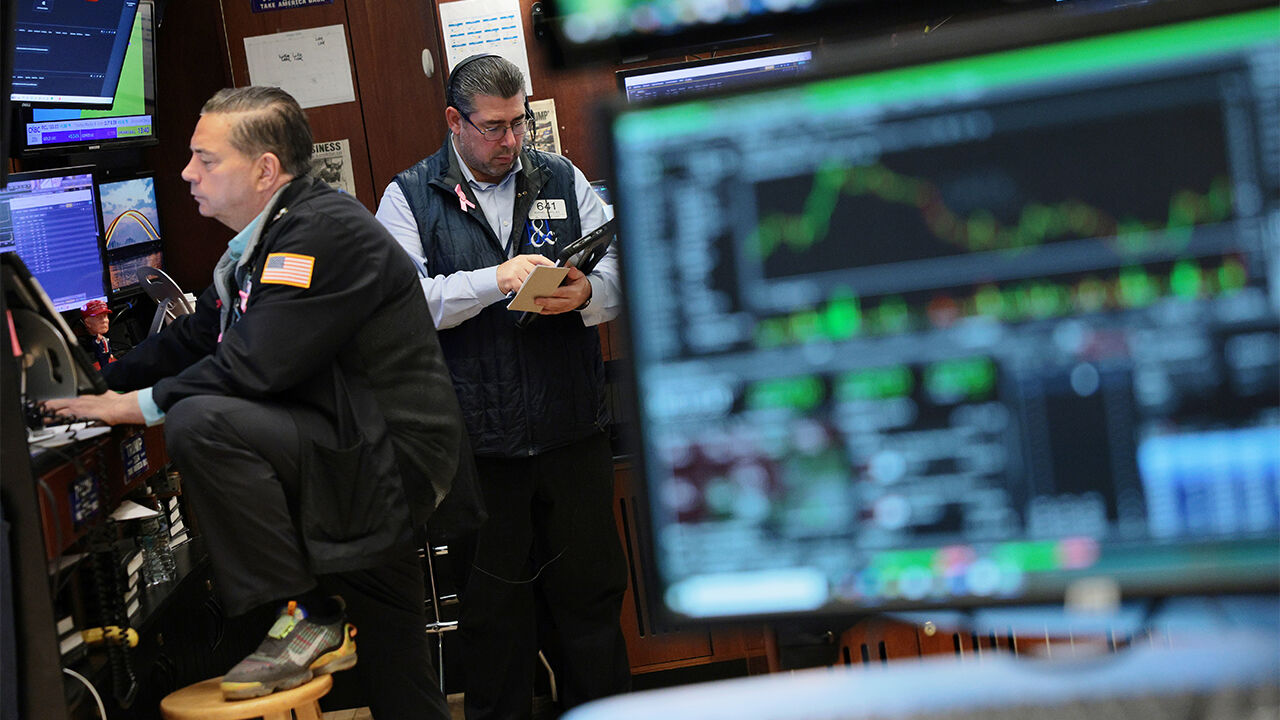
▲ New York Stock Exchange
Global corporate credit spreads have widened to their highest level in one year and five months as investors' preference for safe-haven assets intensifies amid growing concerns over an artificial intelligence bubble and heightened tensions in the Middle East.
According to Bloomberg on the 23rd (local time), the global corporate bond credit spread rose to its highest level since May 2025 based on the Bloomberg index.
The widening of spreads for certain indicators reached up to 129 basis points (1 bp = 0.01 percentage point).
A credit spread refers to the difference in yield between bonds carrying credit risk and benchmark bonds.
In the corporate bond market, it is typically measured by the difference in yield between corporate bonds and government bonds of similar maturities.
It can be viewed as the additional yield demanded by investors in exchange for taking on credit risk, and a widening spread suggests that investors' risk aversion has strengthened or market conditions have deteriorated.
This trend was also observed in Asia and Europe.
The credit spread on dollar-denominated corporate bonds issued by prime Asian corporations widened on this day to its highest level since July 2025.
As market volatility increased, the Export-Import Bank of Korea postponed the issuance of yen-denominated bonds, Bloomberg reported.
Asia's credit default swap (CDS) spread also widened by 2 bps at one point during trading before narrowing its increase to 1 bp.
CDS is a derivative product used to trade the default risk of a bond issuer, and a widening CDS spread indicates that the credit risk evaluated by the market has increased.
In Europe as well, credit spreads on investment-grade corporate bonds rose to their highest level since May 2025.
Behind the market anxiety lies skepticism regarding the profitability of the AI industry.
As AI investments accompanied by massive borrowing rapidly increase, concerns are growing over whether technology companies can generate revenues matching the scale of their investments, leading to sell-offs in related stocks.
Geopolitical tensions in the Middle East have also stimulated investors' risk-aversion sentiment.
Gary Ng, senior economist at Natixis, said, "Credit risk is now driving market trends," adding, "Asia is not immune to these shocks."
Some in the market assess that the widened spreads could present investment opportunities in high-grade corporate bonds.
Norbert Ling, head of Asia-Pacific fixed income portfolio management at Invesco, maintained an overall positive stance on credit assets, diagnosing that "the widening spreads offer higher compensation to investors taking on credit risk in prime companies."
On the other hand, Lakshmanan R, head of Asia corporate credit at CreditSights, stated, "We view this as the beginning of a more sustained phase of credit risk repricing," recommending an increase in cash and short-term financial product weightings while paying attention to senior unsecured bonds of banks and financial institutions.
(Photo: Getty Images)
※ Please note: This article was translated by AI and may contain errors.



 Video News
 Video News
 Video News
 Video News