
 KOR
"We Are Closing Down": Tears of a Korean Business Owner
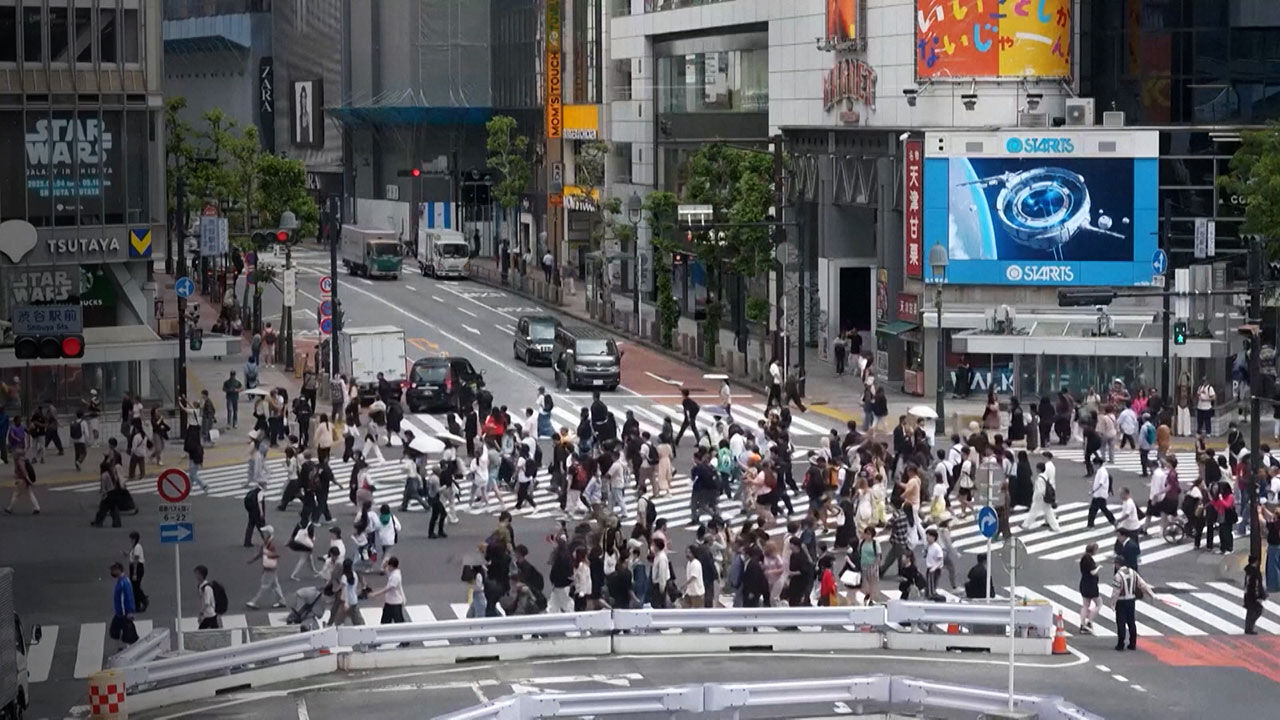
[Choi Seok-jin / Restaurant Owner: Tears just come to my eyes. Even so, I am just so grateful that our regular customers keep coming every day because we are closing down.]
When asked about the reason, it turned out to be visa policy. Late last year, the Japanese government significantly tightened the requirements for the "Business Manager Visa" issued to foreign entrepreneurs. It raised the capital requirement sixfold in one go, from the previous 5 million yen to 30 million yen. For a small business owner, suddenly coming up with nearly 300 million won in Korean currency is no easy task. As of 2024, out of approximately 143,000 corporations established in Japan, only about 1% had capital of 30 million yen or more. But there is another condition attached: they must hire Japanese nationals or permanent residents as full-time employees.
[Choi Seok-jin / Restaurant Owner: If I had 300 million won, I wouldn't need to come here. We could just go back and live in Korea. Also, the biggest problem is that all the part-time workers at our restaurant are Vietnamese. Young Japanese people don't want to do this kind of work. If we run the business under these conditions, practically nothing is left. What this means is that they will no longer grant permits. In other words, it means go back home.]
It is not just business visas like Choi's. The fee for renewing a general Japanese residency status has also jumped more than 12 times, from around 50,000 won to over 600,000 won. For a family of four, that means spending more than 2.4 million won every two to three years. Moreover, even after going through the arduous process of obtaining permanent residency, people can no longer rest easy. Overdue taxes or social insurance premiums have been added to the grounds for revoking permanent residency. Moves to exclude foreigners are also appearing in university admissions. Some universities are abolishing special admissions tracks for international students or cutting tuition waiver benefits. A national university has even emerged that plans to charge international students more than double the tuition of Japanese students. Society as a whole is narrowing its doors to foreigners.
"Foreigners Are Indispensable": So Why Is This Happening?

Politically, it appears related to the launch of the Takaichi cabinet and the rise of exclusionary public sentiment toward foreigners during that process. When the Takaichi cabinet was formed a year ago, reports followed in succession that a so-called "aggregate quota on foreigners" policy was under review. Although it was ultimately not included in the primary policy agenda, Takaichi appointed hardline lawmaker Kimi Onoda as the minister in charge and has steadily tightened foreign policies. Minister Onoda, whose potential replacement had been consistently rumored over allegations of election law violations and other issues, was retained in the cabinet reshuffle last month. This appears to reflect the prime minister's determination to maintain existing policies on foreigners.
Furthermore, the right-wing Sanseito creating a sensation in last year's election with its provocative slogan of "Japanese First" also seems to have had an influence. Sanseito has been raising its voice in the Diet to formally introduce an "aggregate quota on foreigners." Within the Korean community in Shinjuku, grumbling is also emerging that while these foreign policies were practically aimed at Chinese nationals, the wrong people are ending up hurt. Amid this atmosphere, the founding of a political party in Japan by immigrants from South Korea and Uzbekistan for the first time is another notable development. While it was not created solely to oppose foreign policies, the party's creation itself can be seen as a reaction to the current climate in Japan and may serve as a vehicle to represent the voices of foreigners in the future.
[Chung Jae-wook / Co-leader of Shinseidang: It is becoming difficult for young people to enter Japan. This is also not good for Japan's future.]
"Foreigners Barely Putting the Brakes on Declining Birthrates"

Moreover, after giving birth to children, raising them here, and living in Japan for a long time, suddenly returning to a homeland where one has no foundation is easier said than done. While Japan's current total fertility rate is slightly higher than South Korea's, some argue that even that level is maintained thanks to foreigners. Recent statistics showed that the number of foreign children under age 15 living in Japan as of 2025 rose by 34% over five years. The Nikkei described it as a dynamic where "foreigners are barely putting the brakes on the declining birthrate trend." If foreigners leave under these circumstances, the drop in birthrates will become even steeper, which could have a significant impact on Japan's economy and government finances. In the first half of this year, the number of foreign business managers who left Japan quadrupled compared to the same period last year. As mentioned earlier, while business visa issues play a role, it is also worth reflecting on whether foreigners are gradually turning their backs on Japan as well. Some point out that Japan's overall appeal is declining due to recent high inflation, a weak yen, and exclusionary sentiment toward foreigners.
Are 'AI Robots' the Answer?
[Sanae Takaichi / Prime Minister of Japan: Labor shortages are the greatest challenge facing a depopulating society. In order to maintain essential services such as medical care and nursing, logistics, and public transportation, as well as to respond to expanding domestic investment, we will boldly advance the social implementation of AX.]
She set a target to invest over 10.5 trillion yen (more than 88 trillion won) across the public and private sectors in AI-related fields by fiscal year 2040 and to deploy 10 million AI robots across Japan during the same period. The idea is to fill the labor shortage with AI robots. In fact, in August, private companies in Japan partnered to open a large facility in Chiba Prefecture to jointly develop domestic physical AI, training robots on human movements so they can be deployed in nursing care and logistics work. The plan is to deploy them in the field as early as within this year. In the private sector as well, the development of robots that can replace convenience store clerks and hospital caregivers is gaining momentum.
AI robots, which have no nationality and need no visas, may certainly be of some help to a labor-starved Japan. However, robots cannot replace all human work, nor can they replace the consumers and local community residents lost to population decline. How to slow population decline while balancing how many foreigners to accept and how far to supplement the labor shortage with technology, and how "they" and "we" are to live together—this dilemma, which Japan has encountered first, is an unavoidable task that South Korea, where depopulation is progressing even faster, can no longer put off.
※ Please note: This article was translated by AI and may contain errors.




 Video News
 Video News
 Video News