
 KOR
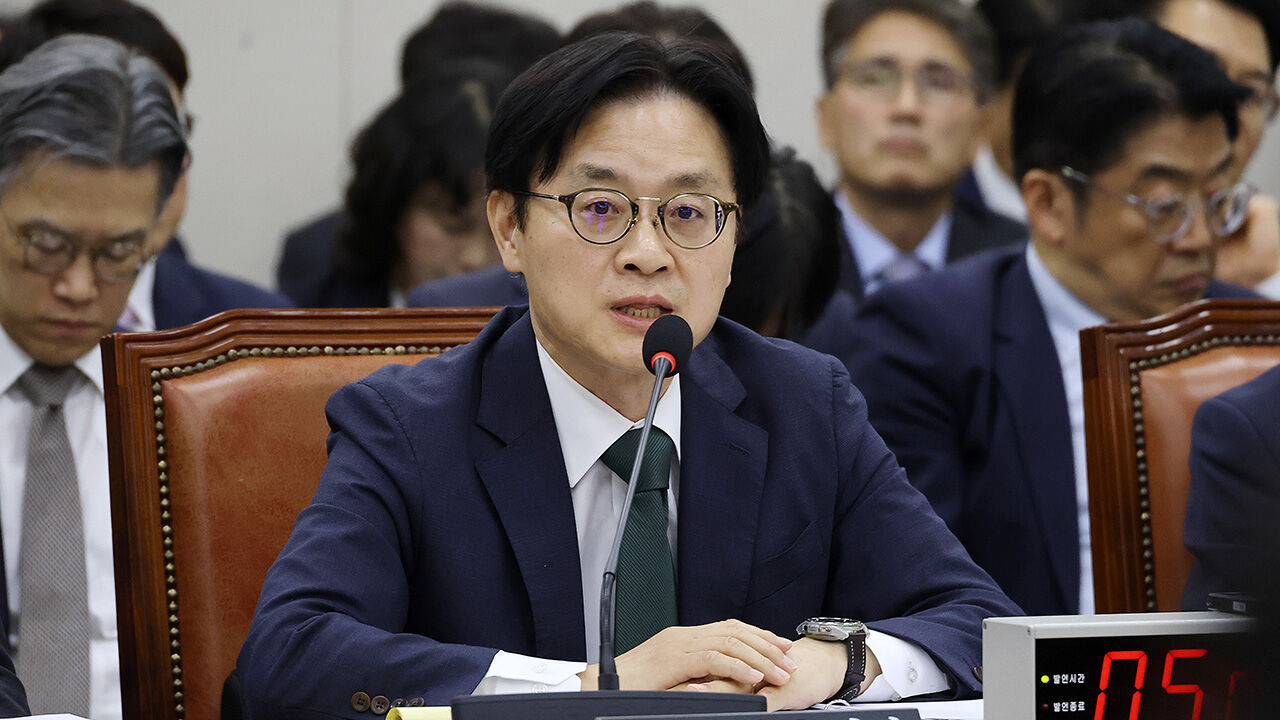
▲ Minister of Trade, Industry and Energy Kim Jung-kwan answers questions during the 2026 parliamentary audit held by the Trade, Industry, Energy, SMEs and Startups Committee of the National Assembly on the 22nd.
Minister of Trade, Industry and Energy Kim Jung-kwan has stated that labor special exception provisions, such as exemptions from the 52-hour workweek cap, must be included in the Mega Special Zone Act designed to support mega-projects.
During the comprehensive parliamentary audit by the Trade, Industry, Energy, SMEs and Startups Committee of the National Assembly today (the 22nd), when asked about the Ministry's stance by People Power Party lawmaker Cho Ji-yeon, Minister Kim said, "Our hope is that labor-related exception clauses will definitely be included when the Mega Special Zone Act is processed."
He added, "It seems that the Ministry of Employment and Labor's judgment is that social consensus is necessary and that social discussions should precede it."
While an agreement has yet to be reached within the government over clauses such as applying exceptions to the 52-hour workweek rule for high-income earners and research workers, the Democratic Party of Korea has recently proposed both bills containing labor special provisions and bills excluding them.
In response to lawmaker Cho's remark that the discussions are turning into a "war of attrition" rather than a "speed battle," Minister Kim said, "We will do our best to pass the bill during this regular session of the National Assembly."
Addressing criticisms that the Ministry of Trade, Industry and Energy might be neglecting its role as a control tower for mega-projects regarding budget compilation and review, he replied, "I take this weightily and will make greater efforts."
Meanwhile, regarding People Power Party lawmaker Park Sung-min's criticism that it was inappropriate for the government to split energy and resource policies between the Ministry of Trade, Industry and Energy and the Ministry of Climate, Energy and Environment, Minister Kim expressed his view that "in the long term, industry and energy should go together."
He said, "As domestic nuclear power and overseas nuclear power exports are divided, inefficiencies in those areas are also appearing."
To the criticism that the government focused only on securing supply volumes rather than import prices when responding to the crude oil supply crisis triggered by the Middle East war, Minister Kim replied, "In situations like war, I believe supply and demand take priority," adding, "At the time, securing stable supply and demand was prioritized over price. As the situation has eased slightly, policies are changing accordingly."
(Photo: Yonhap News)
※ Please note: This article was translated by AI and may contain errors.


 Video News
 Video News
 Video News
 Video News
 Video News