
 KOR
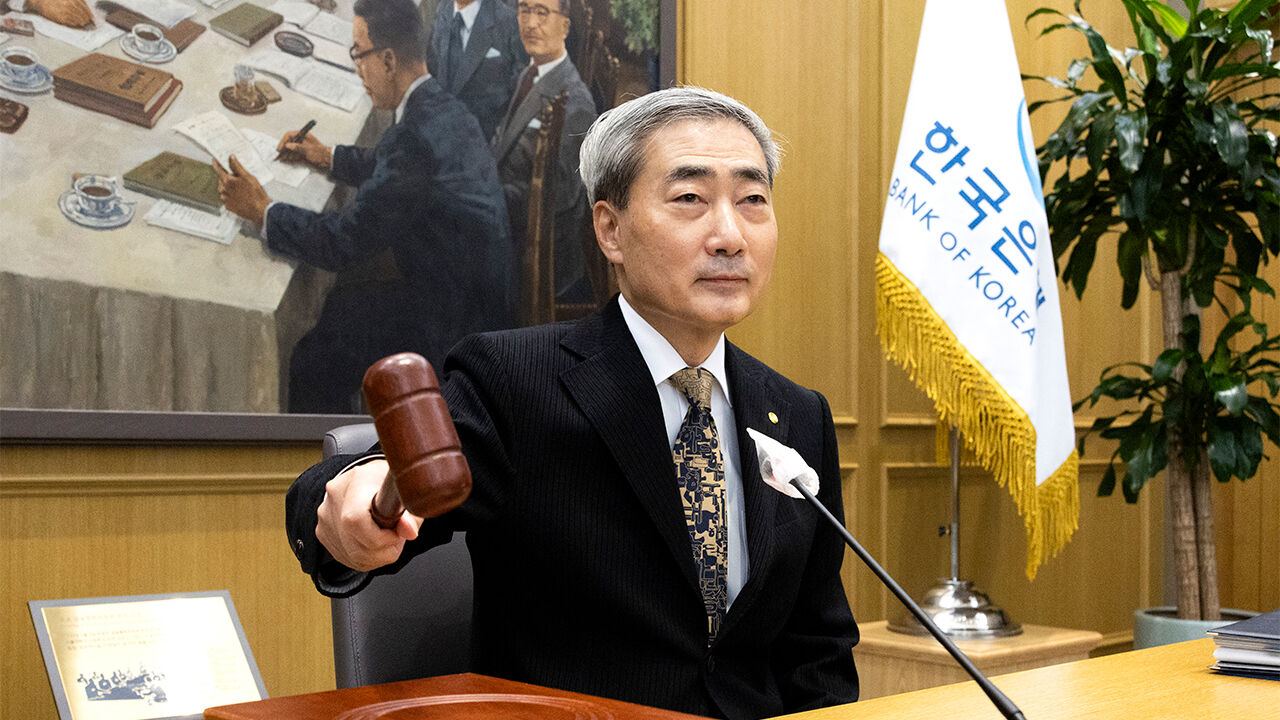
▲ Bank of Korea Governor Rhee Chang-yong strikes the gavel during a Monetary Policy Board meeting held at the Bank of Korea in Jung-gu, Seoul, on the 22nd.
The Bank of Korea's (BOK) Monetary Policy Board emphasized today (the 22nd), "There is a need to examine how internal and external risk factors unfold, as well as the ripple effects of the two previous benchmark interest rate hikes."
In its monetary policy direction resolution released that day, the board explained the background behind the rate freeze, citing "high uncertainties surrounding situations such as the Middle East conflict and the monetary and fiscal policies of major countries."
Previously, the phrase included in the August 27 resolution—"It is important to prevent the spread of upward inflation pressure through preemptive responses"—was omitted from this statement.
However, the board maintained its existing phrasing that "future monetary policy will determine the timing and pace of additional hikes while closely monitoring inflation and economic trends, as well as financial stability conditions."
The board revealed that all seven members unanimously voted in favor of keeping the benchmark interest rate unchanged at 3.00% per annum.
Assessing current conditions, the board stated, "While the domestic economy continues to see strong growth centered around exports and investment, inflation continues its high upward trend at around 3%, and risks to financial stability persist."
Regarding the domestic economy in detail, the board announced, "Growth rates for this year and next year are expected to significantly exceed the forecasts made in August (3.3% and 2.9%, respectively)."
On inflation, it predicted, "While consumer price and core inflation rates for this year will largely align with the August forecasts (2.7% and 2.5%, respectively), next year's figures are expected to exceed previous forecasts (2.3% and 2.5%)."
The board evaluated that "the won-dollar exchange rate has fallen significantly, supported by improved foreign exchange supply and conditions driven by a large current account surplus, despite the strong U.S. dollar."
It further noted, "Household loans turned to a decline as other types of loans showed net repayments, but housing-related loans continued their upward trend, and the rise in housing prices in the Seoul metropolitan area expanded once again."
(Photo: Photo Joint Press Corps, Yonhap News)
※ Please note: This article was translated by AI and may contain errors.


 Video News
 Video News
 Video News
 Video News
 Video News