
 KOR
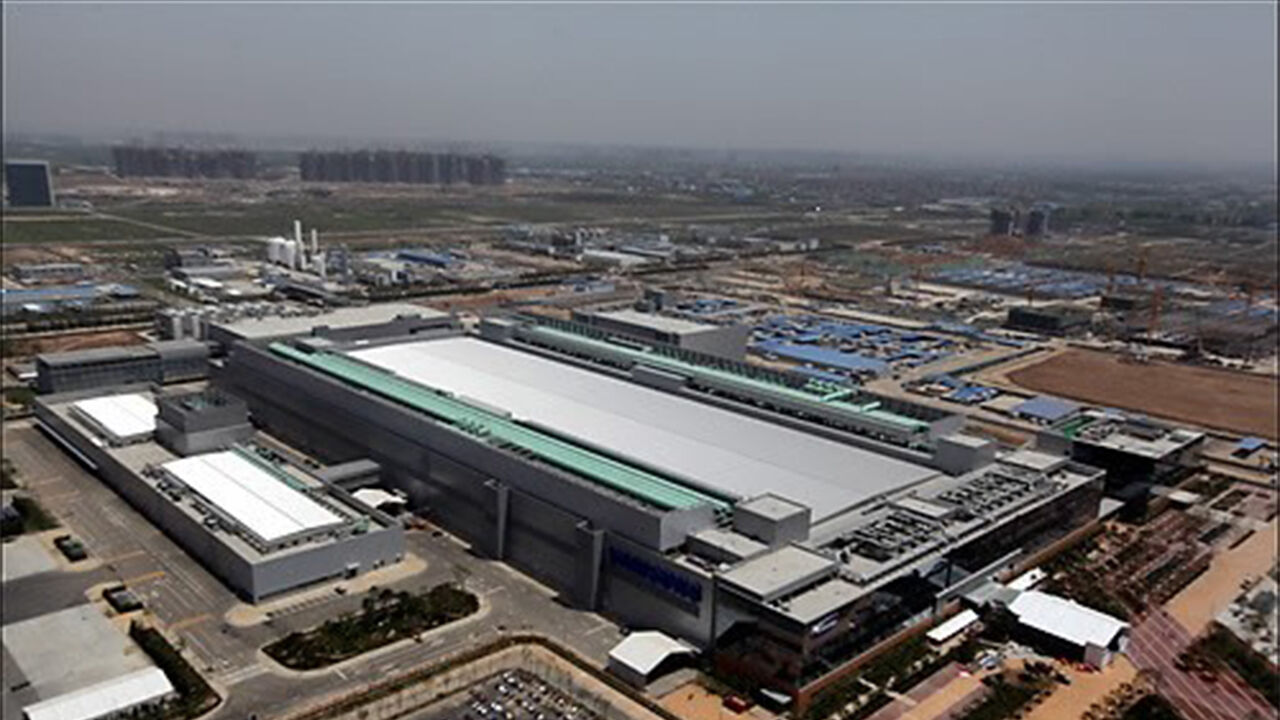
▲ Samsung Electronics' semiconductor plant in Xi'an, China
Samsung Electronics and SK Hynix are shifting their manufacturing processes at their Chinese plants to produce next-generation NAND flash memory, Reuters reported on the 21st, citing four sources.
In statements sent to Reuters, the two companies officially confirmed that process upgrades at their factories in China are underway and that they are in close consultation with the U.S. government, while declining to disclose specific production plans.
According to one source, Samsung is transitioning its Xi'an plant in China to a 286-layer NAND production system, targeting a monthly output of 5,000 wafers by December of this year and 40,000 wafers by December of next year.
Samsung stated, "This is to respond to the growing demand from global customers, including the U.S.," adding, "It is neither expanding production capacity nor constructing new manufacturing facilities."
Three sources said SK Hynix is pursuing plans to shift its Dalian plant from current 192-layer NAND production to 240 layers or higher.
The two companies must obtain annual U.S. approval to bring U.S.-made equipment into China.
The U.S. Department of Commerce's Bureau of Industry and Security (BIS) stated last year that it would not permit capacity expansions and technology upgrades at these plants.
The scope of U.S. approval for the equipment required for this upgrade has not been confirmed.
Meanwhile, market research firm Omdia reported that Yangtze Memory Technologies Corp. (YMTC) of China captured a 38.5% market share in the Chinese NAND market in the second quarter, surpassing Samsung Electronics (33.5%), while SK Hynix's share fell from 20% to 17%.
(Photo provided by Samsung Electronics, Yonhap News)
※ Please note: This article was translated by AI and may contain errors.


 Video News
 Video News
 Video News
 Video News
 Video News