
 KOR
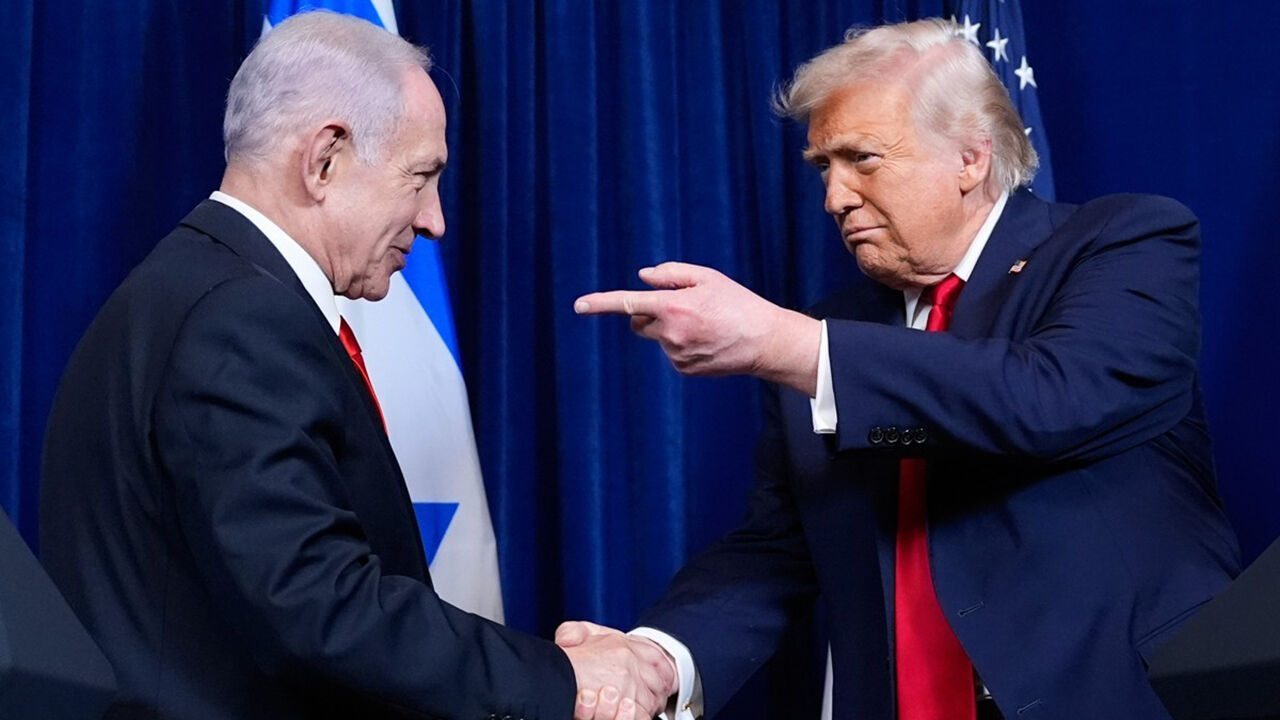
▲ Israeli Prime Minister Benjamin Netanyahu and U.S. President Donald Trump
Israeli Prime Minister Benjamin Netanyahu drew up plans for a massive airstrike operation against Iran earlier this month, but put the plan on hold after facing opposition from U.S. President Donald Trump, the Financial Times reported on the 21st local time.
Multiple sources told the newspaper that the Israeli military had prepared a large-scale bombing operation against Iran timed for Saturday, October 10.
The plan involved striking civilian infrastructure such as power plants, as well as nuclear facilities and key regime targets over the course of several days.
In particular, Israeli officials prepared an updated target list that included civilian infrastructure which had been excluded earlier this year, and noted that the plan was designed with an intensity surpassing the joint U.S.-Israel offensive at the time.
However, the operation was ultimately not executed after running into opposition from President Trump, who did not want the conflict in the Middle East to escalate into an all-out war ahead of the U.S. midterm elections next month.
Regarding the matter, the White House responded, "The U.S. has no plans to attack Iran prior to the midterm elections," adding that the current economic and military blockade against Iran is already proving successful.
The Israeli Prime Minister's Office and the Israel Defense Forces declined to comment.
Previously on the 13th, U.S. outlet Axios also reported that Prime Minister Netanyahu and President Trump discussed reauthorizing a large-scale operation against Iran ahead of the elections.
Israel's recent airstrike plan and the U.S. opposition are primarily set against the backdrop of critical political timetables facing both Israel and the United States.
Israel faces a general election on October 27, while the U.S. has its midterm elections coming up on November 3.
Prime Minister Netanyahu is facing an uphill battle in this upcoming election, which marks the first to be held since the Gaza war broke out in October 2023 and two wars with Iran last year and this year.
As recent major opinion polls showed him trailing the opposition by a narrow margin, analysts suggest he tried to utilize tensions with Iran as a card to rally his base ahead of the election.
Current and former Israeli security officials have expressed concern that launching a war right as the election approaches could severely undermine democratic processes.
On the other hand, from the perspective of President Trump, escalation in the Middle East could serve as a major negative factor for the election.
This is because striking Iran risks dragging U.S. forces and surrounding Arab nations into a war, and above all, could trigger a surge in energy prices that would pose a heavy political burden ahead of the midterms.
In effect, both Prime Minister Netanyahu and President Trump sought to attack or held back from attacking Iran because of elections tied to their own political fates.
Although the large-scale airstrike has been put on hold for now, the situation involving Iran remains unstable.
The Israeli military has canceled leaves for all troops during the election period, maintaining an exceptional state of high alert.
In addition, both Prime Minister Netanyahu and President Trump have raised the level of threats against Iran by declaring that "the job must be finished," leaving open the possibility of resuming attacks, meaning tensions are expected to persist for the time being.
(Photo: AP, Yonhap News)
※ Please note: This article was translated by AI and may contain errors.


 Video News
 Video News
 Video News
 Video News
 Video News