
 KOR
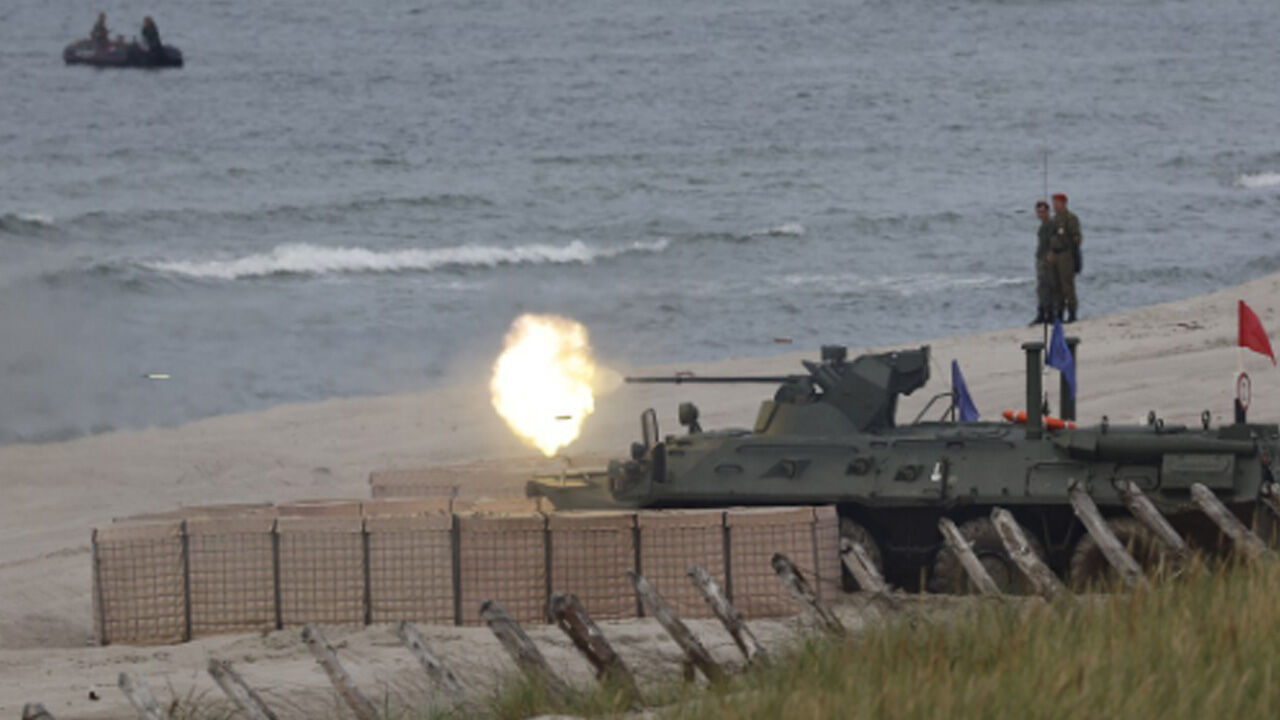
▲ Russian forces training in Kaliningrad
Russian forces have been spotted building a mega-sized radar facility in Kaliningrad, the Baltic Sea exclave used as a strategic military base by Russia, the British daily The Times reported on the 19th (local time).
The Times reported that recent satellite imagery capturing the skies over the Gvardeysk region in Kaliningrad revealed a facility under construction that appears to be part of an over-the-horizon radar system.
The facility is located about 32 kilometers from the Polish border and approximately 64 kilometers from the Lithuanian border, featuring a structure with three antenna masts, each stretching about 500 meters long.
Depending on its specifications, an over-the-horizon radar can detect missiles, warships, and aircraft located roughly 885 to 3,218 kilometers away.
The Times analyzed that this range easily reaches the outskirts of northern and western Europe, including the United Kingdom.
An over-the-horizon radar of the scale shown in the satellite imagery is analyzed to be capable of emitting radio waves with wavelengths exceeding 10 meters.
This is dozens of times longer than standard air surveillance radars.
It is also capable of detecting stealth aircraft.
Among NATO's European allies, only a few countries, such as the United Kingdom and France, operate radars with comparable performance.
The UK operates two units at an air base in Cyprus, while France maintains a facility of similar scale located about 80 kilometers west of Paris.
Arguments are also emerging that these satellite images serve as evidence that Russia is expanding Kaliningrad into a hub for advanced military sensors and electronic warfare systems.
Kaliningrad borders NATO member states Lithuania and Poland, and is also a port city facing the Baltic Sea to the west.
It is estimated to be equipped with storage facilities and delivery systems capable of housing and transporting around 100 nuclear warheads.
High-ranking sources in Poland and Lithuania believe that Russia has already begun deploying nuclear warheads to Kaliningrad, according to The Times.
Over the past four years, GPS jamming has been incessant in the region, causing major disruptions to maritime and aviation logistics across northeastern Europe.
Lithuania estimates that Russia has installed at least 36 so-called spoofing antennas in the area to manipulate vessel location data.
(Photo: AP, Yonhap News)
※ Please note: This article was translated by AI and may contain errors.


 Video News
 Video News
 Video News
 Video News
 Video News